An Incredible Operation: Lifting Timmy the Whale with Air Cushions to Tow Him Back to the Deep Ocean
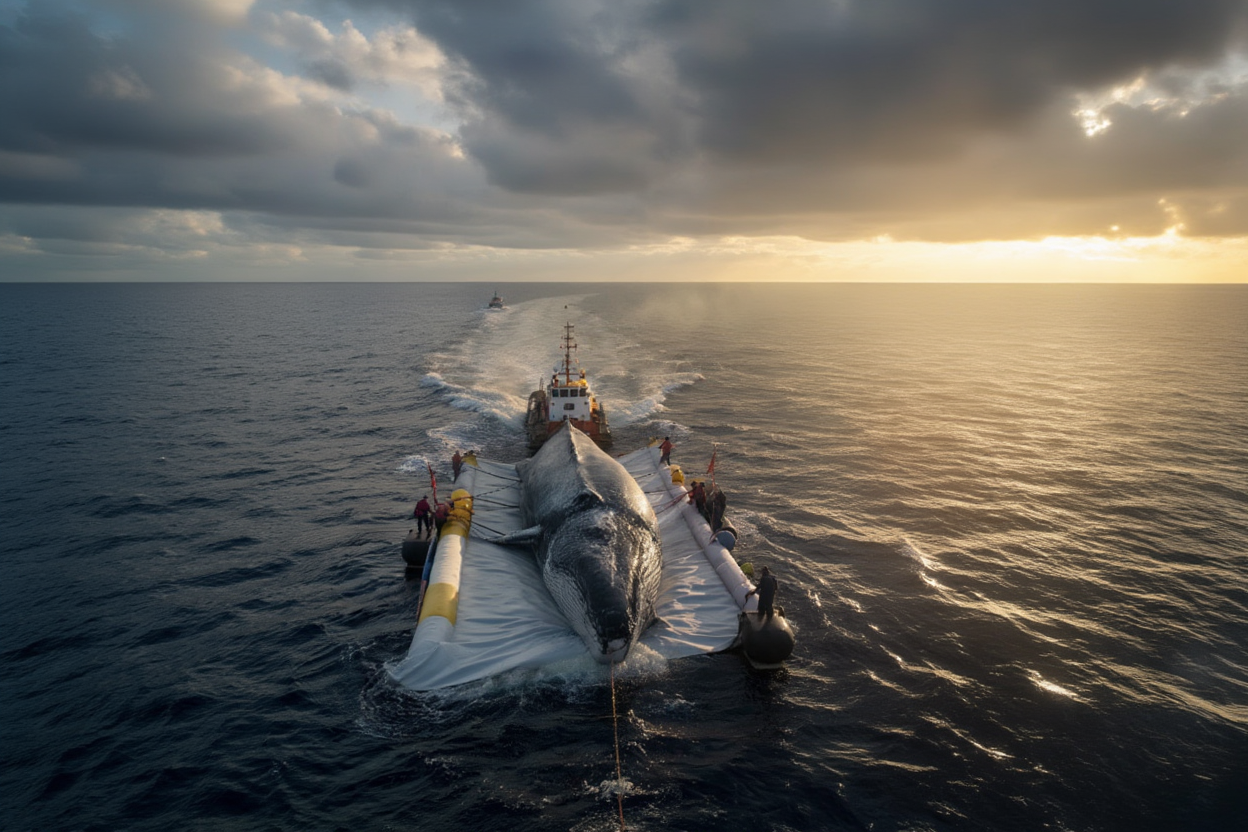
An Incredible Operation: Lifting Timmy the Whale with Air Cushions to Tow Him Back to the Deep Ocean
In an unprecedented and awe-inspiring operation, a team of marine experts is using industrial air cushions to rescue a 30-ton humpback whale named Timmy, who has been stranded in shallow waters for nearly two weeks. This daring and delicate mission aims to save the giant whale from suffocation and exhaustion by lifting him off the dangerous sandbars and towing him back to the deep ocean where he belongs.
The Battle Against Time
Timmy, a 13.5-meter humpback whale, was discovered stuck in a shallow inlet near Wismar, Germany, with no way of reaching the deeper waters that would allow him to breathe and move freely. The whale’s size and weight made traditional rescue methods ineffective, and with every passing hour, the risk of injury and death grew higher.
Rescue teams quickly realized that they had no choice but to employ an innovative solution—industrial air cushions, typically used in construction for lifting heavy objects, would be used to gently raise the whale from its perilous position. This method had never been attempted before for a creature of Timmy’s size, making the operation not just a race against time but a scientific breakthrough in marine rescue.
The Lifting Process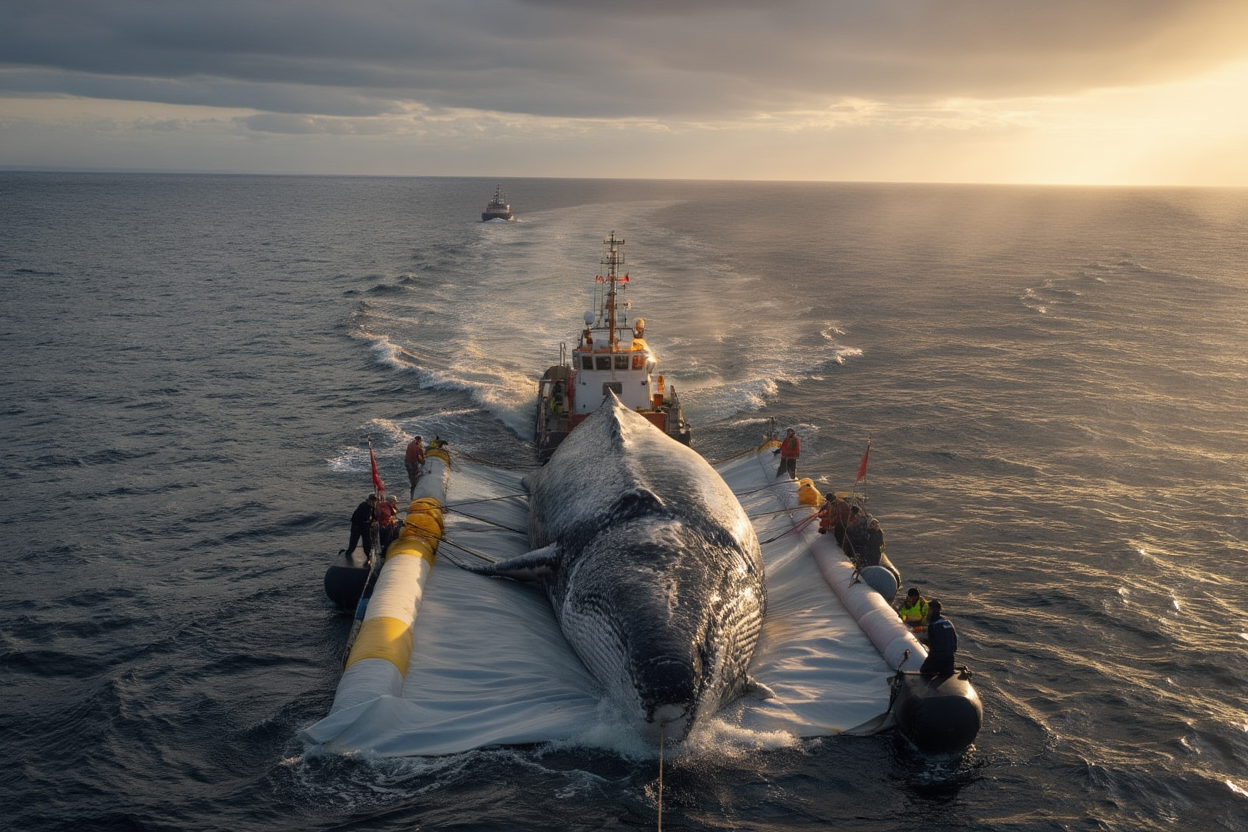
The air cushion technique is complex and requires absolute precision. The rescue team carefully slid giant airbags under Timmy’s massive body, taking extreme care not to harm the whale’s delicate skin or organs. As the airbags were gradually inflated, the whale’s enormous weight was lifted off the sandbars, inch by inch, until Timmy’s body was clear of the shallow water.
This process, which involves multiple inflatable airbags working in tandem, is not only about lifting the whale but also about making sure it is properly stabilized. Timmy’s internal organs and muscle structure must be carefully supported to avoid internal injury. Additionally, marine biologists and veterinarians are monitoring Timmy’s vital signs to ensure that the stress of the operation doesn’t cause further harm.
Towing Timmy to Safety
Once the whale was successfully lifted, the next challenge was towing him into deeper waters. Using ropes and specialized equipment, the team began to gently tow Timmy towards the open ocean. The goal is to slowly guide the whale to a location where it can swim freely, without the immediate threat of being trapped again.
The use of air cushions allowed for a much smoother and more controlled movement, ensuring that Timmy was not subjected to jarring motions or sudden shifts that could cause injury. As the operation progressed, the team remained in constant communication, coordinating each step of the rescue with precision.
A Moment of Triumph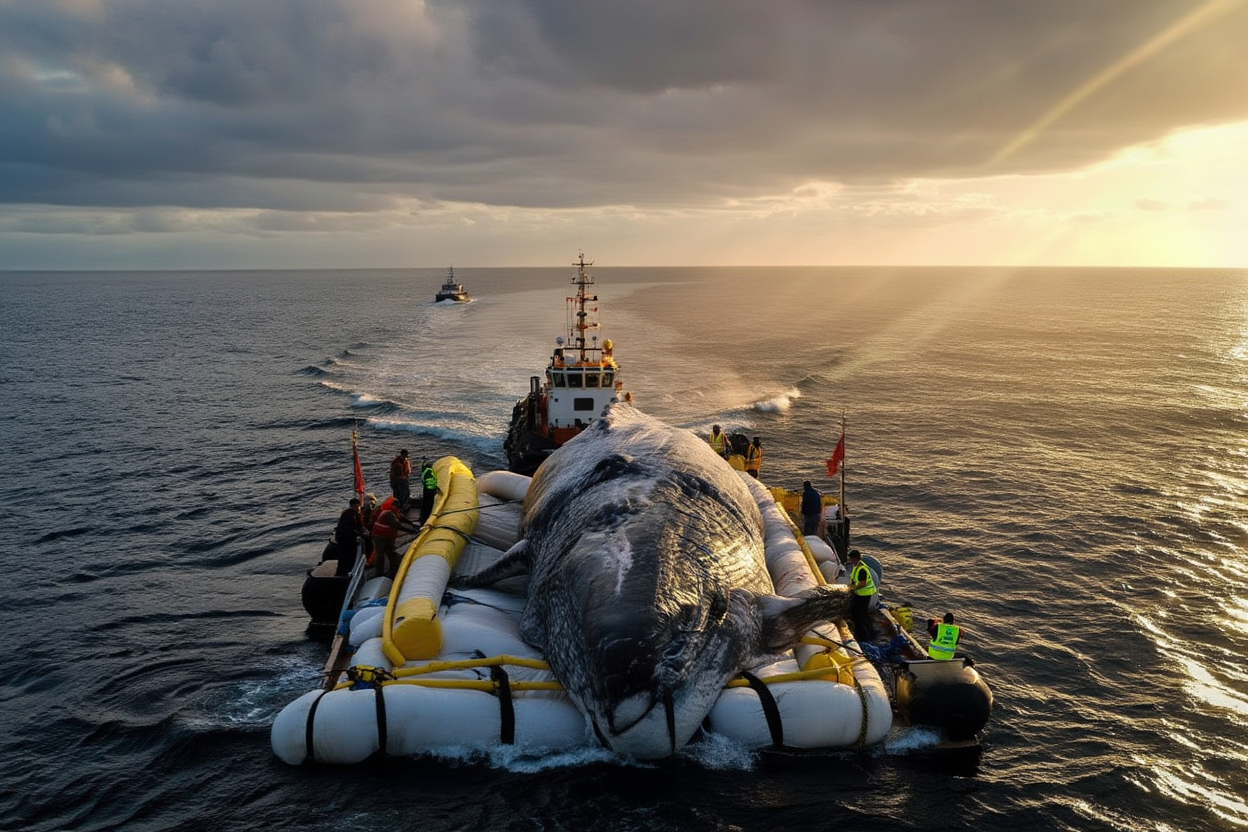
After hours of painstaking work, the rescue team’s efforts paid off. Timmy, once stuck in the shallows, was successfully guided into deeper waters. The massive whale swam away, slowly at first, but then with greater confidence as it regained its strength. The moment was one of sheer relief and joy for everyone involved. This incredible rescue is not only a triumph for marine conservationists but also a powerful reminder of the resilience of the natural world and the lengths we will go to protect it.
A New Era in Whale Rescue
Timmy’s successful rescue marks a historic moment in marine conservation. This operation demonstrates that with innovation, determination, and teamwork, it’s possible to save even the largest and most endangered creatures. The use of air cushions to lift such a giant mammal could revolutionize future whale rescues and set a new standard for marine mammal recovery efforts.
A Call to Action for Conservation
As Timmy swims back to the deep ocean, the larger message remains clear: we must continue to invest in ocean conservation and protection efforts. From habitat preservation to reducing ocean pollution, our actions today will determine the future of marine life. Timmy’s story serves as both a victory and a reminder that there’s still much work to be done to safeguard the wonders of the sea.