Miracle on the Horizon: Humpback Whale’s Struggle for Survival in Shallow Waters
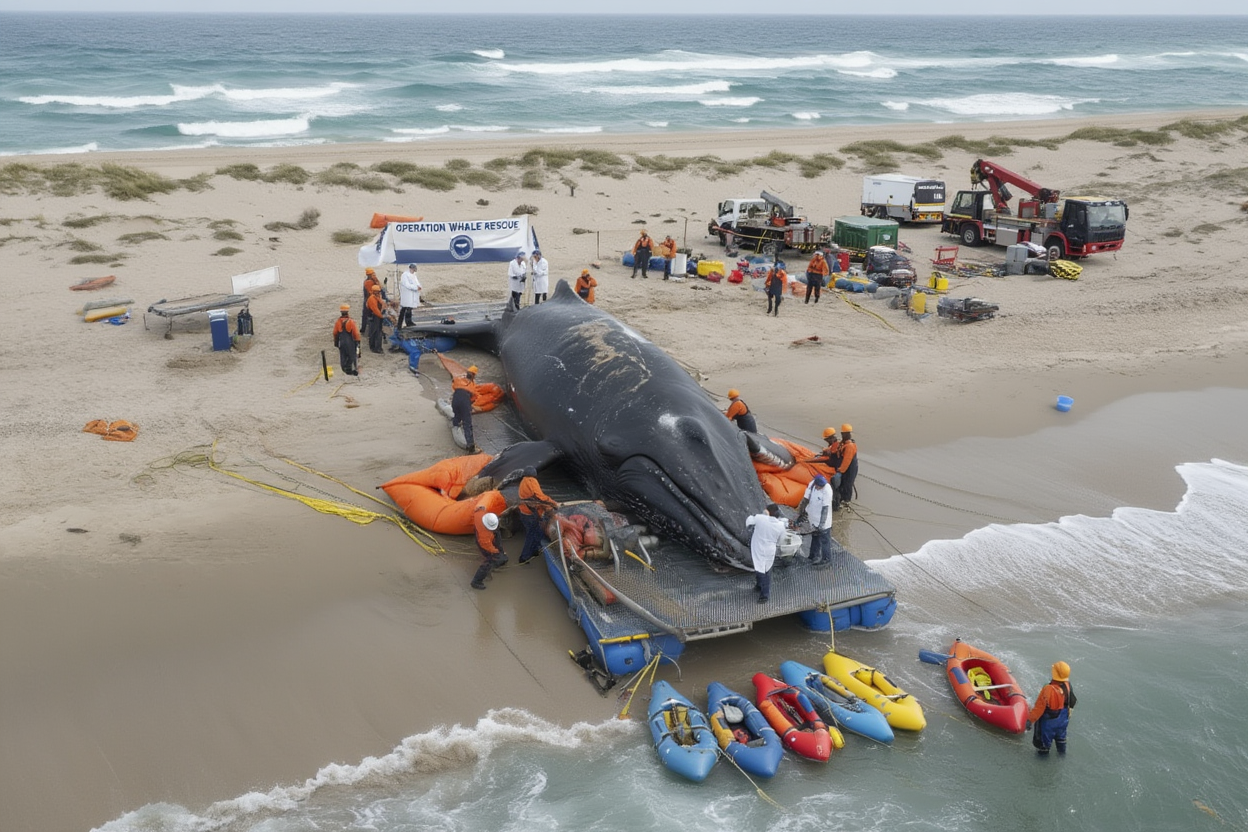
Miracle on the Horizon: Humpback Whale’s Struggle for Survival in Shallow Waters
In the tranquil waters off the coast of Wismar, Germany, an awe-inspiring rescue operation is unfolding for a stranded 13-meter humpback whale. Nicknamed “Timmy,” the massive creature has found itself trapped in the shallow waters for over two weeks, with time rapidly running out. What started as a routine rescue mission has quickly turned into a race against the clock, with a team of dedicated rescuers pulling out all the stops to give Timmy a fighting chance at survival.
The Desperate Situation
The story began when the 30-ton humpback whale was found stranded near a sandy stretch of coast. Its size and weight have made it incredibly difficult for traditional rescue techniques to work. In the past, similar cases have involved large-scale efforts with cranes, boats, and even excavators, but nothing has been able to shift the whale back to deeper waters, where it can find safety and freedom.
As days passed, Timmy’s health began to deteriorate. Rescuers noted signs of exhaustion, dehydration, and severe stress. These factors, along with the rising temperatures, created a real and immediate risk of the whale’s death. The urgency of the situation cannot be overstated: humpback whales are endangered species, and the loss of one would be a tragic blow to conservation efforts.
The Innovative Rescue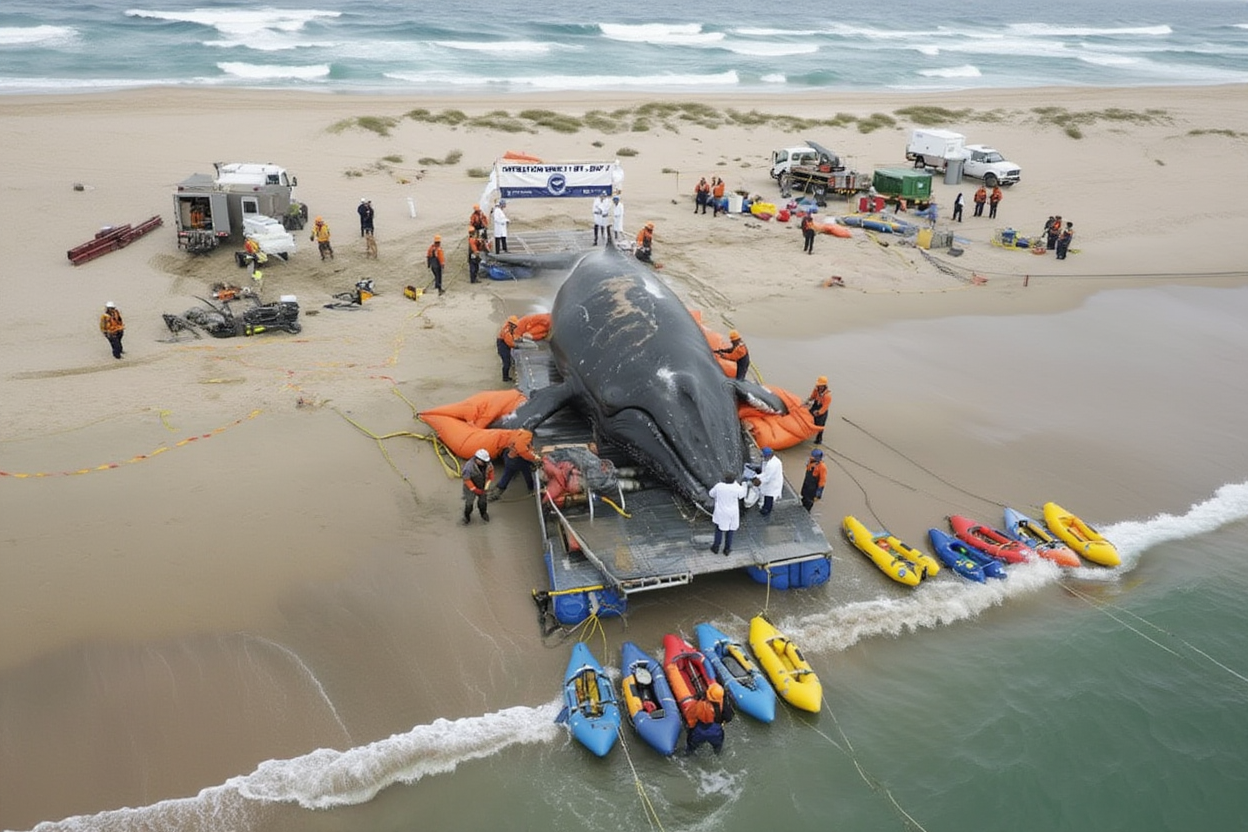
Faced with mounting challenges, the rescue team decided to employ an unprecedented method using industrial-sized airbags to lift the whale and return it to deeper waters. These airbags, typically used in the construction and heavy-lifting industries, are designed to withstand immense pressure. Placed carefully beneath the whale’s body, the airbags are slowly inflated to lift Timmy from the shallow sandbars that have kept it stuck in place.
The operation, described as delicate and high-risk, has been ongoing for several days. The rescuers must ensure that the airbags are properly positioned without causing harm to the whale’s fragile body. At the same time, teams of marine biologists and veterinarians are monitoring Timmy’s health, administering fluids, and taking every precaution to avoid causing further distress.
The air cushions are part of a broader, innovative strategy, with ropes, tarps, and a team of specialized divers helping to guide the whale. Timmy’s survival is still uncertain, but this unique rescue method gives hope to everyone involved.
Challenges and Hope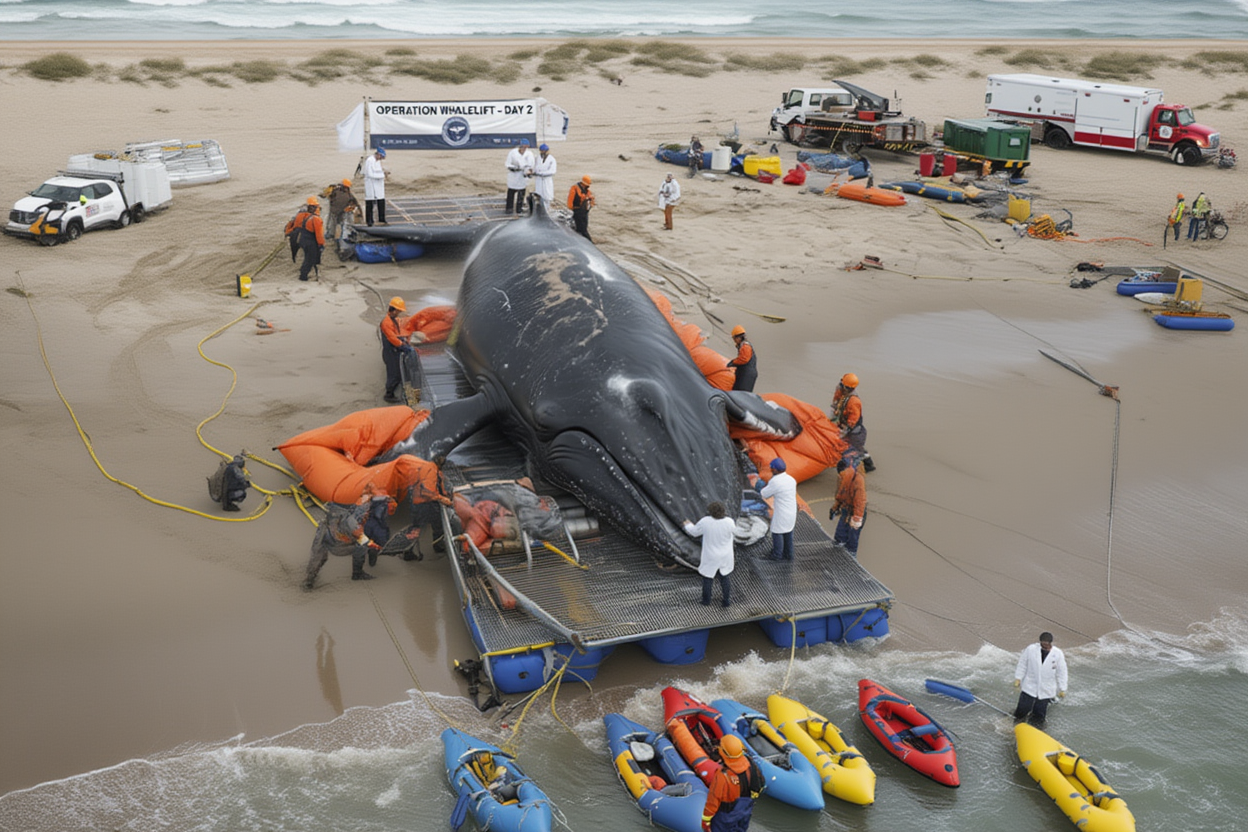
Though Timmy’s survival remains in the balance, the rescue mission has already been hailed as a remarkable effort of human ingenuity and perseverance. If successful, it could set a precedent for future whale rescue operations, offering a new tool in the fight to protect these majestic creatures. However, the stakes are high. The rescue teams face not only physical and logistical challenges but also the unpredictability of nature itself.
With the tides shifting and the hours slipping away, the clock is ticking. Timmy’s fate depends not just on human skill but also on the giant air sac that is slowly but surely lifting it closer to freedom. The world is watching, hoping for a miracle.
A Larger Conservation Effort
This dramatic rescue is more than just a single whale’s struggle for survival. It is a reminder of the challenges marine life faces in our changing world. Habitat destruction, pollution, and climate change all contribute to the increasing vulnerability of whales and other marine species. The rescue of Timmy highlights the dedication of conservationists, but it also emphasizes the urgent need for broader global efforts to protect marine life.
As Timmy continues its fight for survival, the world can only wait and hope for the best. If the rescue is successful, it will be a powerful reminder of how innovation, compassion, and teamwork can overcome even the most formidable challenges.