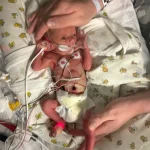
Harrison’s Journey: How Innovation and Resilience Are Transforming Life with Scoliosis and Phocomelia
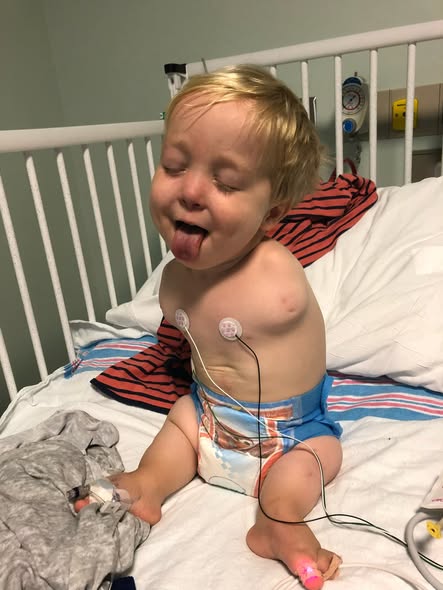
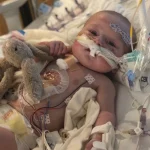
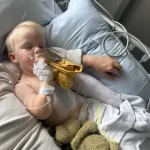
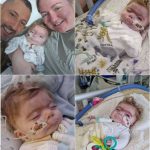
When Harrison was born, his parents knew their path would look different.
What they couldn’t have predicted was just how complex that journey would become—or how moments of innovation would one day change everything.
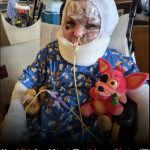
Diagnosed early with scoliosis and phocomelia, Harrison entered the world facing physical challenges that would require constant care, careful monitoring, and extraordinary resilience.
But today, his story is no longer defined only by medical hurdles. It’s also a story of breakthrough technology, compassionate care, and a young boy gaining confidence in a world that is finally adapting to him.
A Complex Diagnosis from the Start
From infancy, Harrison’s medical needs were clear—and urgent.
Scoliosis, a condition that causes an abnormal curvature of the spine, can worsen over time if not carefully managed. In Harrison’s case, the curvature not only affected his posture but also brought discomfort and limitations to everyday movement.
At the same time, phocomelia—a rare condition impacting limb development—added another layer of complexity. Simple activities that most children take for granted required extra effort, adaptation, and support.
For his parents, the early days were filled with appointments, questions, and a constant search for the best possible care.
That search led them to specialists who could do more than treat symptoms—they could build a long-term plan for Harrison’s future.
Finding the Right Care—and a Path Forward
At Children’s Healthcare of Atlanta, Harrison’s family found exactly what they needed: expertise paired with compassion.
Under the care of Michael Schmitz and a dedicated orthopedic team, Harrison began a treatment plan tailored specifically to his condition.
This wasn’t a one-size-fits-all approach.
Managing scoliosis and limb differences requires ongoing evaluation, adjustments, and a deep understanding of how a child’s body grows and changes over time. Every decision—from monitoring spinal curvature to assessing mobility—had to be carefully considered.
And central to all of it was one essential tool: imaging.
The Hidden Challenge of Routine X-Rays
For many children with orthopedic conditions, X-rays are a routine part of care.
For Harrison, they were anything but routine.
Tracking the progression of scoliosis requires regular imaging, often forcing patients to lie flat on their backs for extended periods. For a child with both spinal curvature and limb differences, this position was not only uncomfortable—it was physically and emotionally exhausting.
Each appointment became a challenge.
There was the discomfort. The stress. The anticipation of a process that felt more like an obstacle than a step toward healing.
And yet, these scans were critical. Without them, doctors couldn’t accurately measure changes or adjust treatment plans.
It was a necessary burden—until something changed.
A Breakthrough That Changed Everything
At a recent appointment, Harrison experienced something entirely new.
For the first time, he didn’t have to lie flat during his X-ray.
Instead, he was able to sit upright.
This moment—simple on the surface—represented a major breakthrough made possible by advanced imaging technology now available at Children’s Healthcare of Atlanta.
This cutting-edge system allows for full-body imaging in a seated or standing position, using significantly lower levels of radiation compared to traditional X-rays.
But for patients like Harrison, the real impact goes beyond technical improvements.
It’s about comfort.
It’s about dignity.
And it’s about giving children a sense of control over their own care.
Why This Innovation Matters
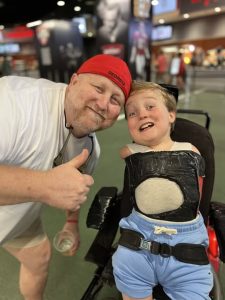
For children with scoliosis, phocomelia, and other musculoskeletal conditions, positioning during imaging is not just a matter of convenience—it directly affects accuracy and experience.
Traditional methods often force patients into unnatural positions, which can distort results and increase discomfort.
This new technology changes that.
By allowing imaging in more natural, functional positions, doctors gain a clearer understanding of how the body behaves in real life—not just on a table.
At the same time, the reduced radiation exposure makes repeated scans safer over the long term—an essential factor for children who require ongoing monitoring.
For families, it means fewer tears, less anxiety, and a more manageable journey.
A Moment of Empowerment
For Harrison, sitting upright during his X-ray was more than just a medical improvement.
It was a moment of empowerment.
No longer confined to a position that caused discomfort, he was able to participate in his care in a way that felt natural. The experience shifted from something he had to endure to something he could face with confidence.
His parents noticed the difference immediately.
Where there had once been stress, there was now calm.
Where there had been discomfort, there was relief.
It was a small change—but one with a profound emotional impact.
Looking Ahead: Strength, Support, and Possibility
Harrison’s journey is far from over.
Managing scoliosis and phocomelia will continue to require ongoing care, monitoring, and adaptation. There will be challenges ahead—moments that test both his strength and his family’s resilience.
But now, there is also something else:
Possibility.
With access to advanced technology, expert medical care, and a support system that understands his needs, Harrison is better equipped than ever to move forward.
He is not defined by limitations.
He is defined by how he overcomes them.
A Story Bigger Than One Patient
Harrison’s experience reflects a broader shift in pediatric care—one where innovation is not just about new machines, but about improving real lives.
It shows how technology, when used thoughtfully, can reduce pain, restore dignity, and change the way children experience healthcare.
And it reminds us that progress doesn’t always come in dramatic breakthroughs.
Sometimes, it comes in quiet moments—like a child sitting comfortably during an X-ray for the very first time.
Redefining What Care Can Look Like
In the end, Harrison’s story is not just about living with medical conditions.
It’s about redefining what care can look like when compassion meets innovation.
It’s about a future where children aren’t forced to adapt to systems—but where systems adapt to them.
And for Harrison, that future has already begun.