Cohen’s Journey: Overcoming Clubfoot Through Expert Care, Persistence, and Family Strength
- KimAnh
- March 30, 2026
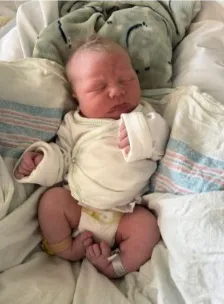
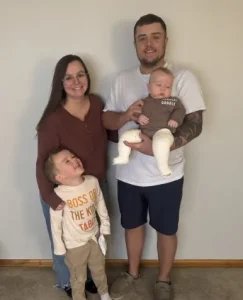
When Rachel Lumley and her fiancé, Sean Bisbal, attended their routine 20-week ultrasound, they expected reassurance and excitement. Instead, they received unexpected news that would reshape their journey into parenthood—their unborn son, Cohen, had been diagnosed with bilateral clubfoot.
Known medically as Clubfoot, this condition affects roughly one in every 1,000 babies. It causes one or both feet to twist inward and downward, making walking difficult if left untreated. For Rachel and Sean, who had no family history of the condition, the diagnosis came as a complete shock.
Like many parents facing an unfamiliar medical condition, Rachel immediately began searching for answers. She found comfort in an online community of parents who had faced similar diagnoses. Through shared experiences, advice, and encouragement, she realized they were not alone—and that effective treatment options were available.
A Difficult Start with Treatment
After Cohen’s birth, his parents followed medical advice and began treatment close to home in Pennsylvania. He was placed on the Ponseti Method, the gold-standard approach for correcting clubfoot. This method involves a series of carefully applied casts that gradually guide the baby’s feet into the correct position, followed by bracing to maintain the correction.
But for Cohen, the process didn’t go as planned.
Despite 12 rounds of casting, there was little improvement. The casts frequently slipped, and each session became increasingly distressing. Rachel remembers her son crying in pain, turning what should have been a hopeful process into an emotionally draining experience.
Sensing something wasn’t right, she returned to her online support group. Other parents quickly recognized the signs—Cohen’s treatment might not have been progressing correctly. They encouraged her to seek a second opinion from a specialist with more experience in clubfoot care.
Finding the Right Expert Care
Determined to give their son the best chance at recovery, Rachel and Sean made a decision that would change everything. They traveled 90 minutes to seek care at Akron Children’s Hospital, where they met Dr. Mark Adamczyk, director of the Clubfoot Clinic.
From the very first consultation, the difference was clear.
Dr. Adamczyk carefully evaluated Cohen’s condition and recommended a short break from casting to allow his irritated skin to heal. Then, with a fresh approach, his team began a new series of casts—applied gently and adjusted weekly.
This time, the experience was completely different.
Cohen was calm. In fact, during some sessions, he even fell asleep—something his parents never thought possible after their earlier experiences. The clinic’s supportive environment, including soothing sounds and calming visuals, helped reduce stress for both baby and parents.
Just as importantly, Dr. Adamczyk took the time to explain every step of the treatment plan. As a parent himself, he approached each conversation with empathy and clarity, ensuring Rachel and Sean felt informed and confident.
A Turning Point: The Tenotomy Procedure
As Cohen’s feet began to respond to the corrected casting technique, the next step in his treatment became clear—a tenotomy.
This minor procedure, required in about 90% of clubfoot cases, involves releasing the Achilles tendon to allow the foot to achieve its final corrected position. Though the idea of surgery can be intimidating for any parent, the reality was far less daunting than expected.
Performed under local anesthesia in an outpatient setting, the procedure was quick and efficient. Within about 90 minutes, it was complete.
Afterward, Cohen wore a cast for three weeks to support healing. For Rachel and Sean, it marked a major milestone—a turning point in their son’s journey.
The Final Phase: Building a Strong Future
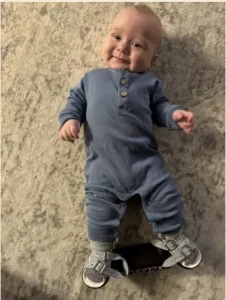
Today, Cohen has entered the final stage of treatment: wearing special boots connected by a bar for most of the day. This phase is critical in preventing relapse and ensuring his feet remain properly aligned as he grows.
While wearing the brace for 23 hours a day may seem challenging, Rachel understands its importance. Over time, the hours will gradually decrease until Cohen only needs to wear it at night, typically until age four or five.
The difference in his progress is undeniable.
What once felt like an uncertain future is now filled with hope. Cohen is improving, growing stronger, and moving closer to a life where he can walk, run, and play without limitations.
The Power of Persistence and Community
Cohen’s journey is not just about medical treatment—it’s about perseverance, advocacy, and the importance of finding the right care.
Rachel’s decision to seek a second opinion, guided by a supportive community of parents, made all the difference. Her willingness to question, learn, and act ultimately changed the course of her son’s life.
At the same time, the expertise and compassion of Dr. Mark Adamczyk and his team demonstrate how critical specialized care is in treating complex conditions like clubfoot.
A Story of Hope and Resilience
Today, Cohen’s future looks bright.
His journey, though challenging, is a powerful reminder that early intervention, expert care, and parental determination can transform even the most difficult beginnings into stories of success.
For families facing a similar diagnosis, Cohen’s story offers something invaluable: hope.
Because sometimes, the difference between struggle and success is simply finding the right path—and having the courage to follow it.