Boy Was Killed amid Police Chase While Heading to Shop for 11th Birthday. The Man Who Hit Him Just Received His Sentence
At Tymetrius Walter’s sentencing, Kathryn Luxemburger recalled the final conversation she had with her 10-year-old son, Jake Luxemburger
The man who fatally struck a 10-year-old boy while fleeing police in Kentucky in 2023 has just been sentenced to four decades behind bars.
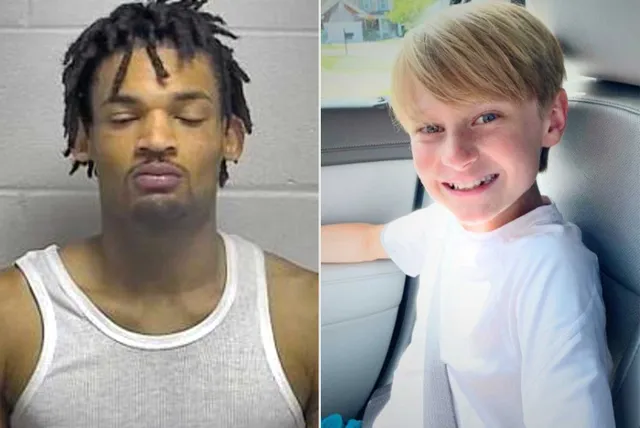
Tymetrius Walter allegedly fled a state trooper in a stolen vehicle after an attempted traffic stop on Sept. 16, 2023, according to a press release from the Kentucky State Police (KSP). The subsequent high-speed chase down I-71 ended with Walter striking an SUV, killing “Jake” John Lewis Luxemburger.
On Wednesday, July 1, Walter was sentenced to 40 years in prison for the fatal collision in Campbellsburg, ABC affiliate WHAS 11 reported.
Jake Luxemburger.
The sentencing came after Walter pleaded guilty in June to several charges — including vehicular homicide when under the influence, ᴀssault, receiving stolen property of over $10,000, wanton endangerment and fleeing or evading police — the Louisville outlet previously reported.
He was originally charged with murder in the immediate aftermath of the accident, but it was amended down to vehicular homicide as part of the June plea agreement, per WHAS 11.
During Walter’s July 1 sentencing, Jake’s family spoke in court, giving emotional victim impact statements. It marked the first time the 10-year-old victim’s loved ones spoke publicly about the collision, per NBC affiliate WAVE 3.“The morning he died, he was so excited because he was going shopping for his birthday,” Jake’s mom, Kathryn Luxemburger, said at the sentencing, per WHAS 11.Jake was 9 days from turning 11 at the time of his death, per his obituary.
Kathryn also remembered her final interaction with Jake before he left with his grandmother, Teri Portnoy, who was visiting from Florida for his special day, per WAVE 3.
Reading aloud the mother-son duo’s final conversation, Kathryn said, “‘No more sweatshirts! You have so many.’ He yelled back, ‘Love you, Mom!’ I answered, ‘I love you too, buddy.’ ”
Portnoy, who was also injured in the collision, per WHAS 11, shared a written statement, which was read aloud at the sentencing.
According to her statement, Jake was opening a new pack of football cards and joking with his grandmother when Walter’s vehicle struck theirs. “The next thing I remember is waking up, lying on my left side in excruciating pain, not knowing what had happened,” she said in her statement, per WAVE 3. “I remember thinking, ‘Have I been in an accident?’ ”
Tymetrius Walter mug sH๏τ.Oldham County Jail
“The car was still sliding and the glᴀss was flying everywhere,” the grandmother’s statement continued. “When the car finally stopped, Jake’s hand fell in front of my face. I could see his little fingernails turning blue. I reached up, touched his hand and said, ‘Hey Jake, talk to Mimi.’ Nothing. Again, I said, ‘Jake, talk to me.’ Nothing.”
Jake’s mother also addressed Walter, who shared a statement of his own with the family, in court.
“You made the choice to run from the police. You made the choice to put your own desire to avoid being caught above every life around you,” the mom said, per WHAS 11. “When your sentence is complete you will walk out of prison, you will have the opportunities to rebuild your life. Jake will never get that opportunity. His sentence is permanent and our sentence is permanent.”
Walter apologized. “I am truly sorry for what I took,” he said at the sentencing. “That day also changed my life as well. I apologize for my own actions that led to this.”
“I know my words will never replace the hurt, the trauma, the pain I inflicted,” he said.
:max_bytes(150000):strip_icc():focal(669x602:671x604):format(webp)/Jake-Luxemburger-070426-c1bcc95a1e9a43278e21efe28deedca4.jpg)
:max_bytes(150000):strip_icc():focal(812x282:814x284):format(webp)/Tymetrius-Walter-070426-40cebf16a61644ee9c894364e65ee206.jpg)