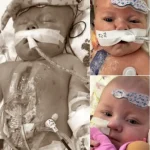
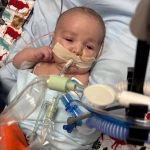
From Micropreemie to Milestone: Mckenzi Hardwick’s First Year of Courage, Care, and Celebration
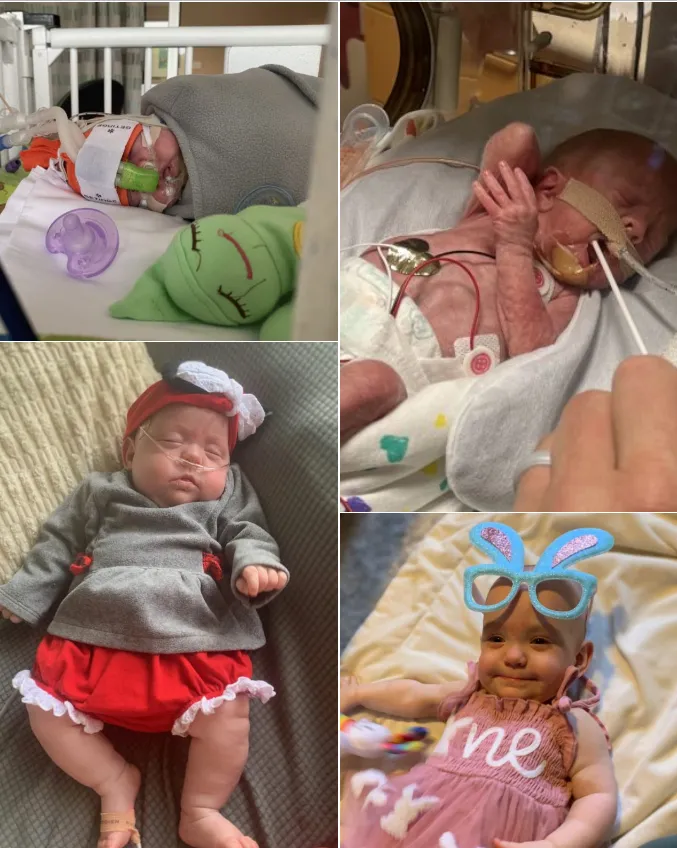
When Ginny Hardwick went into labor at just 22 weeks pregnant, fear quickly took hold. The chances of survival for her baby were uncertain, and every moment felt critical. Thanks to the swift action and expertise of the medical team, her labor was delayed by two vital weeks—time that would ultimately give her daughter, Mckenzi, a fighting chance at life.
On Easter Sunday in 2024, Mckenzi entered the world weighing only 1.3 pounds—no larger than a doll. Born as a micropreemie, she faced overwhelming challenges from her very first breath. Her tiny lungs were not yet fully developed, requiring immediate respiratory support and round-the-clock monitoring in the Neonatal Intensive Care Unit (NICU).
The early months of Mckenzi’s life were marked by uncertainty, but also by determination. Day by day, she fought to breathe stronger, to grow, and to survive. For four months, the NICU became her home—a place filled not only with advanced medical care but also with hope.
Her respiratory care team played a vital role, encouraging both Mckenzi and her parents through every small step forward. They often described her as a “spunky baby,” a nickname that reflected her strong will and resilience. Each tiny improvement—every steady breath—was celebrated as a meaningful victory.
In addition to her breathing challenges, Mckenzi was diagnosed with heart conditions common in premature infants, including patent ductus arteriosus (PDA) and a stretched patent foramen ovale (PFO). These conditions required careful monitoring, adding another layer of complexity to her already fragile condition.
Under the watchful eye of her cardiology team, Mckenzi’s heart gradually improved. Over time, the PDA reduced significantly in size, shrinking to just one millimeter before her first birthday. This progress meant that no immediate intervention was needed, bringing immense relief to her family. What once felt like a looming threat became a manageable condition, with follow-up care planned for the future.
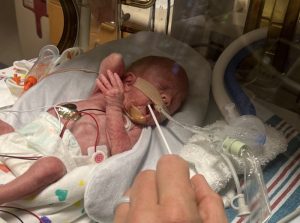
Caring for a micropreemie requires far more than typical newborn care. Ginny and her family had to learn new ways to handle even the simplest tasks. Physical and occupational therapists guided them step by step—teaching how to safely feed, hold, and care for their tiny daughter while supporting her development.
But what made the greatest difference was not just the medical expertise—it was the human connection. The NICU staff created an environment where Ginny felt supported, included, and empowered. They made sure she was not just a bystander in her daughter’s care, but an active participant.
Even in the clinical setting of the NICU, the team found ways to bring warmth and joy. They celebrated holidays with small decorations, created keepsakes like handprints and footprints, and marked milestones with thoughtful gestures. These moments transformed a difficult experience into one filled with meaning and love.

As Mckenzi grew stronger, she transitioned from an incubator to a “big-girl room” with windows—a symbolic step forward in her journey. Each change, no matter how small, reminded her family that progress was happening.
After months of challenges, perseverance, and care, the day finally came to celebrate something truly extraordinary—Mckenzi’s first birthday.
At home, surrounded by love, she marked the milestone not just as a one-year-old, but as a survivor. Crawling, cooing, and joyfully exploring her surroundings, she embraced life with the same determination that had carried her through her earliest days. A simple moment—tasting birthday cake frosting—became a powerful symbol of how far she had come.
For Ginny and her family, that birthday was more than a celebration. It was the culmination of a year filled with fear, hope, and unwavering strength. Every doctor, nurse, and therapist who had been part of Mckenzi’s journey played a role in that moment.
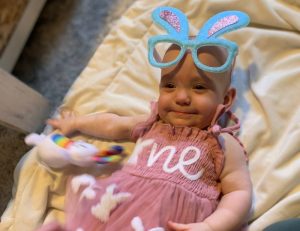
Her story highlights the critical importance of early intervention and coordinated care for premature infants. From respiratory support to heart monitoring and developmental therapy, every aspect of her treatment contributed to her survival and growth.
It also underscores the emotional resilience required of families navigating long NICU stays. The support of compassionate healthcare providers can make an unimaginable journey feel possible, helping parents build confidence and deep bonds with their child.
Today, Mckenzi continues to grow and thrive, with regular follow-ups ensuring she stays on a healthy path. The strong foundation built during her first year will continue to support her as she reaches new milestones.
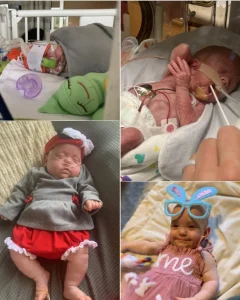
Mckenzi Hardwick’s journey—from a fragile micropreemie to a thriving one-year-old—is a powerful testament to courage, medical innovation, and family love. Every breath she takes, every smile she shares, reflects the incredible effort behind her survival.
Her story offers hope to other families facing the uncertainty of premature birth. It shows that even the smallest beginnings can lead to extraordinary outcomes when care, determination, and compassion come together.
In the end, Mckenzi’s first year is more than a timeline—it is a story of triumph. A story that proves that even against the greatest odds, life can flourish in the most beautiful ways.