“He Can Never Leave the House”: A Mother’s Relentless Journey Raising a Severely Immunocompromised Son
Life was unfolding exactly as planned. I was happily married, nearing the end of my medical residency, and preparing to welcome my first child. With my dream job waiting just months ahead, everything felt perfectly aligned. My pregnancy had been smooth, aside from a diagnosis of gestational diabetes that required careful monitoring. Still, nothing could have prepared me for how quickly everything would change.
At 34 weeks, I noticed my baby’s movements had slowed. A quiet worry turned into urgent action. Within 24 hours, I was rushed into an emergency C-section. My son, Jackson, was born into a world already fighting against him. Doctors later told us he should not have survived.
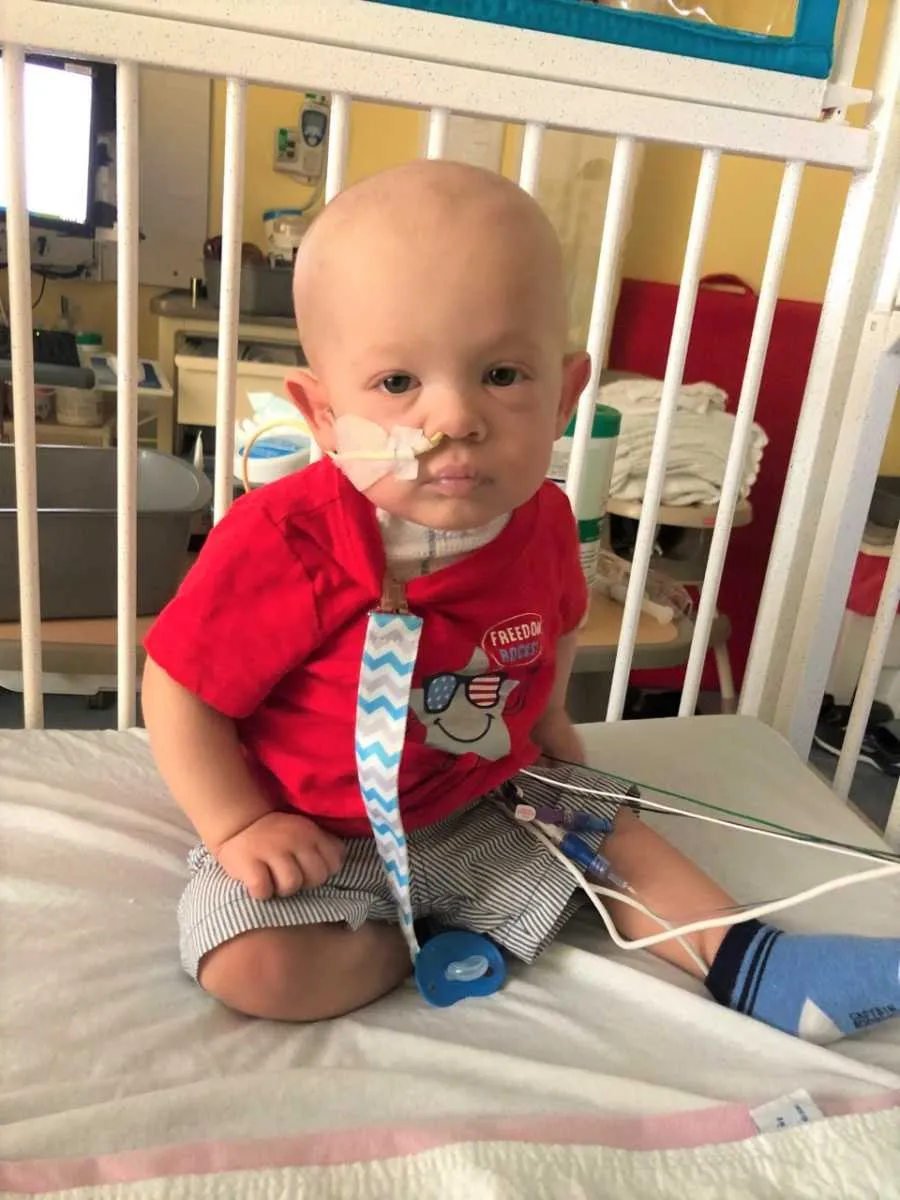
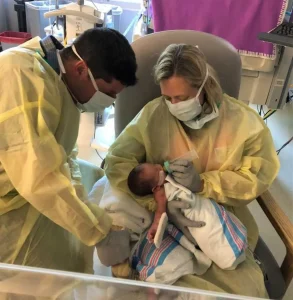
He was critically ill—severely anemic, with almost no platelets or white blood cells. Within moments of birth, he required immediate transfusions just to stay alive. He was taken to a specialized NICU, far from my arms. For days, I couldn’t hold him. When I finally could, it was through layers of protection—gown, gloves, and mask. Even the most natural bond between mother and child had to be carefully controlled. Skin-to-skin contact was too dangerous.
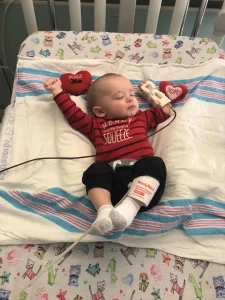
Each day brought new challenges: blood tests, transfusions, and constant monitoring. Infections were a constant threat. A simple fever could turn deadly within hours. The milestones most parents celebrate were replaced by hospital visits, IV lines, and the anxiety of waiting for lab results.
At seven weeks old, Jackson was diagnosed with Diamond Blackfan Anemia, a rare bone marrow failure disorder. His body could not produce the blood cells he needed to survive. From that moment, life became a cycle of transfusions every two to three weeks. I administered daily injections, hoping to stimulate his fragile immune system, knowing they wouldn’t always work. Every needle brought pain—not just for him, but for me as well.
By nine months, the risks had grown too great to ignore. Repeated transfusions threatened his organs with iron overload. The only viable option was a bone marrow transplant. We packed our lives into boxes and moved twelve hours away to be near a specialized hospital. There, Jackson underwent chemotherapy to destroy his failing marrow before receiving stem cells from an anonymous donor.
For the first time, hope felt real.
But it was short-lived. Jackson developed thrombotic microangiopathy, a life-threatening complication that affected nearly every part of his body. His red blood cells broke down. His platelets dropped dangerously low. His kidneys struggled. Fluid built up around his heart. He couldn’t tolerate food.
There were days he needed transfusions daily. He endured multiple heart procedures to drain fluid. His blood pressure remained dangerously high despite six different medications. Three times, he was transferred to the ICU. Three times, we were told he might not survive the night.
And yet, he did.
After 125 consecutive days in the hospital, Jackson was finally discharged. But freedom came with limits. We were required to stay within a five-mile radius of the hospital. Life became a series of appointments, tests, and constant vigilance. We rented a small apartment nearby, where isolation became our new normal.
Because chemotherapy had destroyed his immune system, Jackson could not leave the house except for essential medical visits. No visitors were allowed. Every surface was disinfected. Every item entering our home was wiped down. My husband worked remotely, limiting all outside exposure. Even a common cold could be fatal.
Slowly, there were signs of progress. His bone marrow began producing blood cells again. Doctors told us it could take a year for his immune system to recover enough for him to safely experience the outside world. Still, we held onto hope.
We eventually returned home just before Thanksgiving, grateful to be together again. But life remained far from normal. Our routines were strict—showering immediately after leaving the house, constant handwashing, sanitizing everything. We had learned to live in a world defined by caution.
Then the COVID-19 pandemic arrived.
For many, it was a disruption. For us, it was terrifying. The world we had carefully controlled suddenly became unpredictable. Supplies became scarce. Grocery deliveries were unreliable. Jackson’s specialized dietary needs became harder to meet. In-home therapies were canceled. Our isolation deepened.
Hearing people say “only the vulnerable will be affected” was devastating. My son was the vulnerable. So was I—pregnant again, navigating fear upon fear. Every decision became heavier. Could I safely attend prenatal appointments? Could we protect Jackson while preparing for another birth? What if complications arose during delivery?
The emotional weight was overwhelming.
And yet, we continued. For 19 months, we had fought for Jackson’s life. We weren’t about to stop. Every precaution, every sacrifice, every moment of isolation—it was all for him.
Still, it was painful to watch a world that didn’t fully understand. For many, safety measures felt optional. For us, they were the difference between life and death.
Through it all, hope remains.
Jackson is getting stronger. His immune system, though fragile, continues to improve. We dream of the day he can step outside freely, meet family, play with friends, and experience the simple joys of childhood.
Until then, we remain vigilant.
This journey is not just about survival—it’s about resilience, love, and the quiet strength of a family doing everything possible to protect their child. Jackson’s story is a reminder that behind every “vulnerable” life is a world of courage, sacrifice, and unwavering hope.
And sometimes, the greatest act of love is simply doing everything you can to keep someone safe.