Logan Rabensteine’s Fight Against RSV: How a Premature Infant Survived a Life-Threatening Respiratory Crisis
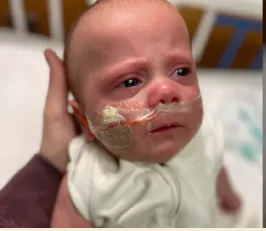
Logan Rabensteine’s life began with both heartbreak and resilience.
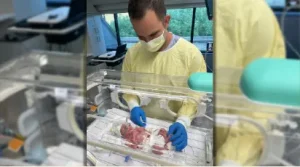
Born nine weeks early at Riley Hospital for Children, Logan entered the world alongside his twin brother, Benjamin. Tragically, Benjamin passed away shortly after birth — a loss that forever shaped the journey of Logan’s family.
For Logan, survival was only the beginning.
After spending two months in the neonatal intensive care unit (NICU), he finally went home with his parents, Jena and Lee Rabensteine, where three older siblings eagerly awaited his arrival.
But just weeks later, another life-threatening challenge emerged.
A Dangerous Virus Strikes Early
Only six weeks after returning home, Logan developed a severe case of Respiratory Syncytial Virus (RSV) — a common virus that can become dangerous for infants, especially those born prematurely.
RSV typically peaks in the winter months, but this season proved unusually intense, with hospitals across the country experiencing a surge in pediatric cases.
For vulnerable infants like Logan, the virus can quickly escalate into serious breathing difficulties.
A Mother’s Quick Recognition
Logan’s mother, Jena, was uniquely prepared to recognize the danger.
As a paramedic and emergency department nurse, she understood how quickly respiratory conditions can worsen in infants.
What began as a mild cough over the weekend soon became alarming.
By Sunday night, Logan’s symptoms had escalated. By Monday morning, Jena noticed critical warning signs — chest retractions, grunting, and even episodes of apnea, where her baby briefly stopped breathing.
She knew there was no time to wait.

Racing Against Time
Jena rushed Logan toward the hospital, carefully monitoring him in his car seat despite heavy traffic.
She counted his breaths, watched for pauses, and stayed alert for any signs of deterioration.
When they arrived at the emergency department at Riley Children’s Health, the situation was urgent — but they were fortunate to be seen quickly.
Testing confirmed that Logan was positive for RSV, though he tested negative for COVID-19.
He was immediately admitted for care.
Intensive Monitoring and Care
During his hospitalization, Logan required close observation and supportive treatment.
Doctors provided oxygen through a nasal cannula to help him breathe more easily. He also received nutrition through a nasogastric (NG) tube to ensure his body remained strong while fighting the infection.
Despite the severity of his condition, Logan did not require a ventilator — a positive sign in an otherwise serious situation.
Over the next five days, a team of nurses, doctors, and respiratory therapists monitored him closely, adjusting care as needed.
Their goal was simple: stabilize his breathing and give his body the support it needed to recover.
Understanding the Warning Signs
Logan’s case highlights the importance of recognizing early symptoms of respiratory distress in infants.
According to medical professionals, parents should seek immediate care if they notice signs such as:
-
Rapid or labored breathing
-
Chest retractions (skin pulling inward with each breath)
-
Grunting or unusual breathing sounds
-
A “sniffing” position with the head tilted upward
-
Episodes of apnea
Infants can sometimes compensate for breathing difficulties temporarily, but once symptoms worsen, their condition can decline rapidly.
Early intervention can be life-saving.
A Challenging Season for Families
The RSV surge did not affect Logan alone.
His older siblings also became ill, experiencing complications such as pneumonia and ear infections. The situation added emotional and physical strain to an already stressed family.
To protect Logan moving forward, his parents have taken extra precautions.
They limit exposure to large groups, emphasize hand hygiene, and remain vigilant about any signs of illness within the household.
For families with premature infants, even minor infections can carry significant risks.
Hope Through Medical Advances
While RSV remains a serious threat, ongoing research offers hope.
Pharmaceutical advancements, including work by Pfizer, are focused on developing vaccines that can be given during pregnancy.
These vaccines aim to pass protective antibodies from mother to baby, reducing the risk of severe RSV infections in newborns.
Early studies have shown promising results, with significant reductions in severe illness among infants.
The Power of Preparedness
Logan’s recovery also highlights the critical role of parental awareness.
Jena’s medical training allowed her to recognize danger signs early, make quick decisions, and remain calm under pressure.
Her actions ensured Logan received timely medical care — a factor that likely played a key role in his recovery.
However, her experience also serves as a reminder that all parents can benefit from understanding basic warning signs.
A Story of Fragility and Strength
After five days in the hospital, Logan was finally able to return home.
Now, he is gaining weight and slowly catching up, surrounded by the love of his family.
Every small improvement represents a victory — not just for Logan, but for the coordinated efforts of his parents and the medical team that cared for him.
Moving Forward With Caution and Hope
For the Rabensteine family, life has not returned to normal — but it has moved forward.
They continue to balance caution with optimism, protecting their vulnerable infant while celebrating each milestone.
Logan’s journey is a powerful reminder of how fragile life can be for premature infants — and how quickly situations can change.
But it is also a story of hope.
A Life Saved Through Awareness and Care
Ultimately, Logan Rabensteine’s story demonstrates the life-saving impact of early recognition, rapid action, and specialized pediatric care.
From a premature birth and personal loss to a severe respiratory infection, his journey has been filled with challenges few families expect to face.
Yet through vigilance, expertise, and resilience, Logan survived.
Today, his story stands as both a warning and an inspiration — reminding parents to stay alert, trust their instincts, and seek help when something doesn’t feel right.
Because sometimes, those decisions can make all the difference between crisis and recovery.