US Navy “Weaponizes” Light… Microwave Shield Surges as Drones Fall

US Navy “Weaponizes” Light… Microwave Shield Surges as Drones Fall
Introduction:
-
Modern naval warfare is grappling with a new and unexpected challenge: low-cost, highly effective drones threatening to overwhelm billion-dollar warships. While traditional weapons like missiles can destroy these drones, the financial cost of using high-powered weapons to target cheap drones is unsustainable. In response, the U.S. Navy is experimenting with a radically different approach—weapon systems that use beams of light and bursts of microwave energy to neutralize drone threats with precision and minimal cost.
The Problem: Drones vs. Warships:
-
Drones, which cost only a fraction of what a modern warship does, have proven to be highly effective in swarming and overwhelming traditional military defenses. This has posed a major dilemma for naval commanders, who are faced with the challenge of defending highly expensive ships from thousands of low-cost UAVs.
-
Traditional countermeasures, such as missiles and anti-aircraft systems, are expensive and less efficient for dealing with these relatively simple, inexpensive aerial threats. The growing effectiveness of drone swarms has highlighted the need for alternative, cost-effective solutions.
The Solution: Beams of Light and Microwave Energy:
-
The U.S. Navy has turned to emerging technologies that harness energy in the form of light and microwaves to combat these drones. These systems, still in the experimental phase, use targeted beams or energy pulses to disable or destroy drones without the need for costly missile strikes.
-
Laser Weapons: These systems use high-energy laser beams that can precisely target and disable drones. The lasers can burn through drone electronics or cause structural damage, effectively neutralizing the threat. They are cheap to operate once installed, with nearly zero cost per shot compared to conventional missile systems.
-
Microwave Weapons: Microwave-based systems use bursts of electromagnetic energy to disable drones. These systems can disrupt the drone’s electronics, causing it to lose control and crash. Microwave energy offers a safe and relatively inexpensive way to neutralize drone swarms.
-
How These Systems Work: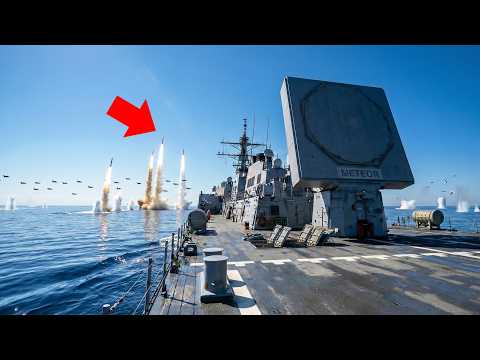
-
The lasers and microwave systems are designed to lock onto a drone’s location, guiding a focused beam or energy burst with pinpoint accuracy. These weapons can be operated in a continuous or pulse mode, allowing for rapid response to multiple threats simultaneously.
-
For example, in tests conducted by the U.S. Navy, laser systems have been successfully used to disable small UAVs at ranges of several miles. Similarly, microwave systems have shown the ability to disrupt the electronics of drones from a distance, rendering them useless.
Impact on Modern Naval Warfare:
-
The integration of these technologies could significantly alter the balance of power at sea. Unlike traditional weapons, which are designed for large-scale engagements, these new systems are well-suited to address the growing threat posed by small, agile drone swarms.
-
The ability to fire beams of light or pulses of microwave energy could provide a more cost-effective and sustainable solution for defending warships against drone swarms, allowing the Navy to neutralize threats without depleting expensive missile stocks.
Looking Ahead: Future Naval Defense:
-
As these technologies continue to develop, they could lead to a radical transformation in how naval forces operate, enabling warships to defend themselves with minimal logistical overhead. The Navy is also exploring the possibility of combining these energy weapons with other defense systems, such as anti-missile and anti-aircraft technologies, to create a multi-layered defense grid capable of handling a variety of threats.
-
Additionally, as these systems are refined, their use could extend beyond just drone defense, possibly including capabilities to target other threats, such as incoming missiles or even hostile small boats.
Conclusion:
-
The U.S. Navy’s experimentation with laser and microwave weapons marks a new frontier in modern naval defense. As drone warfare continues to evolve, these futuristic technologies could reshape how navies around the world approach defense, offering a more cost-effective and efficient solution for countering small, fast-moving threats in the skies.