Iran Declares “No Reason to Negotiate with Washington” Amid Rising Tensions
Iran Declares “No Reason to Negotiate with Washington” Amid Rising Tensions
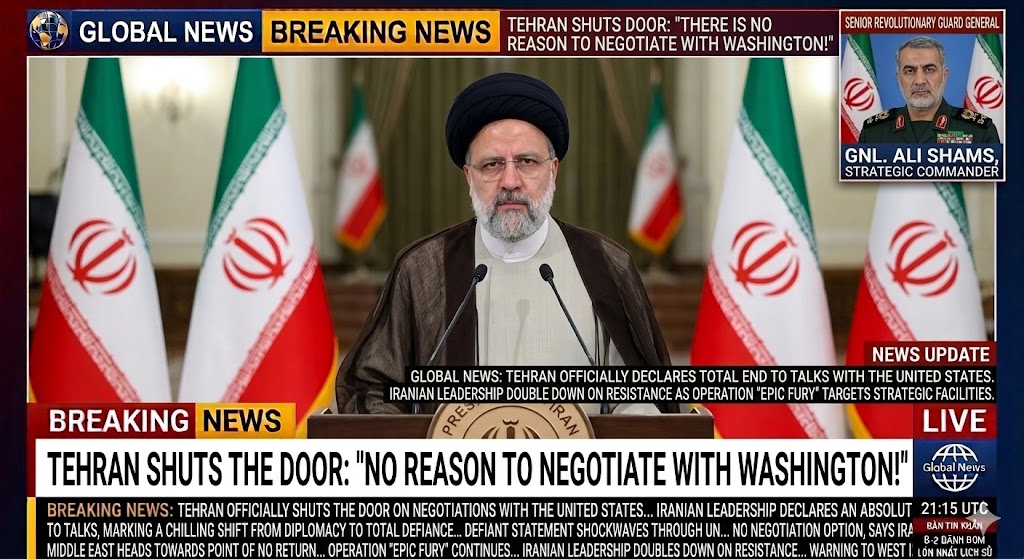
In a bold statement that could escalate already high tensions between the U.S. and Iran, Tehran declared that there is “no reason to negotiate with Washington” — signaling a significant shift in its approach to diplomacy and negotiations with the United States.
The End of Diplomatic Engagement?
The statement, issued by Iranian officials, marks a sharp break from previous periods of diplomatic engagement between the two nations, particularly under the Obama administration when the Joint Comprehensive Plan of Action (JCPOA), commonly known as the Iran nuclear deal, was signed in 2015. The agreement, which aimed to limit Iran’s nuclear activities in exchange for the lifting of economic sanctions, was abandoned by the Trump administration in 2018, leading to a sharp deterioration in relations.
Since then, Tehran has maintained that it will not engage in talks with the U.S. unless sanctions are lifted and the U.S. re-enters the nuclear deal. However, this latest declaration suggests that the Iranian leadership may be less inclined to pursue any kind of diplomatic engagement with Washington, particularly in light of continued pressures and regional developments.
Key Reasons Behind Tehran’s Decision
Several factors may have led to Tehran’s hardline stance:
-
Failure of Past Negotiations: Since the U.S. left the nuclear deal and re-imposed sanctions, Iran has repeatedly stated that it is unwilling to negotiate under duress. Tehran’s belief that the U.S. has not honored its commitments under the JCPOA makes further talks seem fruitless.
-
U.S. Military Presence and Regional Policies: Iran has expressed frustration over the U.S.’s military presence in the Persian Gulf and its backing of regional adversaries, such as Israel and Saudi Arabia. For Tehran, any negotiations could be seen as a diplomatic concession to what it views as the U.S. interference in its sphere of influence.
-
Internal Political Dynamics: Within Iran, hardline political factions have consistently pushed for a more confrontational stance with Washington, arguing that the U.S. cannot be trusted. As a result, this statement could reflect the growing influence of Iran’s hardliners, particularly as the country faces economic challenges.
-
Regional Influence: Iran has increasingly focused on expanding its influence across the Middle East, from Syria to Yemen. For Tehran, negotiating with the U.S. could be seen as undermining its strategic ambitions in the region, where it has gained significant leverage through proxy groups and alliances.
What’s Next for U.S.-Iran Relations?
The declaration marks another significant moment in the ongoing U.S.-Iran standoff, which has been characterized by alternating periods of confrontation and brief moments of diplomatic engagement. As the Biden administration continues to explore the possibility of returning to the JCPOA, the road to a meaningful agreement appears increasingly fraught.
For the U.S., this message from Tehran presents a serious challenge. While Washington has long pushed for Iran to return to the negotiating table, Tehran’s rejection of talks signals that the path forward may be much more difficult and complex.
Global Implications
The decision to shut the door on U.S.-Iran diplomacy will likely have broader consequences, not just for the two nations but for the Middle East at large. Israel and Saudi Arabia, both of whom view Iran as a regional threat, may ramp up their efforts to counter Tehran’s influence through military and diplomatic means. Meanwhile, European powers—who have supported the JCPOA—will find themselves caught between supporting the U.S. stance and maintaining ties with Iran.
The ongoing crisis in Ukraine has also shifted global attention, with Russia and China playing a more prominent role in Middle Eastern geopolitics. Iran’s alignment with both Moscow and Beijing in certain diplomatic and military affairs has further complicated the global landscape, making it harder for Western nations to secure a unified stance on Tehran.
Looking Ahead
While Tehran’s refusal to negotiate may fuel more tension in the short term, it also presents a crucial moment for the international community to reassess its approach. Whether this marks the beginning of an even more isolated and confrontational period or whether future diplomacy can break through remains to be seen.