BREAKING: Iran DEMOLISHES Tel Aviv With Huge Cluster Bomb Attack; Missiles Smash Israeli Defences.hl
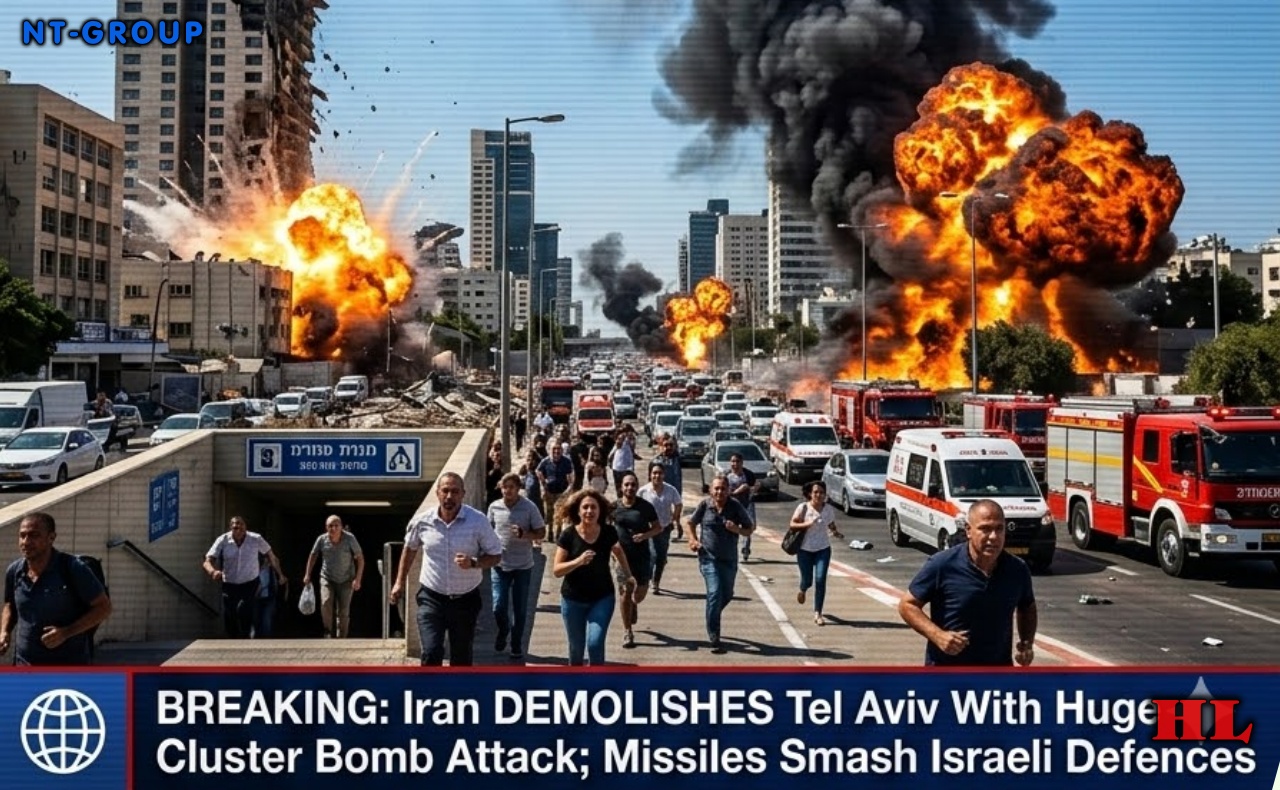
Iran has unleashed its most intense barrage yet on central Israel, firing ballistic missiles tipped with cluster warheads at Tel Aviv and nearby cities late Thursday, March 5, local time. Air‑raid sirens wailed across the Gush Dan metropolitan area as residents rushed to shelters and watched streaks of incoming fire arc over the skyline.
Video from the ground shows at least one missile warhead bursting in mid‑air, scattering dozens of explosive submunitions that peppered streets, car parks and rooftops with secondary blasts. Footage carried by Indian and regional media captures a “rain” of small detonations across wide swathes of central Israel.
Israel’s Channel 12, cited by Anadolu, reports that the cluster missiles caused “major material damage” and large fires at multiple locations in and around Tel Aviv, with fragments falling across several districts. Witnesses described burning vehicles, shattered shopfronts and apartment blocks left blackened and uninhabitable.
The Israel Defense Forces say most of the salvo was intercepted but acknowledge a limited number of missiles got through, some believed to carry cluster payloads designed to saturate Iron Dome and other layers by spreading submunitions over an area of up to eight kilometres. Defence analysts note this is at least the fifth confirmed use of cluster‑armed missiles against populated parts of Israel since the war began.
Casualty figures are still emerging. One defence assessment cites at least a dozen people wounded by shrapnel and submunitions near Tel Aviv this week, while Israeli community updates count 13 missile impact sites in residential areas nationwide since February 28.
Tehran frames the cluster strike as retaliation for devastating US‑Israeli attacks on Iranian missile bases and leadership. But human rights groups, already probing Iran’s earlier cluster attacks on the Tel Aviv area, warn that firing such weapons into dense urban neighbourhoods almost certainly amounts to a war crime—deepening fears that this conflict is crossing legal as well as military red lines.