Tomb of King Richard III Discovered Beneath a Parking Lot
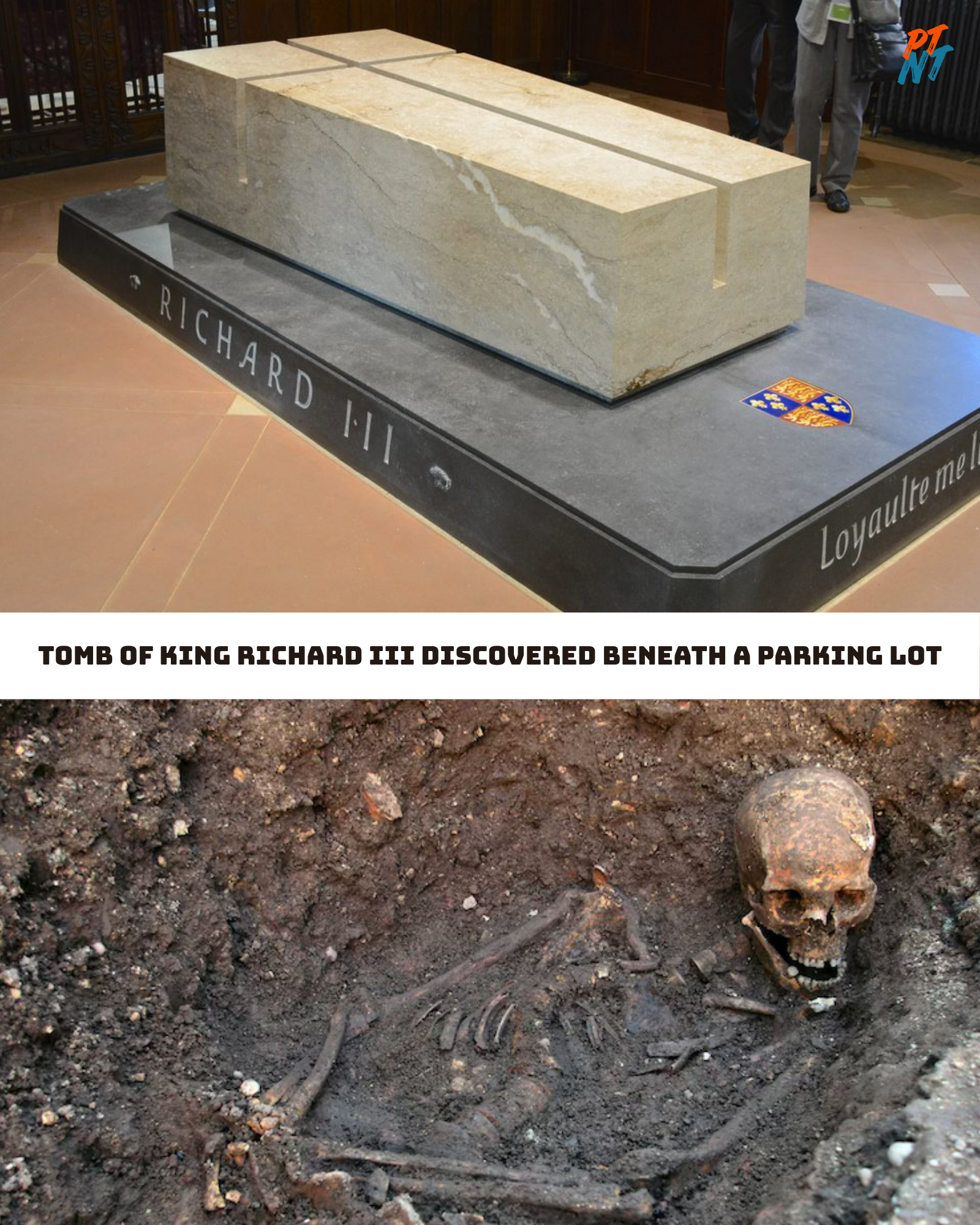
Richard III died in 1485 during the Battle of Bosworth Field, a decisive conflict that ended the Wars of the Roses and brought the Tudor dynasty to power. For centuries, historians believed his body had been buried somewhere within the medieval Greyfriars Friary, but the exact location was lost after the monastery was destroyed in the 16th century.
More than 500 years later, archaeologists from the University of Leicester began excavating a parking lot located on the suspected site of the old friary. Within days, they uncovered a skeleton showing severe battle injuries and a curved spine.

DNA testing later confirmed the astonishing truth: the remains belonged to King Richard III.
The discovery captured global attention, especially among historians and fans of William Shakespeare, whose famous play Richard III portrayed the king as a controversial and dramatic figure.
Scientific analysis revealed that Richard likely died from multiple wounds during battle, including fatal blows to the head. The skeleton also confirmed he suffered from scoliosis, which may have inspired later legends exaggerating his physical deformities.
In 2015, more than five centuries after his death, Richard III was reburied in a ceremonial tomb made of Swaledale fossil stone at Leicester Cathedral. The ceremony drew thousands of spectators and was attended by members of the British royal family.
Today, the discovery stands as one of the most extraordinary examples of how modern archaeology can solve centuries-old historical mysteries.