USS Abraham Lincoln Deployment Raises Tensions — But No Evidence Iran “Backed Down” After 8 Days
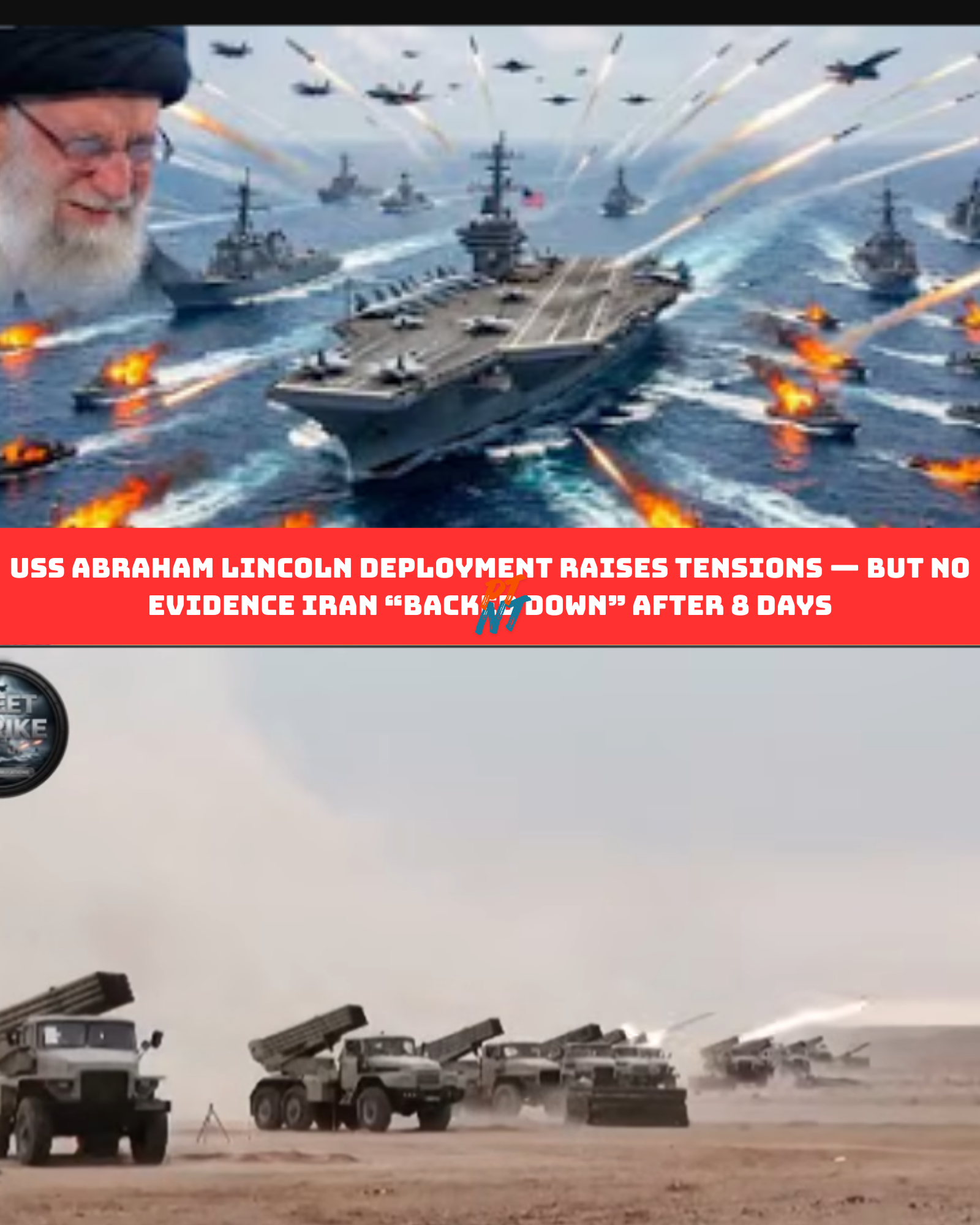
Recent claims circulating online suggest that after the United States deployed the aircraft carrier USS Abraham Lincoln to the Strait of Hormuz, Iran “backed down” within eight days. However, verified reports paint a far more complex and less dramatic picture.
The USS Abraham Lincoln, a Nimitz-class aircraft carrier, has long been a symbol of U.S. naval power in the Middle East. Its presence in strategic waterways like the Strait of Hormuz—through which roughly 20% of the world’s oil passes—often signals heightened military readiness rather than immediate conflict.
In early 2026, tensions between the U.S. and Iran escalated following multiple incidents at sea. A U.S. Navy F-35 fighter jet shot down an Iranian drone that approached the carrier in what officials described as an “aggressive” manner. Meanwhile, Iranian forces reportedly harassed commercial vessels in the same region, raising fears of wider confrontation.

Despite these developments, there is no credible evidence confirming that Iran “backed down” within a specific eight-day window. Instead, both sides appear to be engaging in a familiar pattern of military signaling combined with cautious diplomatic maneuvering. Iran has even conducted live-fire drills in the Strait of Hormuz, temporarily disrupting one of the world’s most critical shipping lanes.
Military analysts emphasize that deployments like the USS Abraham Lincoln are often intended to deter escalation rather than provoke it. While the show of force is significant, it does not necessarily lead to immediate concessions from adversaries.
As tensions persist, the situation remains volatile—but far from the simplified narrative spreading across social media.