40,000-Year-Old Permafrost May Aid Military Research
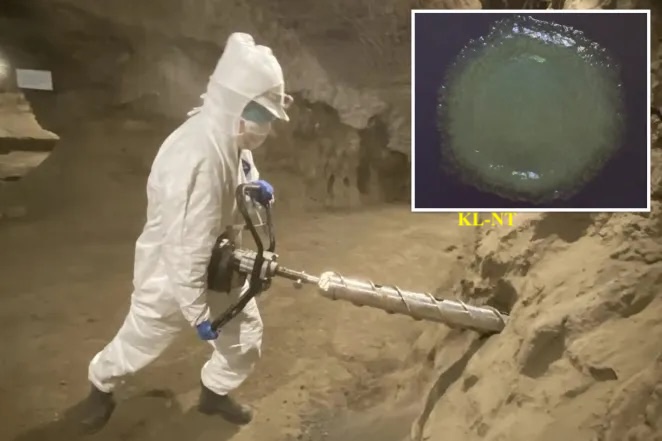
Research biologists with the U.S. Army Corps of Engineers discovered 26 new microbial species that could aid in developing new technologies that help the U.S. military survive and thrive in extreme cold regions.
The U.S. Army Corps of Engineers said the microbes were found in permafrost estimated to be about 40,000 years old, cored from the U.S. Army Engineer Research and Development Center’s Cold Regions Research and Engineering Laboratory (CRREL) in Fox, Alaska.
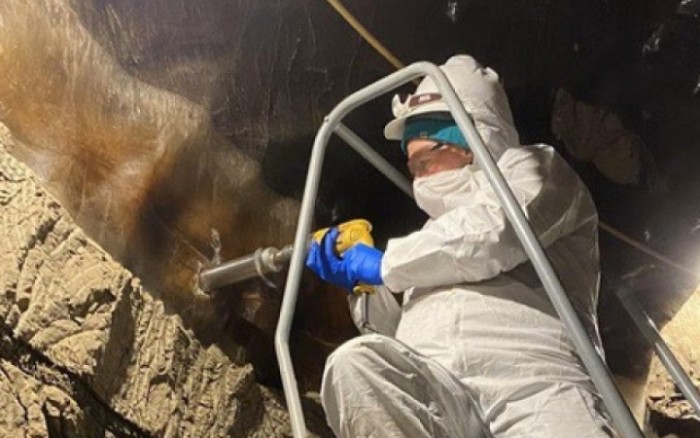
The microorganisms were then revived or “awoken” in CRREL’s soil microbiology laboratory in Hanover, New Hampshire.
“We are discovering new bacteria that have never been discovered before,” said Dr. Robyn Barbato, senior research microbiologist and leader of CRREL’s soil microbiology team. “Do you remember being enchanted by the animals that Jack Hanna would bring on late night TV? It’s sort of like that. There are these organisms that we didn’t even know existed that have been locked in frozen ice or permafrost.”
These microbes will take part in a project called Ice Control for Cold Environments (ICE) for the Defense Advanced Research Projects Agency (DARPA).
The Army Corps of Engineers said the project aims to identify what allows the microbes to survive being frozen and develop products that mimic those characteristics.
“These microbes have evolved to remain viable in sub-zero temperatures,” said Barbato. “We want to learn how they do it so that we can develop new biotechnologies that help the U.S. military operate in cold regions.”

Examples of potential technologies, Barbato said, could be a skin cream that protects troops from frostbite or a spray-on coating that prevents ice buildup from negatively impacting the performance of military vehicles and equipment.
The Army Corps of Engineers said the microbes will be put in CRREL’s Innovative, Collaborative, Exploratory Cold Regions Organism Library for Discovery in Biotechnology (ICE COLD).
ICE COLD is a collection of live microorganisms originating from soil, snow, and ice that have been isolated from the Arctic, Antarctica, and from high altitude sites.


Fifty-two percent of the bacteria discovered in the CRREL permafrost tunnel in Alaska are new species, the Army Corps of Engineers said.