Smoke Billows After U.S. Embassy Building in Kuwait Targeted
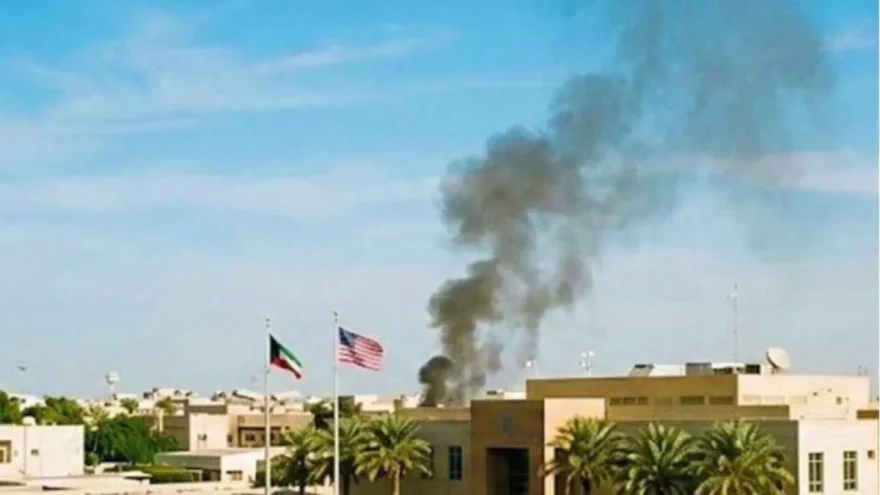
Smoke Billows After U.S. Embassy Building in Kuwait Targeted
Kuwait City, Kuwait / Washington, D.C. — Thick smoke is billowing from the site of the U.S. Embassy in Kuwait after it was reportedly targeted in a missile strike earlier today. The attack has sent shockwaves through the region, raising tensions further between the United States and Iran-backed factions in the Middle East.
Kuwaiti officials have confirmed the attack, which occurred in the heart of the capital, Kuwait City. Several explosions were heard, followed by visible plumes of smoke rising from the embassy building. The U.S. Embassy in Kuwait is one of the most fortified American diplomatic compounds in the region, and it is currently unclear how much damage has been done or whether any personnel have been injured.
Details of the Attack
The missile, which is believed to have been launched from Iranian-backed militias in Iraq, struck the U.S. Embassy’s outer perimeter, causing significant structural damage. Local emergency responders and security forces are on the scene, working to contain the fires and evacuate the embassy’s staff if necessary.
The strike is suspected to be part of a larger campaign targeting American diplomatic and military assets across the region. While it is unclear whether the missile was aimed specifically at U.S. personnel or infrastructure, the strike follows a recent series of attacks on U.S. interests, including military bases in Iraq and Bahrain, attributed to Iran and its proxies.
U.S. Military and Diplomatic Response
The U.S. government has yet to confirm casualties, but sources within the embassy have indicated that no American diplomats were inside the building at the time of the strike. U.S. officials have condemned the attack, describing it as an “act of terrorism” and “a direct provocation.”
The U.S. Department of State issued an emergency statement, pledging to hold those responsible for the attack accountable. “The United States will take all necessary steps to ensure the safety and security of its personnel and diplomatic missions,” the statement read.
Additionally, U.S. forces stationed in the region, including military personnel in Kuwait and Iraq, have been put on high alert, and security measures around all American diplomatic and military facilities in the region have been strengthened.
Iranian Proxy Involvement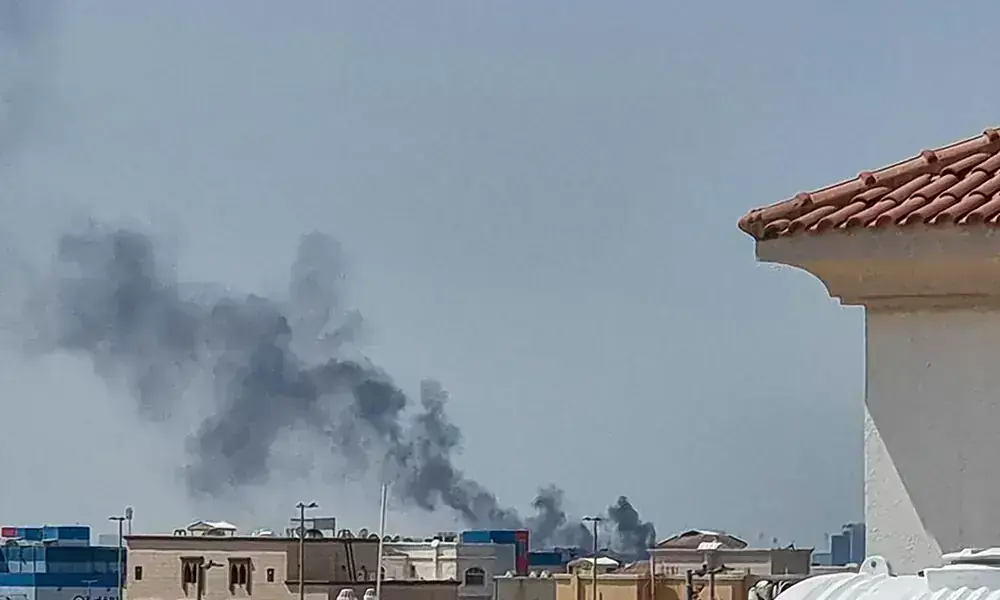
While no group has officially claimed responsibility for the attack, analysts suggest that Iranian-backed militias, including groups such as Kata’ib Hezbollah and Asa’ib Ahl al-Haq, may be behind the strike. These groups have been responsible for similar attacks on U.S. interests in Iraq, and their proximity to Kuwait makes them prime suspects in the operation.
Iranian-backed militias have previously targeted U.S. embassies in Baghdad and other facilities across the region, and this latest strike is seen as part of a broader strategy to undermine U.S. influence in the Middle East, particularly as tensions continue to rise over Iranian nuclear activities and U.S. military presence.
International Reactions
The attack on the U.S. Embassy in Kuwait has drawn swift condemnation from both the United States and its allies. NATO, the European Union, and several Gulf Cooperation Council (GCC) states have issued statements calling for an immediate halt to such attacks and calling for diplomatic solutions to de-escalate tensions.
The United Nations Security Council is expected to hold an emergency session to address the attack and discuss measures to protect diplomatic missions across the region. A UN spokesperson urged both sides to exercise restraint, warning that attacks on embassies could escalate the conflict further.
“The world cannot afford to see this situation spiral out of control,” said a UN official. “Diplomacy must prevail, and all parties must prioritize the safety of civilians and diplomatic personnel.”
Looking Ahead
As the situation unfolds, both the U.S. and Iran are bracing for potential further escalation. The attack on the U.S. Embassy in Kuwait marks a significant development in the ongoing conflict, and there are growing fears that it may lead to further strikes on American interests in the region.
While U.S. forces have responded to previous attacks with airstrikes on militia positions, the diplomatic fallout from this latest strike could have broader consequences for U.S.-Iran relations and regional stability. With the risk of a larger military confrontation rising, the international community will be watching closely in the coming days to see how both sides respond.