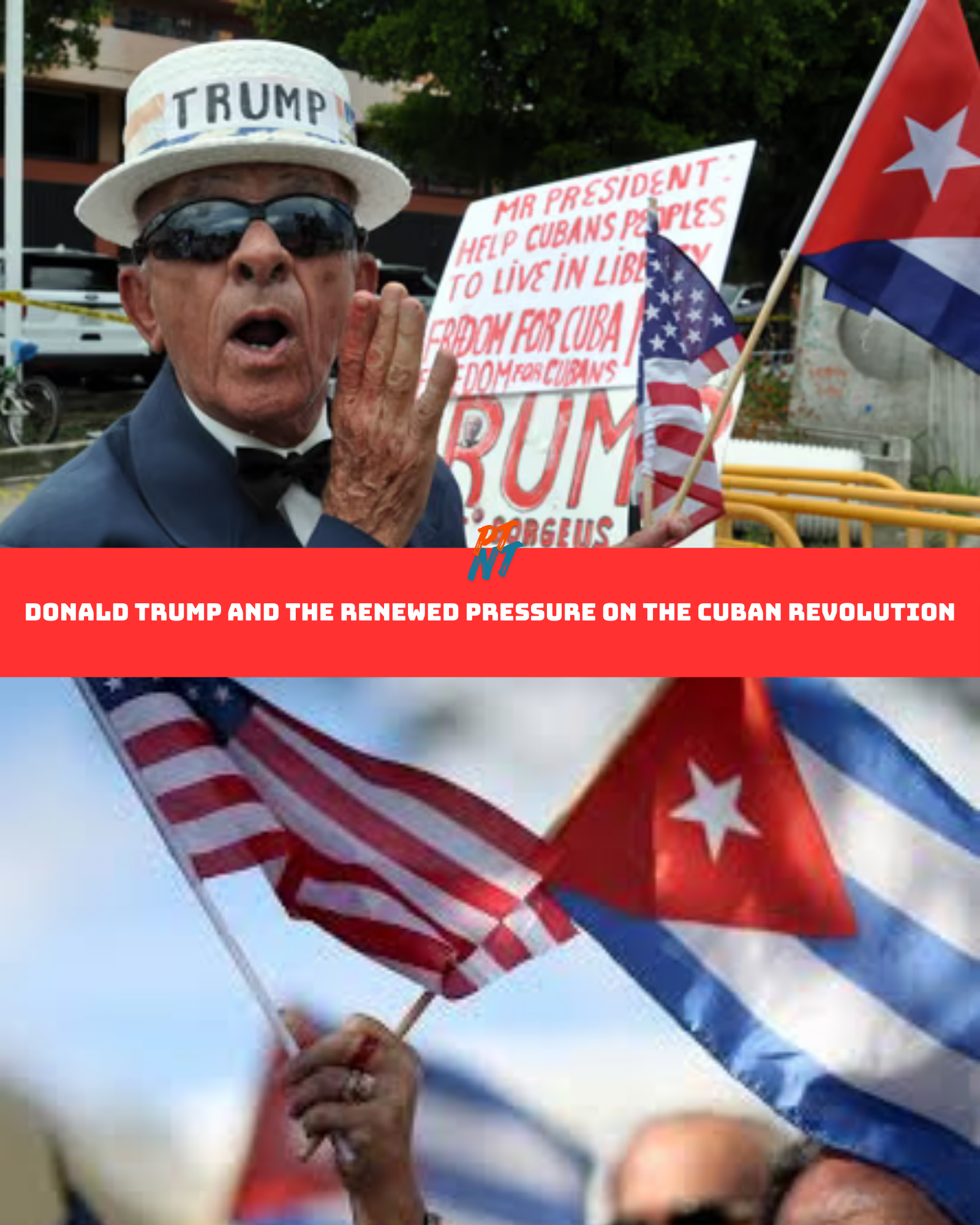
Donald Trump and the renewed pressure on the Cuban Revolution
The claim that Trump has posed the “greatest threat” to the Cuban Revolution stems from several key factors tied to his administration’s hardline policies toward Cuba:
1. Tightening economic sanctions
The Trump administration reversed many of the easing measures introduced under Barack Obama. These included:
-
Restricting travel and remittances from the U.S. to Cuba
-
Expanding sanctions on Cuban businesses and financial institutions
👉 As a result, Cuba’s already fragile economy faced even greater strain, weakening the social foundation of the revolutionary system.
2. Increased international isolation
Under Trump, the U.S. sought to pressure other countries to limit cooperation with Cuba, especially in:
-
Medical missions (Cuba sending doctors abroad)
-
Foreign investment
This significantly reduced a key source of foreign currency for Havana.
3. Linking Cuba to U.S. adversaries
The Trump administration frequently associated Cuba with countries such as:
-
Venezuela
-
Iran
This framing justified a tougher security stance, treating Cuba as part of a broader bloc of U.S. rivals.
4. Impact on internal stability
Prolonged economic hardship led to:
-
Shortages of food and medicine
-
Rare public protests within Cuba
👉 These developments created serious challenges for the political system established after 1959.
Conclusion
Trump’s policies did not directly overthrow the Cuban Revolution, but they imposed some of the strongest economic and diplomatic pressures in decades. This has fueled arguments that Cuba’s revolutionary system is facing one of its most significant tests in modern history.