Iran Confirms Supreme Leader Ali Khamenei Dead After US–Israeli Attacks.hl
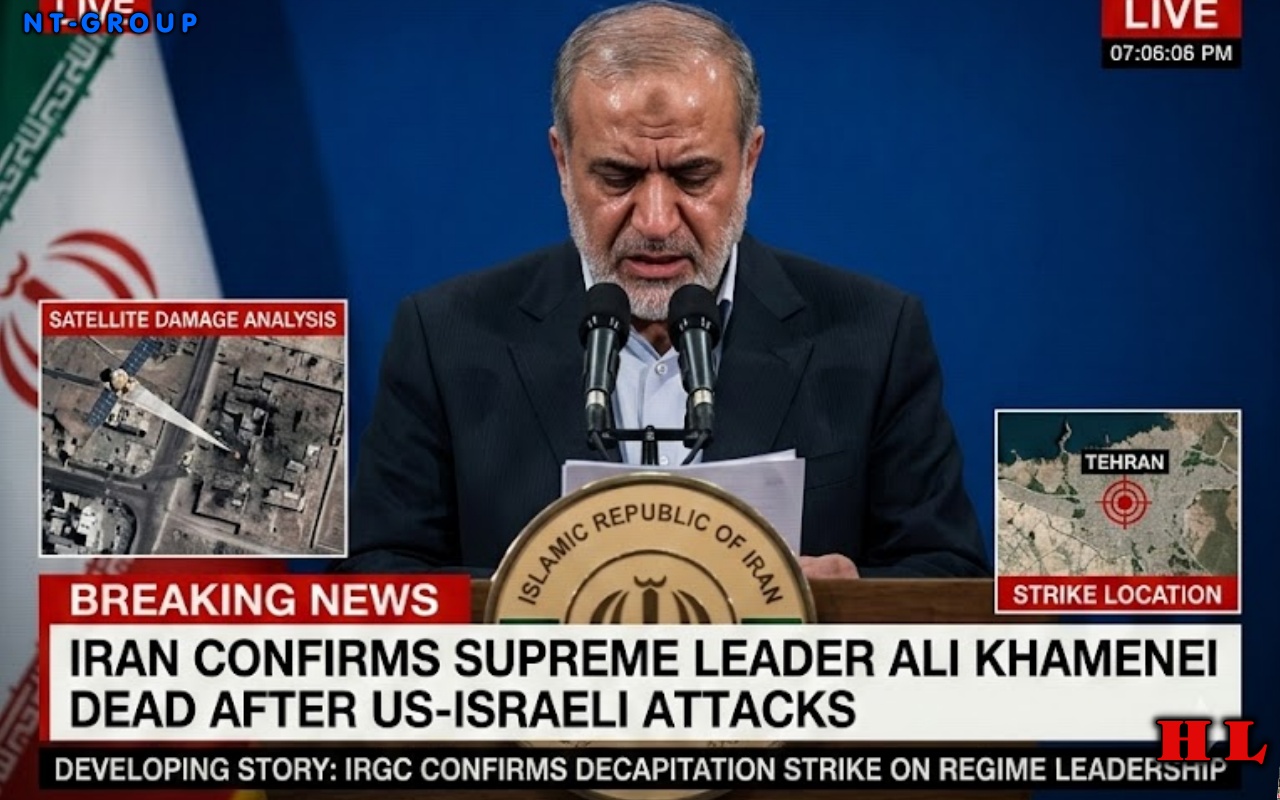
Tehran — Iran has officially confirmed the death of Supreme Leader Ayatollah Ali Khamenei following a wave of coordinated U.S.–Israeli airstrikes, plunging the Islamic Republic into its deepest crisis since the 1979 revolution. State television interrupted regular programming with somber recitations from the Qur’an before announcing that Khamenei had “attained martyrdom” in what it called a “cowardly act of aggression.”
Within minutes, millions poured into the streets of Tehran, Mashhad and Qom, chanting “Death to America” and vowing revenge. Black banners now hang from mosques and government buildings, while the Revolutionary Guard has declared a 40‑day period of “revolutionary mourning and resistance.” A powerful emergency council of senior clerics and generals has been formed to manage the transition, but infighting over who should succeed Khamenei is already rumored behind closed doors.
Washington and Tel Aviv have neither confirmed nor denied direct responsibility for the strike that killed the Supreme Leader, insisting only that “offensive capabilities” were used to neutralize an imminent Iranian threat. U.S. officials frame the operation as a grim necessity, while Israeli leaders hail it as a “historic blow” against what they describe as the engine of regional terror.
World reaction is sharply divided. Russia, China and several Muslim‑majority nations have condemned the killing as an illegal assassination that shreds international law, demanding an emergency UN Security Council session. Western capitals, though uneasy, are quietly signaling support for the operation while urging Tehran to “exercise restraint.”
Analysts warn that Khamenei’s death is more than a single strike: it is a geopolitical earthquake. With succession uncertain, missiles already flying and emotions at boiling point, the question is no longer whether the Middle East will change — but whether the world can contain the fire it has lit.