Israel Claims to Have Attacked Iran in Preemptive Strike: Escalating Tensions in the Middle East
Israel Claims to Have Attacked Iran in Preemptive Strike: Escalating Tensions in the Middle East
Tehran, Iran – Israel has officially claimed responsibility for a military attack on Iran, marking a major escalation in the ongoing conflict between the two nations. According to the Israeli Defense Forces (IDF), the airstrikes were part of a preemptive operation aimed at neutralizing Iran’s missile and nuclear capabilities.
The attacks come amid growing concerns about Iran’s missile programs and the advancement of its nuclear technologies, both of which have long been perceived as threats to Israel’s national security.
Details of the Attack 
While specific details remain sparse, Israeli military sources confirmed that the operation targeted critical military infrastructure in Tehran, including missile sites and nuclear research facilities. The strikes, carried out by Israeli fighter jets, reportedly caused significant damage to facilities that are believed to be integral to Iran’s missile and nuclear development programs. Smoke was seen rising from the affected areas in southern Tehran, where the majority of these facilities are located.
The attack comes after months of escalating tension, with Israel previously warning that it would act to prevent Iran from acquiring nuclear weapons or developing technologies that could threaten Israel’s security.
Israeli Government’s Statement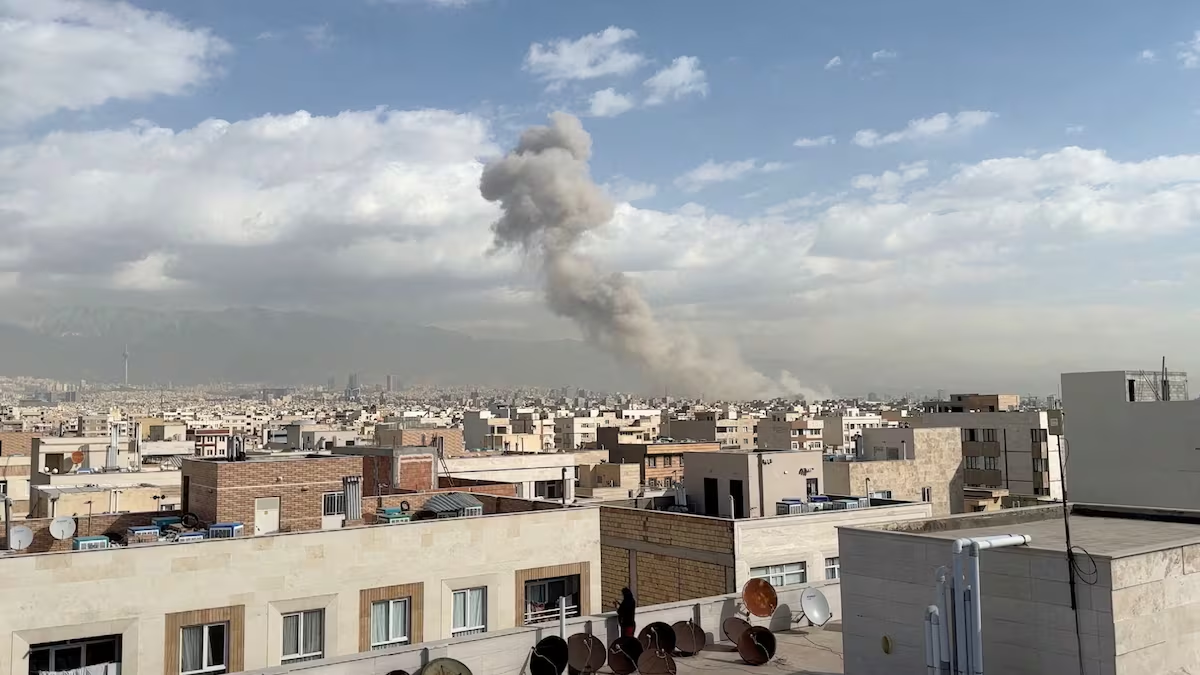
Israeli officials justified the airstrike as a defensive measure against Iran’s growing missile capabilities. Israel has long maintained that Iran’s nuclear program poses an existential threat to the Jewish state, particularly given Iran’s support for proxy groups in Syria, Lebanon (Hezbollah), and Iraq. Israeli Prime Minister Benjamin Netanyahu has repeatedly stated that Iran’s nuclear ambitions cannot be allowed to advance, and that Israel reserves the right to take military action if diplomatic efforts fail.
“The situation is becoming more dire, and Israel cannot afford to wait while Iran accelerates its nuclear and missile programs,” Netanyahu stated. “This attack was necessary to ensure the security of our citizens and our future.”
Iran’s Likely Response
In the wake of the Israeli airstrikes, Iran has condemned the attacks as an act of aggression and violation of its sovereignty. Iranian officials have vowed to retaliate and warned that Israel’s actions would not go unanswered.
Tehran has already begun mobilizing its missile defense systems, and there are widespread expectations that Iran will retaliate through proxy groups operating in Syria, Lebanon, and Iraq. There is also the possibility of direct missile strikes targeting Israel or U.S. military bases in the region.
Many experts believe that Iran’s response will be measured, aimed at signaling its military capabilities without escalating into full-scale warfare. However, the potential for further military escalation remains high.
U.S. Role and Regional Reactions
The United States, which has historically supported Israel, is likely to endorse the strike, given its shared concerns about Iran’s nuclear and missile programs. The U.S. Department of Defense has already issued statements in support of Israel’s right to defend itself, but has called for restraint from both sides to avoid further escalation.
The global community has expressed concerns over the potential for broader conflict in the Middle East. European Union leaders have urged both Israel and Iran to avoid further violence and seek diplomatic solutions. Meanwhile, countries like Russia and China have raised alarms about the impact of the Israeli strikes on the stability of the region and the broader global energy market.
The Road Ahead: Will Diplomacy Prevail?
As tensions rise, the world watches closely to see whether Israel’s strike will lead to more aggressive actions or spark renewed diplomatic efforts. Many analysts believe that this attack could push Iran closer to developing nuclear weapons, which could, in turn, spark a regional arms race in the Middle East.
For now, the situation remains fluid, with both Israel and Iran preparing for what could be the next phase in this high-stakes geopolitical conflict.