The Heart of Mars: Seismology Reveals the Red Planet’s Core
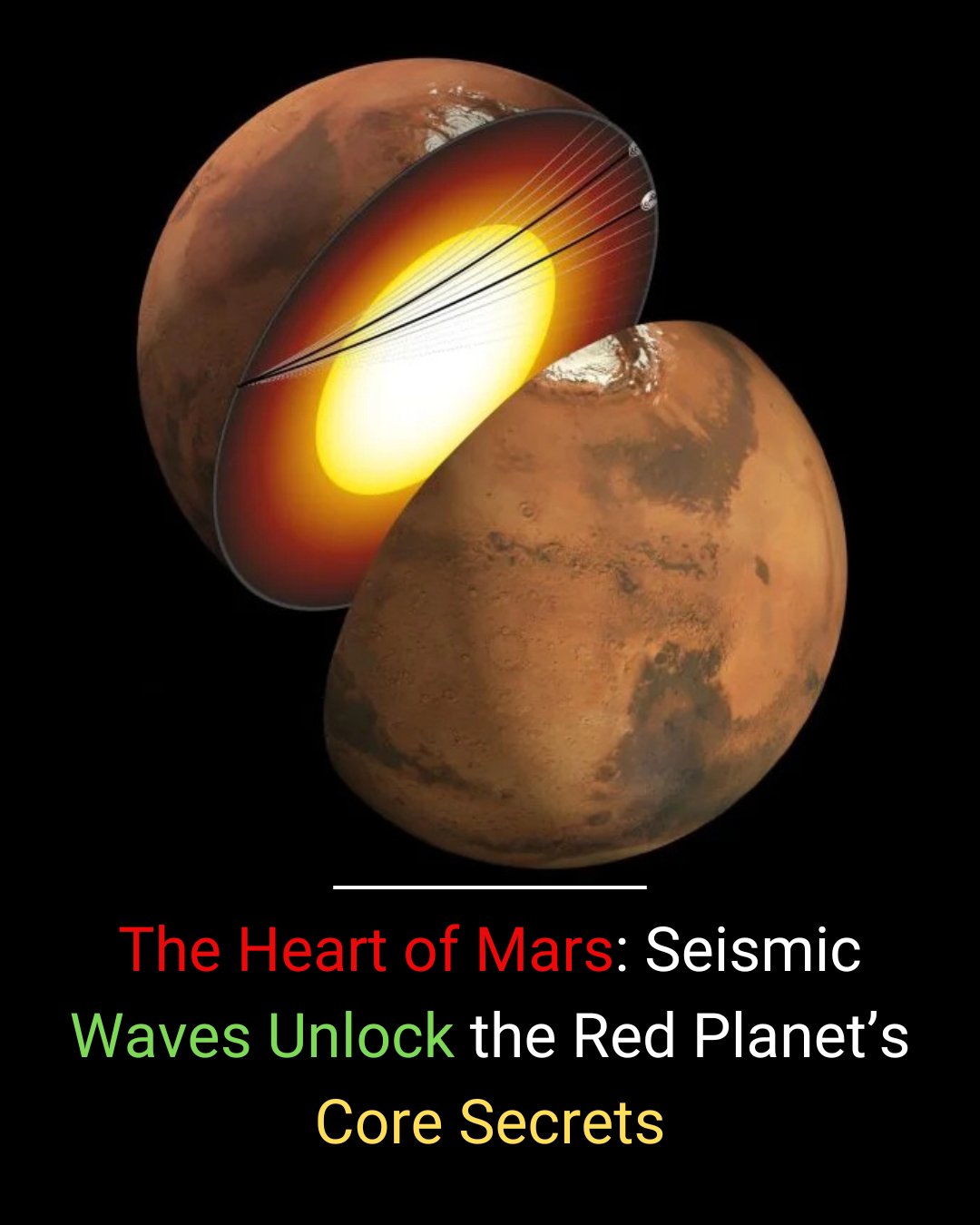
Mars is no longer just a cold, dead rock in the sky; it is a world with a complex, hidden interior. Data from NASA’s InSight lander has allowed scientists to “listen” to the planet’s heartbeat through seismic waves. By analyzing “Marsquakes,” researchers have finally mapped the planet’s internal structure, revealing a surprisingly large, liquid iron core and a unique mantle composition that differs significantly from Earth’s.

The visualization of the Martian core shows seismic waves bouncing through the planet’s center, providing a “sonogram” of its guts. This discovery is crucial because the state of a planet’s core determines its magnetic field. Since Mars lacks a strong magnetic field today, its atmosphere was stripped away by solar winds billions of years ago. Understanding why the core “died” is key to understanding if Mars was ever habitable.
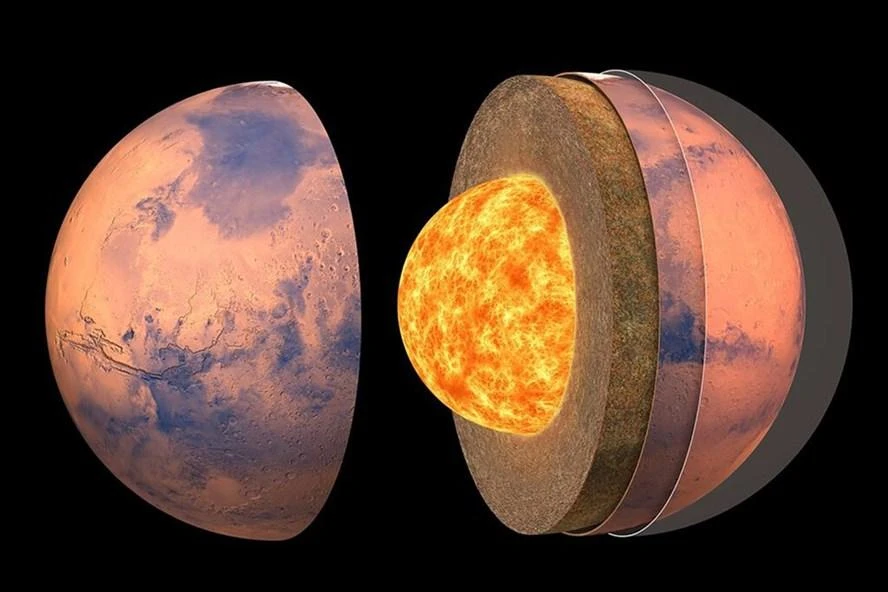
These core secrets are also vital for future human colonization. Knowing the thickness of the crust and the frequency of seismic activity helps engineers design safer habitats for the first Martian pioneers. The “Heart of Mars” research suggests that while the planet is geologically quieter than Earth, it still possesses enough internal heat to produce occasional volcanic activity or tectonic shifts.
As we look toward the 2030s and 2040s, the Red Planet continues to be the primary focus of international space agencies. Every seismic wave recorded is a step closer to solving the mystery of our neighbor’s past. The “Core Secrets” of Mars aren’t just about rocks and metal; they are the blueprints of a world that might one day become a second home for humanity.