The Dust of a Decade: Why the Chalkboard Generation Built a Foundation That Lasts
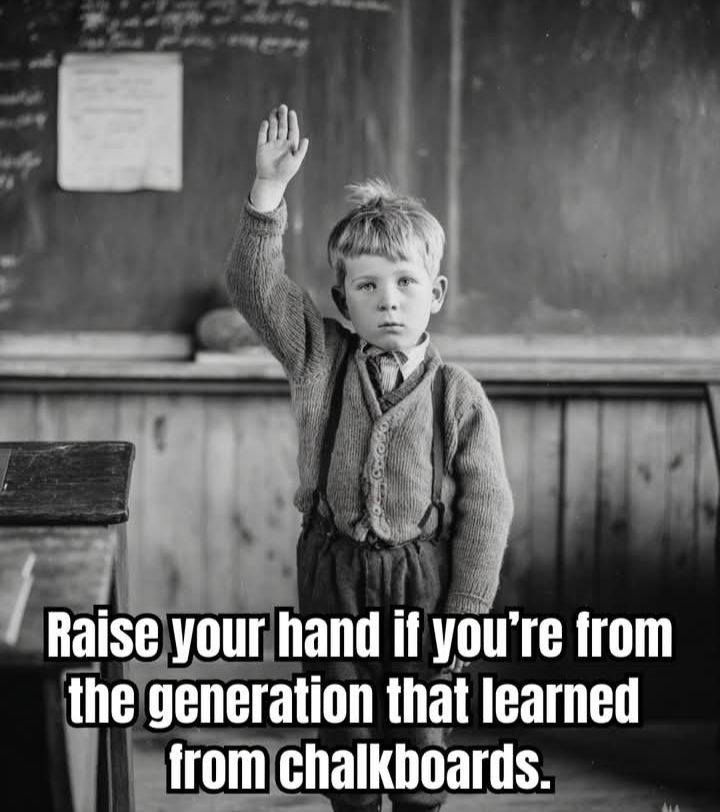
Long before the glow of iPads and the hum of high-speed Wi-Fi, there was the scratch of limestone on slate and the rhythmic clapping of erasers. To some, it’s a relic of the past; to those who lived it, it was the forge of a lifetime.
The Tactile Classroom
Raise your hand if you remember the distinct scent of a classroom in autumn—a mix of floor wax, old paper, and that fine, white powder that seemed to settle on everything. This was the era of the chalkboard. There were no smart screens to swipe, no “Undo” buttons to click, and no AI to summarize the reading.
If you made a mistake, you saw it. You felt it. And then, you wiped it away with a felt eraser, leaving a ghostly “cloud” of the previous lesson behind. It was a physical, tactile way of learning that required patience, focus, and a bit of “dusty hand” grit.
Lessons That Stuck
In today’s digital world, information is often seen as disposable—a tab to be closed or a notification to be swiped away. But the chalkboard generation learned differently.
-
The Wooden Desk: It wasn’t just furniture; it was your station. It held your inkwell (for some) or your graphite pencils, and the scratches on the surface told the stories of the students who sat there before you.
-
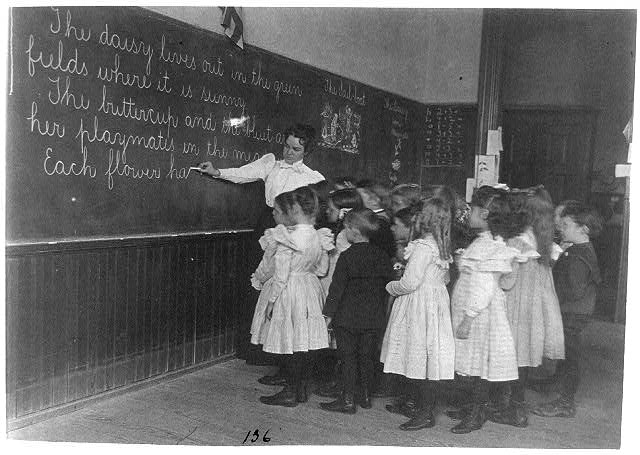
The Hand-Eye Connection: Writing out long-division or cursive letters on a vertical board in front of the class wasn’t just an exercise; it was a performance of courage. It taught us how to stand tall, even when we weren’t sure of the answer.
-
Solid Foundations: Without the crutch of a search engine, we had to internalize knowledge. We memorized poems, mastered times tables, and learned the geography of the world by heart. Those lessons didn’t just pass through our screens—they became part of our “hard drive.”

A Different Kind of Connection
The lack of technology didn’t mean a lack of connection; in fact, it often meant the opposite. Without the distraction of personal devices, the focus was entirely on the teacher and the peer. We looked up, not down. We listened to the cadence of the teacher’s voice and the scrape of the chalk, a soundtrack to a simpler, more grounded era of education.
The Legacy of the Eraser
As we look at the sleek, glass-filled classrooms of today, there is much to admire about the progress we’ve made. Yet, for those of us who grew up with dusty fingers, there’s a quiet pride in knowing we were built on a different kind of foundation.
We learned that progress is slow, that mistakes are part of the process, and that some of the best lessons in life are written in chalk—temporary on the board, but permanent in the mind.