Jorge the Loggerhead Sea Turtle: A Remarkable Return to the Open Ocean
Jorge the Loggerhead Sea Turtle: A Remarkable Return to the Open Ocean
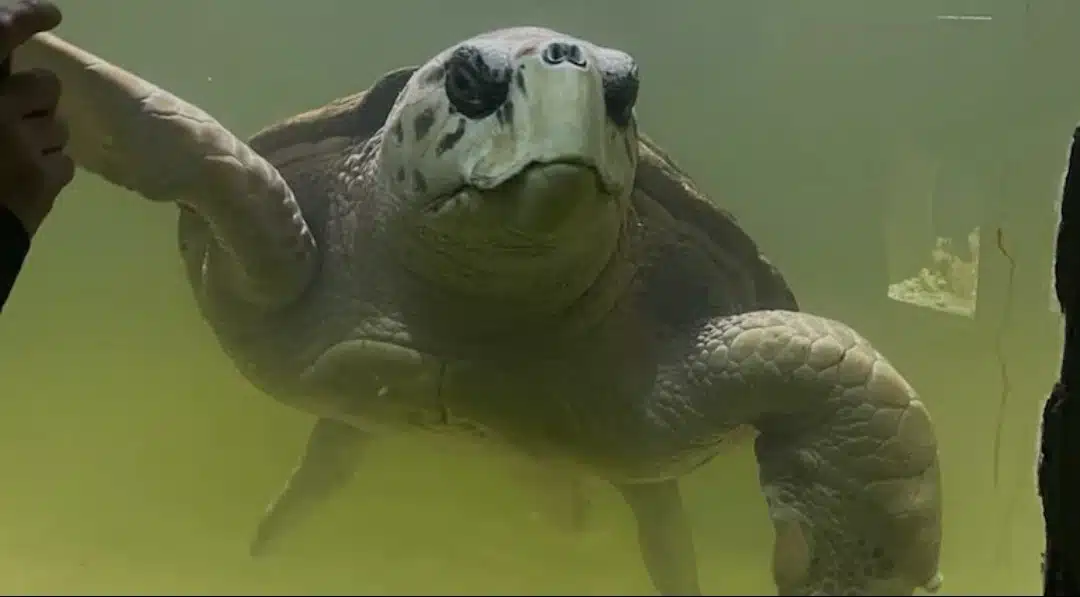
In an inspiring tale of resilience and recovery, Jorge, a 60-year-old loggerhead sea turtle, has made a remarkable return to the open ocean after spending more than four decades in human care. His journey is a testament to the power of rehabilitation and the impact of human compassion on the natural world.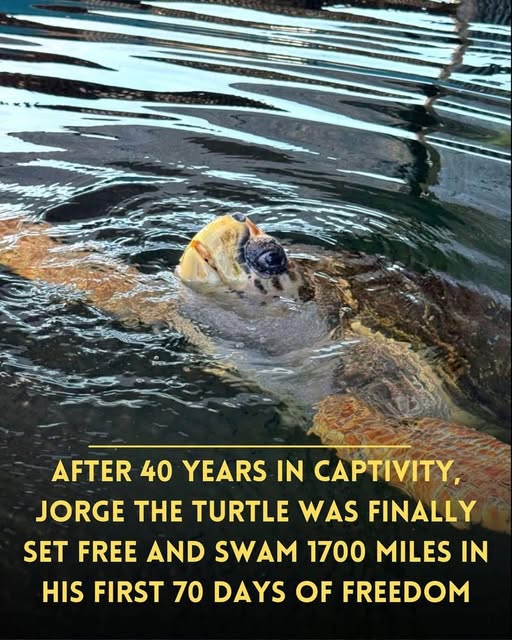
Jorge’s story began in 1984, when he was found entangled in fishing nets off the coast of Argentina. Rescued by fishermen, he was placed in an aquarium in Mendoza, far from his natural habitat. For years, Jorge became a familiar attraction, living in a small tank where he was cared for, but confined to a life far removed from the sea he had once called home. His life in captivity was spent in isolation from the very elements that defined his species — the ocean currents, saltwater, and the complex ecosystem that loggerhead sea turtles thrive in.
However, in 2021, a passionate campaign was launched to change his fate. Researchers, animal rights advocates, and over 60,000 supporters rallied for Jorge’s release. The call for his freedom grew louder, sparking a collective effort that involved marine biologists, attorneys, and environmental groups working together to secure his rehabilitation and eventual release back into the wild.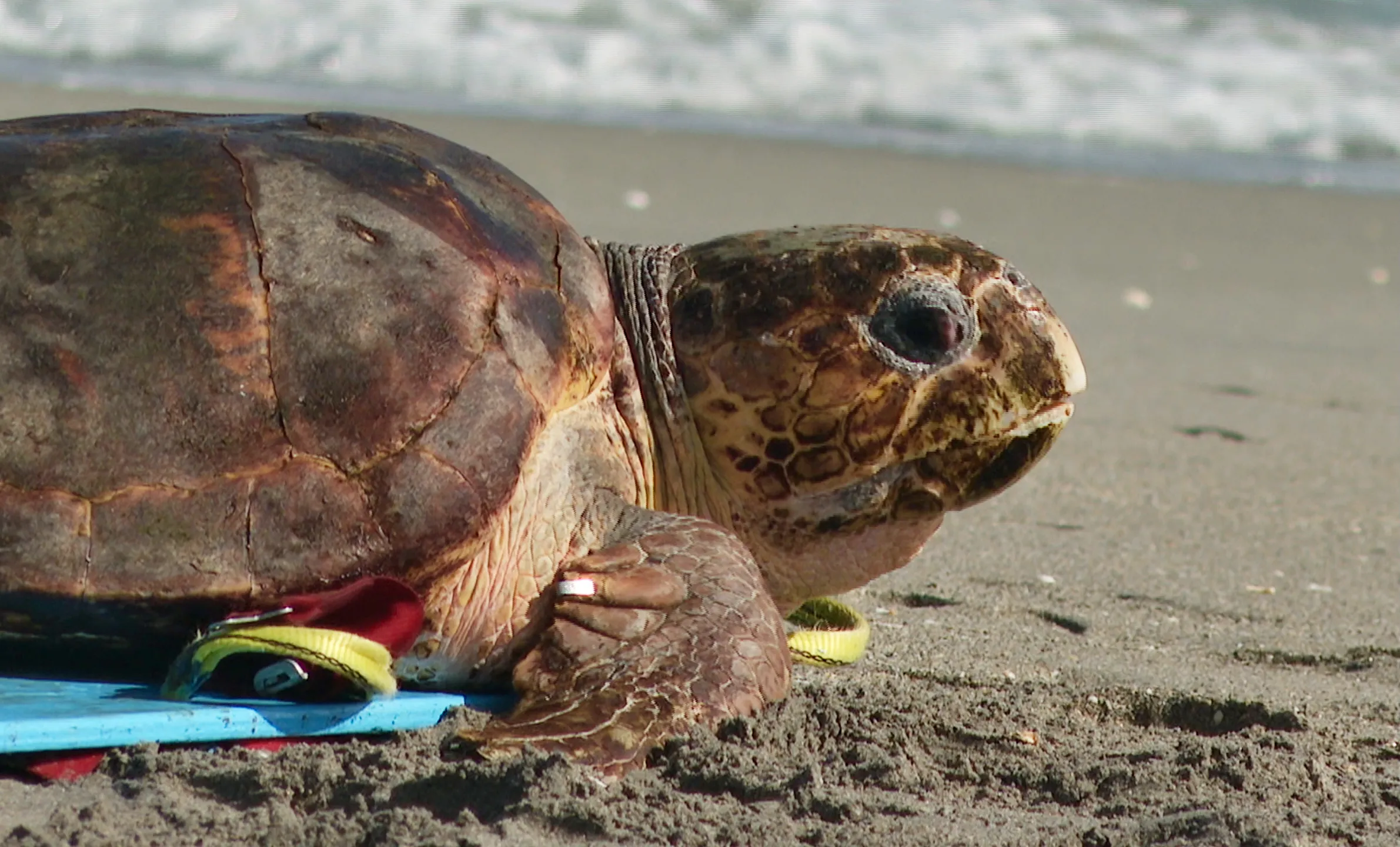
A carefully designed three-year rehabilitation program was put in place. This intensive program was tailored to help Jorge rebuild his natural instincts and survival skills. Marine biologists gradually reintroduced him to the saltwater environment, offering live prey and simulated ocean currents to help Jorge regain his natural hunting and survival abilities. This rehabilitation was slow and cautious, with every step focused on ensuring that he would be able to thrive once released back into the wild.
In 2025, after years of careful preparation, Jorge finally made his return to the Atlantic Ocean, fitted with a satellite tag to track his journey. Within weeks, he had traveled over 1,700 miles north toward Brazil, proving that even after spending most of his life in captivity, Jorge retained the instincts needed to survive in the wild.
Now swimming off the coast of Santa Catarina, Jorge’s return offers hope and proof that, despite the devastating impact of captivity, wild animals can still reclaim their natural abilities with the right support and rehabilitation. His story has sparked a broader conversation about the ethics of animal captivity and the importance of creating pathways for injured or displaced animals to return to the wild.
Jorge’s journey is not just about one turtle; it is a symbol of hope for all wildlife conservation efforts. It highlights the resilience of nature and the possibility of redemption, even for those who have been separated from their natural environment for much of their lives.
This extraordinary return to the ocean proves that with compassion, care, and dedication, even the most unlikely survivors can regain their place in the wild. Jorge’s story reminds us of the potential for recovery — not just for him, but for all creatures in need of a second chance.