Spinosaurus mirabilis: The “Miraculous” Sahara Giant with a Towering Unicorn Horn Crest!lh
Spinosaurus mirabilis: The “Miraculous” Sahara Giant with a Towering Unicorn Horn Crest!
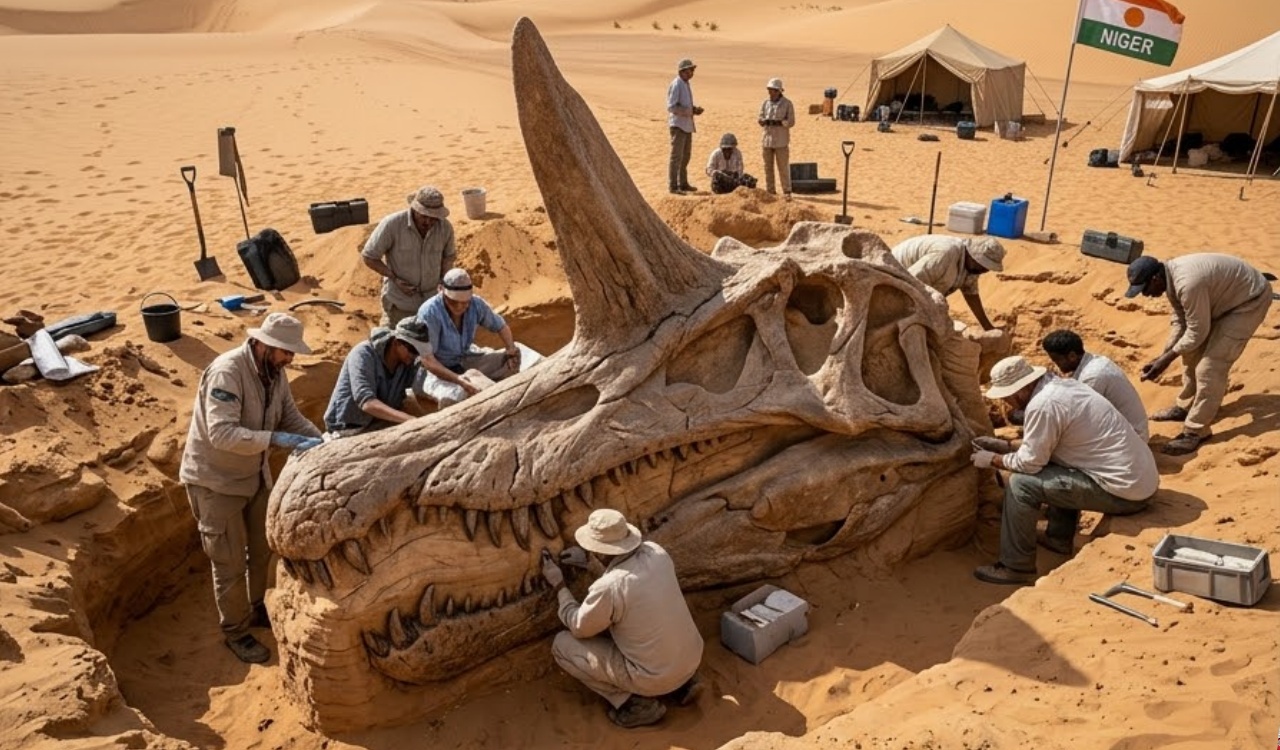
Paleontologists have announced Spinosaurus mirabilis (“the miraculous”), a spectacular new spinosaurid species from the heart of the Sahara in Niger, distinguished by an enormous, forward-pointing unicorn-like cranial horn never before seen in any dinosaur.
Excavated from the remote Jenguebi locality in the Cenomanian Farak Formation (~95 million years ago), the near-complete skull and partial skeleton reveal a 13–15-meter-long predator crowned with a single, 1.2-meter-tall, blade-like horn projecting from the snout. Unlike the sail-backed S. aegyptiacus, this species combined its signature sail with a dramatic unicorn crest, likely vividly colored for display or species recognition.
The fossils were recovered from ancient river-channel deposits hundreds of kilometers inland from the Tethys Sea, confirming a semi-aquatic lifestyle in lush riparian wetlands. Its crocodile-like snout, interlocking teeth, and powerful limbs suggest it was an ambush hunter of fish and terrestrial prey along forested riverbanks.
Lead researcher Paul Sereno (University of Chicago) states: “This unicorn horn is unprecedented. It shows spinosaurids were experimenting with extreme cranial ornamentation, turning the Sahara’s Cretaceous rivers into a stage for bizarre displays.” The find, part of expeditions yielding 55 tons of fossils, highlights how the “green Sahara” of the mid-Cretaceous supported giant, specialized predators.
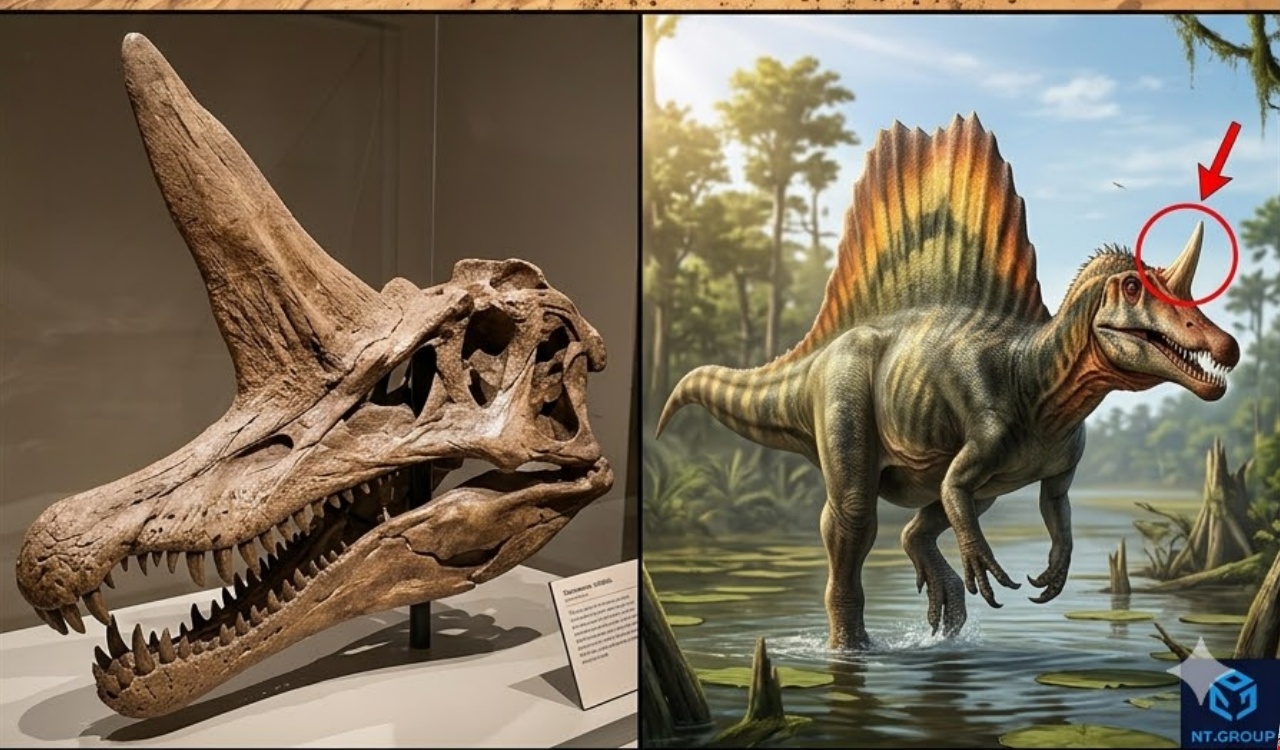
CT scans reveal the horn was lightweight yet structurally reinforced, possibly used in combat or visual signaling. The discovery adds a dramatic new chapter to spinosaurid evolution and underscores Niger’s status as a treasure trove of Cretaceous giants. As further biomechanical studies unfold, S. mirabilis promises to illuminate how these “miraculous” predators dominated their lost world.