Russia’s Groundbreaking mRNA-Based Cancer Vaccine: A Game Changer in Oncology
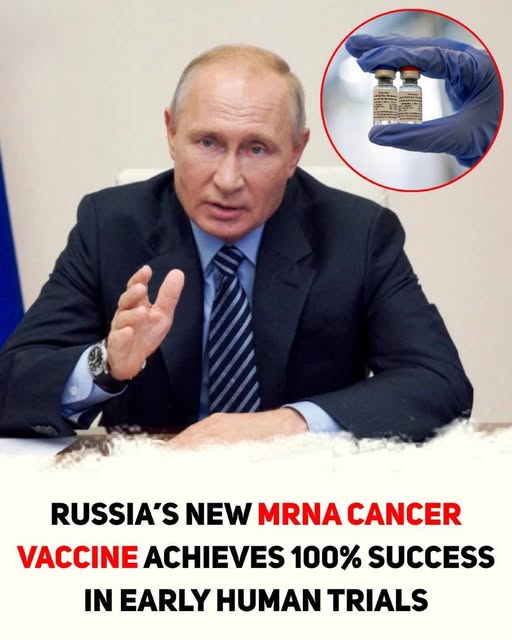
Russia’s Groundbreaking mRNA-Based Cancer Vaccine: A Game Changer in Oncology
In a world where cancer remains one of the most formidable challenges in modern medicine, Russia has just taken a bold step toward revolutionizing the way we fight this deadly disease. An experimental mRNA-based cancer vaccine, currently undergoing human trials, has shown promising results, igniting hope for millions of patients worldwide.
A New Hope for Cancer Patients
Unlike traditional chemotherapy, which indiscriminately attacks healthy and cancerous cells alike, the new mRNA vaccine promises a much more personalized and targeted approach. By training the immune system to recognize and fight each patient’s unique cancer cells, this vaccine offers a level of precision previously unimaginable in cancer treatment.
The vaccine works by using messenger RNA (mRNA) to encode a small fragment of the cancer cells’ unique genetic material. This enables the immune system to identify and destroy the cancer cells without harming healthy tissues.
Promising Early Results
Initial trials have shown that the vaccine is not only safe but also capable of shrinking tumors in patients, with no serious side effects reported. This marks a significant milestone, especially when compared to the often grueling side effects of traditional cancer treatments like chemotherapy and radiation.
In the early stages, patients involved in the trial have experienced improvements in their condition, some even showing a reduction in tumor size. While these results are still preliminary, the potential for a more effective, less harmful cancer treatment is within sight.
Personalized Treatment: The Future of Cancer Care
One of the most exciting aspects of this vaccine is its ability to be tailored to each patient’s specific cancer. Traditional chemotherapy and radiation often fail to target the disease at a molecular level, leading to relapse and side effects. With this new approach, each vaccine is designed to target the unique cancer signatures of individual patients, offering a customized therapeutic solution.
As the vaccine enters larger trials, the possibility of creating highly personalized cancer treatments seems more likely than ever before. This could not only improve survival rates but also significantly reduce the burden of side effects that often accompany current treatments.
The Road Ahead
While the vaccine’s early success has created excitement in the oncology community, larger-scale clinical trials are essential to confirm these promising results. Researchers will need to test the vaccine’s effectiveness across a broader range of cancers, as well as its long-term safety profile.
If these trials prove successful, this mRNA-based cancer vaccine could pave the way for a new era in cancer treatment. It could lead to a paradigm shift in how we approach cancer, focusing on precision medicine that caters to the individual needs of each patient, rather than relying on one-size-fits-all therapies.
A Global Impact
Should this vaccine prove to be as successful on a global scale, it would represent a monumental breakthrough in the fight against cancer, one of the world’s leading causes of death. The success of mRNA technology in the COVID-19 vaccine has already proven the potential of mRNA-based therapies, and this cancer vaccine could be just the beginning.
Researchers and patients alike are watching these trials closely. The hope is that, in the near future, cancer treatment could move away from generalized, toxic therapies toward more effective, personalized options that are kinder to the body and more successful in fighting cancer at its core.
Conclusion
Russia’s experimental mRNA cancer vaccine has the potential to rewrite the rules of cancer treatment. While still in the early stages of testing, the results so far are encouraging. As research continues and trials expand, this innovation could mark the dawn of a new era in oncology, offering hope to millions of cancer patients worldwide who are waiting for a breakthrough that could save their lives.