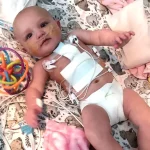
Heartbreaking: 19-Month-Old Delilah-Rai Dies After Delays in Diagnosis—A Family’s Fight for Answers and Accountability
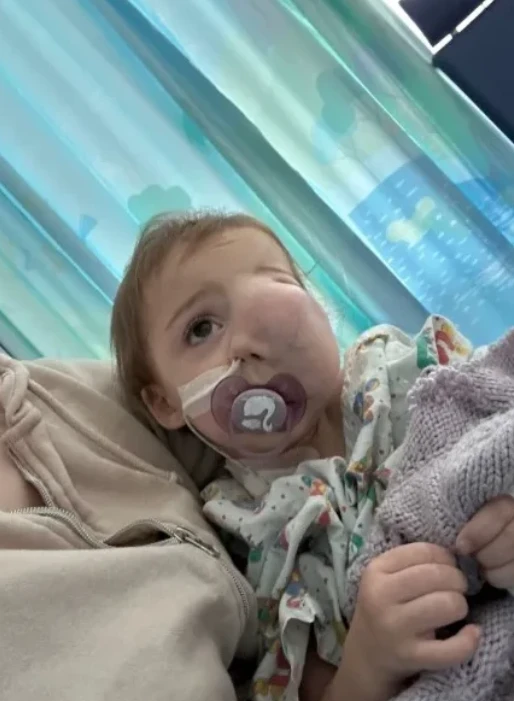
When Kayleigh Reid noticed a small, pea-sized lump on her baby daughter’s face during bath time, her instincts told her something wasn’t right. It was January 30, 2025—an ordinary evening that would mark the beginning of an extraordinary and devastating journey.
Her daughter, Delilah-Rai Reid-Floyd, had just celebrated her first birthday. Described as bright, joyful, and “the sweetest girl,” she was a child full of life and promise. But what started as a seemingly minor concern would, over the course of seven months, turn into a heartbreaking tragedy that has since raised urgent questions about delays in pediatric diagnosis.
A Mother’s Instinct—and a Missed Opportunity
The very next day, Delilah-Rai was taken to a general practitioner. But instead of a thorough examination of the lump, concerns reportedly shifted in a different direction. Medical staff suspected a potential non-accidental injury, initiating safeguarding procedures rather than focusing on a possible underlying medical cause.
For Kayleigh, this moment would later feel like the first critical delay.
While safeguarding protocols are essential, the decision meant that valuable time—time that could have been used to investigate the lump—was lost. As days turned into weeks, the mass on Delilah-Rai’s face continued to grow.
Delays That Would Prove Devastating
Delilah-Rai was later referred to Russells Hall Hospital, where a CT scan identified a paranasal cystic lesion near her nasal cavity. Doctors reassured the family that an urgent referral to an ENT specialist would follow within a week.
But that appointment did not come in time.
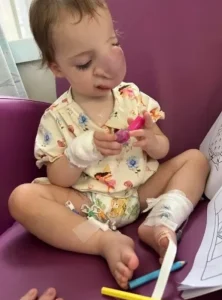
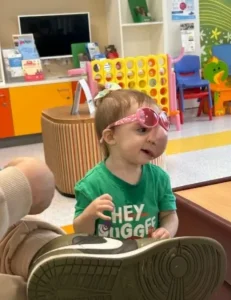
Instead, the family waited weeks before finally securing a consultation in April—months after the lump was first discovered. By then, the growth had noticeably expanded, altering the toddler’s facial features and intensifying her mother’s fears.
After the ENT consultation, Delilah-Rai was referred again—this time to Birmingham Children’s Hospital, a leading pediatric center. Yet once again, delays loomed. The initial appointment was scheduled far into the future.
Desperate, Kayleigh took matters into her own hands—sending photos of her daughter’s worsening condition to push for urgency. That effort finally led to earlier imaging in May and a follow-up in June.
But the clock had already been ticking for months.
A Diagnosis That Came Too Late
A biopsy was eventually scheduled for mid-July. Initial findings suggested desmoid fibromatosis, a rare tumor typically considered non-cancerous but capable of aggressive growth and tissue destruction.
Doctors began planning a major operation to remove affected areas of bone in Delilah-Rai’s face, including parts of her jaw, cheek, and eye socket. The procedure would involve reconstruction using a titanium plate—a complex but hopeful step toward saving her life.
Surgery was scheduled for early August.
Then, just two days before the operation, everything changed.
Further analysis revealed a far more serious reality: the tumor displayed soft tissue cancer characteristics, indicating a more aggressive and dangerous condition than previously believed. The cancer had already become deeply invasive, making surgery too risky.
The treatment plan shifted abruptly to chemotherapy—an attempt to shrink or control the tumor.
But time had run out.
A Life Lost Too Soon
On August 10, 2025, just days after the revised diagnosis, Delilah-Rai passed away. She was only 19 months old.
Her death sent shockwaves through the community and beyond. For her family, it was not only a moment of unimaginable grief but also one filled with unanswered questions.
How had a rapidly growing tumor in such a young child not been identified sooner?
Could earlier intervention have changed the outcome?
For Kayleigh, those questions are deeply personal—and painfully persistent.
“I will always wonder if more could have been done if we had been listened to sooner,” she said, her words carrying the weight of a mother’s loss.
Seeking Accountability and Change
In the wake of the tragedy, Kayleigh has begun a legal pursuit for answers, supported by Fletchers Solicitors. The investigation is focused on potential delays, missed referrals, and whether earlier action might have improved Delilah-Rai’s chances.
The case has also drawn broader attention to the challenges of diagnosing rare pediatric conditions—particularly when early symptoms may appear minor or ambiguous.
Healthcare providers involved have expressed their condolences and confirmed that internal reviews are underway. But for the family, apologies alone cannot fill the void left behind.
A Larger Conversation About Pediatric Care
Delilah-Rai’s story highlights a critical issue in modern healthcare: the importance of listening to parents.
Parents are often the first to notice subtle changes in their children—changes that may not yet be clinically obvious but signal that something is wrong. When those concerns are overlooked or delayed, the consequences can be devastating.
Her case underscores the need for:
- Faster referral pathways for unusual symptoms in children
- Greater awareness of rare pediatric tumors
- Improved communication between healthcare providers and families
Because when it comes to aggressive illnesses, time is everything.
Remembering Delilah-Rai
Beyond the medical details and legal questions, Delilah-Rai was, above all, a little girl deeply loved.
She was laughter in a room, joy in small moments, and a bright light in her family’s life. Her story is not defined solely by illness, but by the love that surrounded her every day.
Now, her memory lives on—not only in the hearts of those who knew her, but in a growing call for change.
Her family is determined that her story will not be forgotten. That her life, however short, will help protect others.
Because no parent should have to wonder if more could have been done.