Celebrating Differences: The Heartwarming Story of Raising Identical Twins and Embracing Their Uniqueness
When we first learned we were expecting identical twin girls, my husband John and I were overwhelmed with excitement. Like many parents, I imagined what life would be like raising two children who shared the same DNA. I assumed they would grow side by side, reaching milestones together, enjoying the same things, and reflecting each other in nearly every way. After all, they were identical—how different could they really be?
What I didn’t realize then was how beautifully wrong that assumption would turn out to be.
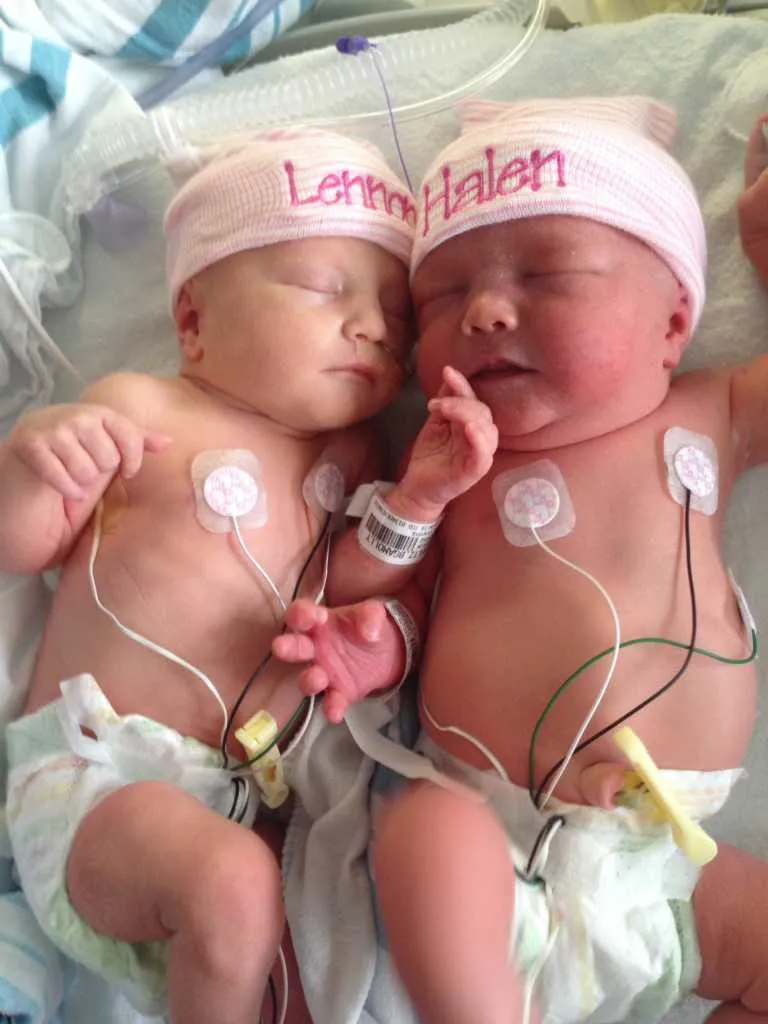
Our daughters, Halen and Lennon, were born at 36 weeks. Though slightly premature, they arrived full of life—but not without complications. During pregnancy, they had been diagnosed with Twin-to-Twin Transfusion Syndrome (TTTS), a serious condition where one twin receives more nutrients than the other. In our case, Halen received more, while Lennon received less.
At birth, the difference was striking. There was nearly a two-pound weight gap between them. Halen appeared flushed and red, while Lennon looked pale and fragile. When doctors told me they were identical, I could hardly believe it. Looking at them, I even joked, “Are you sure? They look nothing alike!” But the science was clear—they were, in fact, identical twins.
Ironically, despite receiving more nutrients in the womb, Halen was the one who required more immediate medical attention. Lennon initially seemed stable, but within hours, she began struggling with temperature regulation and feeding. Soon, both girls were in the NICU, each facing their own challenges. Those early days were filled with uncertainty, fear, and constant monitoring. Yet, after a few weeks, we were finally able to bring them home together—a moment that felt like a small miracle.
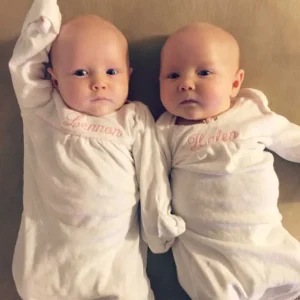
As the months passed, I found myself doing what many parents do—comparing. I would scroll through social media, seeing babies the same age hitting milestones, and I couldn’t help but worry. Even though I knew that premature babies often develop on their own timelines, the doubt still crept in.
Then came a moment that changed my perspective completely.
Halen, the twin who had struggled more at birth, suddenly rolled over—four times in one day. I was stunned. I had assumed Lennon, who seemed stronger early on, would reach that milestone first. But Lennon showed no interest at all. It took her another two weeks to roll over.
That pattern continued. Halen laughed first. Lennon followed two weeks later. Halen started crawling; Lennon took her time. It was as if they were on completely different schedules, despite sharing the same genetic makeup.
That’s when it finally clicked: they may be identical in DNA, but they are entirely different individuals.
I began to truly see who they were.
Halen is gentle, thoughtful, and deeply empathetic. She thrives on structure and enjoys helping around the house. She loves quiet activities like coloring or reading and prefers things to be done “the right way.” She feels emotions deeply and often wants to comfort those around her. Her calm nature brings a sense of peace to our home.
Lennon, on the other hand, is a free spirit. She’s energetic, adventurous, and always on the move. She would rather be outside running or playing soccer than sitting still. She’s bold, independent, and unafraid to speak her mind. When faced with challenges, she doesn’t dwell—she moves forward with confidence and resilience.
Watching them grow has been one of the most eye-opening experiences of my life. Two children, formed from the same DNA, yet so incredibly unique in personality, behavior, and perspective. It taught me an important lesson—not just about twins, but about parenting as a whole.
Every child is their own person.
It’s easy to fall into the trap of comparison—whether it’s between siblings or with other children. We measure milestones, behaviors, and achievements, often forgetting that each child is on their own journey. But raising Halen and Lennon showed me that growth doesn’t follow a universal timeline.
Some children move quickly. Others take their time. And neither is wrong.
Today, I no longer compare my daughters. Instead, I celebrate them. I celebrate Halen’s kindness and thoughtfulness. I celebrate Lennon’s courage and energy. I celebrate the ways they complement each other and the ways they stand apart.
They are not halves of a whole—they are two complete, extraordinary individuals.
To every parent reading this, whether you’re raising twins or one child, here’s what I’ve learned: your child doesn’t need to be like anyone else. They don’t need to meet every milestone at the same time or follow the same path as others.
What they need is your understanding, your patience, and your support.
Because the greatest gift we can give our children is not shaping them into who we expect them to be—but allowing them the freedom to become who they truly are.
And sometimes, the most beautiful part of parenting is discovering just how different—and how wonderful—that can be.