US Deploys P-8 Poseidon and MQ-4C Triton Amid Iran Tensions
US Deploys P-8 Poseidon and MQ-4C Triton Amid Iran Tensions
Introduction:
In response to mounting tensions in the Persian Gulf and the Strait of Hormuz, the United States has deployed its advanced P-8 Poseidon maritime patrol aircraft and MQ-4C Triton unmanned aerial vehicles (UAVs). These deployments are part of a broader surveillance and reconnaissance strategy aimed at maintaining air and maritime superiority and ensuring the security of U.S. assets and allied interests in the region, particularly amidst heightened threats from Iran.
The Role of P-8 Poseidon:
-
Maritime Surveillance:
The P-8 Poseidon is a multirole maritime patrol aircraft designed for long-range anti-submarine warfare (ASW), anti-surface warfare (ASuW), and intelligence, surveillance, and reconnaissance (ISR) missions. Equipped with state-of-the-art sensors, the P-8 can provide real-time intelligence and surveillance over vast oceanic regions, making it invaluable in monitoring Iranian naval activity in the Strait of Hormuz and other strategic maritime areas.-
Countering Iranian Naval Threats: Iran’s military capabilities in the Persian Gulf have included the use of small fast attack boats, submarines, and missile vessels. The P-8 Poseidon, with its radar and sonar systems, is equipped to detect and track these assets.
-
Targeting and Strike Coordination: Beyond surveillance, the P-8 is capable of coordinating with U.S. Navy surface ships and submarines, providing targeting data for precision strikes on Iranian targets, should conflict escalate.
-
Protecting Global Shipping: Given the Strait of Hormuz’s importance as a chokepoint for global oil shipments, the P-8 could play a role in ensuring safe passage for commercial vessels, tracking potential threats to freedom of navigation.
-
-
Enhancing ISR Operations:
The P-8 also acts as a flying command center, capable of sharing intelligence and coordinating operations across U.S. and allied assets in the region. Its surveillance capabilities would be crucial in identifying Iranian military movements, particularly related to ballistic missiles, drone activity, and naval maneuvers.
The Role of MQ-4C Triton:
-
Persistent Maritime Surveillance:
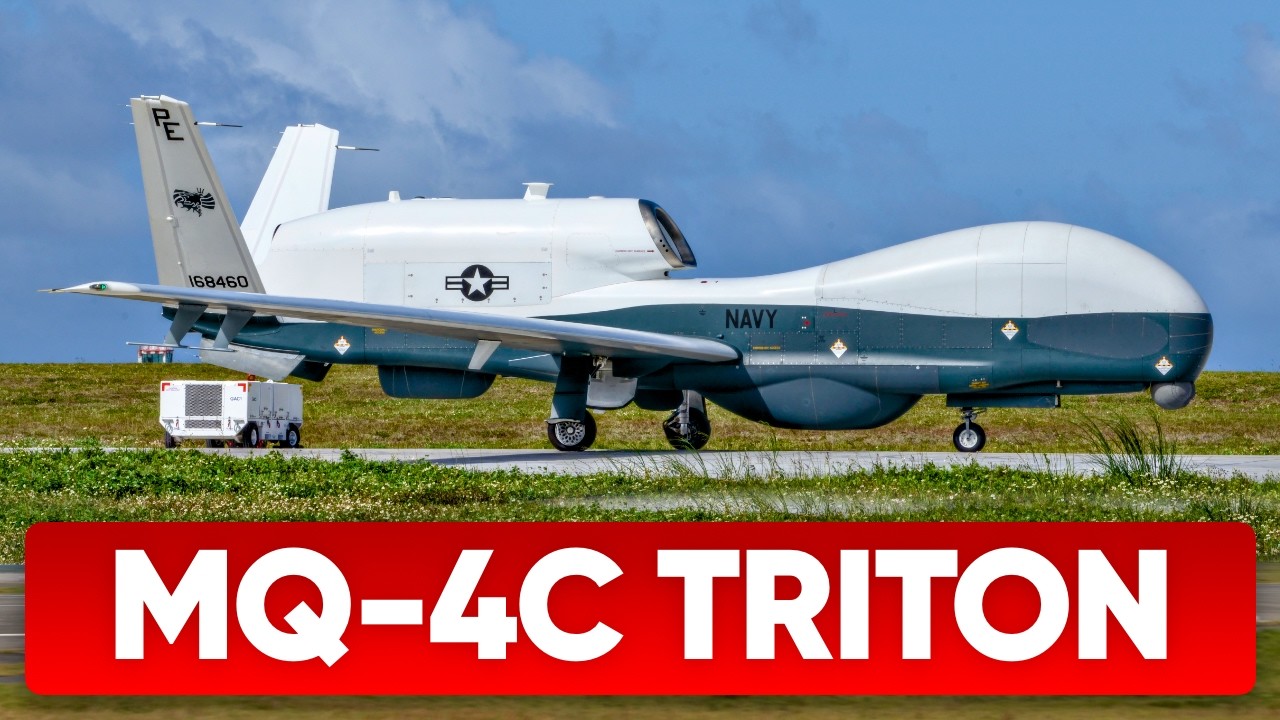
The MQ-4C Triton is a high-altitude, long-endurance UAV specifically designed for maritime patrol and surveillance operations. As a complement to the P-8 Poseidon, the MQ-4C provides persistent surveillance over large areas, especially in remote regions where manned aircraft might not be able to operate as efficiently.-
Borderless Surveillance: The Triton can monitor vast expanses of water, using electro-optical sensors, radars, and synthetic aperture radar (SAR) to detect and track surface vessels, submarines, and drone activity.
-
Real-Time Data Feed: The MQ-4C Triton provides continuous real-time surveillance data, which can be used to track Iranian naval forces, as well as monitor strategic chokepoints like the Strait of Hormuz and the Bab-el-Mandeb Strait, ensuring the protection of global shipping routes.
-
Integration with Other Assets: The MQ-4C can be used in tandem with the P-8 Poseidon, U.S. Navy ships, and U.S. submarines, offering a comprehensive surveillance network that tracks Iranian military deployments and movements.
-
-
Counteracting Iranian Drones:
The Triton’s capabilities are particularly important in the context of the growing threat posed by Iranian drones in the region. The UAVs launched by Iran have been used for reconnaissance, targeting strikes, and swarm attacks against military installations or shipping vessels. The Triton’s ability to spot and track drones at long distances enhances the U.S.’s ability to preemptively neutralize threats before they can strike.
Why Deploy Both Aircraft in the Middle East?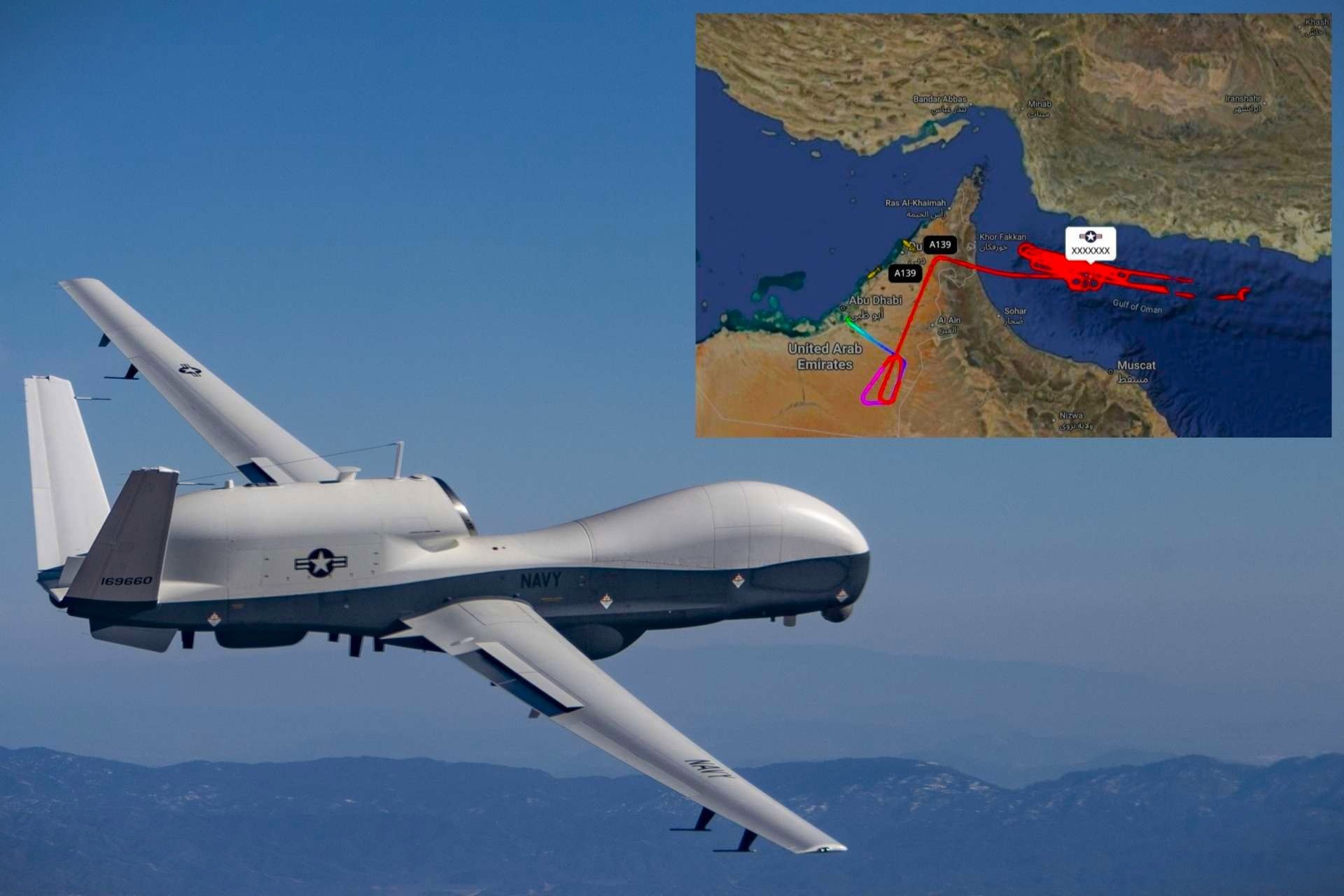
-
Monitoring Iranian Military Movements:
Given Iran’s military advancements in asymmetric warfare, which includes the use of missiles, drone strikes, and naval operations, having both the P-8 Poseidon and MQ-4C Triton in the region ensures comprehensive surveillance of Iranian naval assets, missile launch sites, and drone facilities. Together, these platforms provide the U.S. military with continuous, 24/7 coverage of critical regions like the Strait of Hormuz, a critical oil transit route. -
Denying Iran Freedom of Action:
The presence of both the P-8 and MQ-4C severely limits Iran’s operational freedom. With continuous surveillance, any movement by Iranian naval forces, military aircraft, or ground-based missile systems could be tracked in real time, leaving Iran vulnerable to preventive strikes if necessary. It also deters Iranian aggression, knowing that their every move is being watched by U.S. surveillance platforms. -
Supporting U.S. Naval Forces:
U.S. aircraft carriers in the region, such as the USS Nimitz or USS Abraham Lincoln, could rely on P-8 Poseidons to provide real-time targeting data and air cover. The MQ-4C Triton could ensure that no hostile Iranian naval units or missile systems go undetected, offering a significant strategic advantage.
Potential Iranian Response:
-
Missile and Drone Retaliation:
Iran may interpret the deployment of these advanced surveillance platforms as an escalation and respond with increased missile launches targeting U.S. assets or proxy forces. Iran could also deploy drones to counter U.S. surveillance operations, potentially attempting to jam or destroy the P-8 or MQ-4C through anti-aircraft missiles or swarm tactics. -
Proxy Attacks in the Region:
Iranian-backed militias across Syria, Lebanon, Iraq, and Yemen could launch proxy strikes against U.S. interests, including Israeli assets. These proxy forces may also target shipping lanes, trying to disrupt global oil flows, which would increase the likelihood of international conflict.
Geopolitical and Diplomatic Consequences:
-
Global Shipping Security:
The deployment of these aircraft is part of the U.S.’s broader strategy to ensure the freedom of navigation in the Strait of Hormuz and Persian Gulf, where many of the world’s oil exports pass. As tensions rise, the U.S. might work with allied nations, such as the UAE, Saudi Arabia, and Israel, to strengthen maritime security. -
Diplomatic Tensions:
The deployment could also inflame diplomatic relations between the U.S. and Iran, as well as with Russia and China, both of which are key allies of Tehran. Iran may accuse the U.S. of increasing tensions, especially if surveillance activities infringe upon Iran’s perceived sovereignty in the Persian Gulf. -
International Reactions:
The European Union might call for de-escalation, while Russia and China would likely back Iran, accusing the U.S. of provoking military conflict. Meanwhile, Israel could see this as a positive step in terms of bolstering regional security against Iranian missile threats.
Conclusion:
The deployment of P-8 Poseidons and MQ-4C Tritons by the U.S. military amid rising Iranian tensions represents a key strategic move to maintain maritime security and surveillance superiority in the region. These platforms will play a central role in monitoring Iran’s movements, ensuring real-time intelligence and defense capabilities against Iranian missile and drone threats. As tensions continue to simmer, these aircraft will be a critical component of the U.S. military’s regional posture.