Over 1,000 Iran Military Targets Destroyed — Operation Epic Fury
Over 1,000 Iran Military Targets Destroyed — Operation Epic Fury
Introduction:
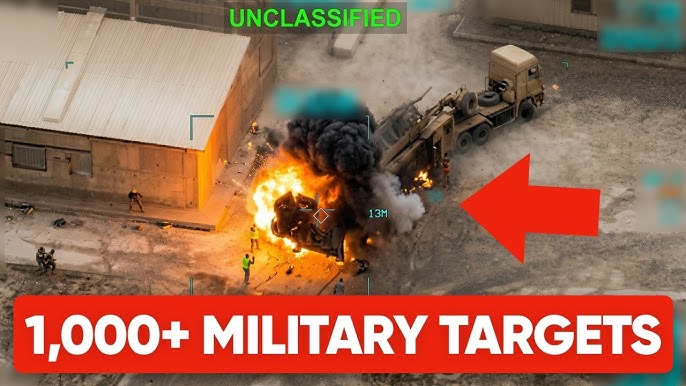
In a bold and decisive move, the United States has launched “Operation Epic Fury”, a military campaign that has seen the destruction of over 1,000 Iranian military targets. This unprecedented operation, carried out in response to escalating Iranian aggression and attacks on U.S. naval assets in the Persian Gulf and the Strait of Hormuz, represents a dramatic escalation in the U.S.-Iran conflict. The scope of the operation is vast, involving multiple branches of the U.S. military, from airstrikes to naval operations and special forces missions. The operation has reshaped the balance of power in the region and set the stage for potential further escalation.
Targeting Iran’s Military Infrastructure:
-
Missile and Drone Launch Sites:
U.S. forces focused heavily on Iran’s missile and drone launch facilities, which are seen as a primary threat to American military assets in the region. Over 100 missile launch sites, including those located in coastal regions and western Iran, were hit with precision-guided Tomahawk missiles and B-2 bomber airstrikes. The goal was to eliminate Iran’s ability to launch long-range ballistic missiles and cruise missiles, which had previously been used in attacks against U.S. warships and bases. -
Naval Bases and Ports:
Iranian naval capabilities were a key focus. Over 300 naval assets, including Kilo-class submarines, Zolfaghar-class frigates, and fast attack craft, were neutralized. These targets were struck using Tomahawk missiles, F-18 fighter jets, and stealth bombers. The goal was to cripple Iran’s ability to challenge the U.S. Navy’s dominance in the Strait of Hormuz and beyond. Naval bases like Bandar Abbas and Chabahar were hit hard, with major damage to Iran’s military shipping infrastructure. -
Air Defense Systems:
Iran’s air defense systems, including radar stations and S-300 missile batteries, were prioritized. The U.S. deployed electronic warfare tactics to disable Iranian radar capabilities, followed by precision airstrikes to destroy the remaining anti-aircraft missile systems. This ensured the safety of U.S. air assets and minimized the risk of retaliation from Iranian fighter jets or surface-to-air missiles. -
Nuclear Facilities and Enrichment Sites:
While U.S. military officials have denied targeting Iran’s nuclear enrichment sites, many strategic military analysts suggest that uranium enrichment facilities and other key nuclear research sites were struck indirectly as part of broader airstrikes aimed at Iran’s military-industrial complex. -
Command and Control Centers:
U.S. forces targeted Iranian command centers where top military officials were coordinating attacks on U.S. assets. These facilities, often located in heavily fortified underground bunkers, were targeted by Bunker Buster bombs dropped from B-52 Stratofortresses. These strikes effectively crippled Iran’s ability to respond in a coordinated manner.
U.S. Military Assets Involved in Operation Epic Fury:
-
U.S. Navy:
The U.S. Navy played a crucial role in the operation. The USS Nimitz and the USS Abraham Lincoln both launched fighter jets to provide air superiority and conduct precision bombing runs on Iranian military assets. Naval destroyers, like the USS Arleigh Burke, launched Tomahawk cruise missiles at pre-selected Iranian targets, while submarines patrolled the Persian Gulf to eliminate any remaining Iranian naval threats. -
U.S. Air Force:
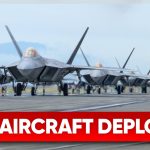
The U.S. Air Force deployed B-2 stealth bombers, F-22 Raptors, and F-16 fighter jets to deliver precision-guided munitions to Iran’s key military installations. F-15E Strike Eagles and B-52 Stratofortresses were also deployed to strike deep within Iranian territory, targeting military supply depots and aircraft hangars. -
Special Forces:
U.S. Navy SEALs and Army Rangers were deployed for high-value target eliminations. Special operations forces engaged in surgical strikes on Iranian military leaders and key infrastructure, ensuring minimal collateral damage while eliminating high-priority threats. -
Cyber Warfare:
A key part of Operation Epic Fury was cyber warfare. U.S. cyber teams attacked Iranian command-and-control networks, effectively neutralizing much of Iran’s ability to communicate and coordinate military actions. The National Security Agency (NSA) and U.S. Cyber Command worked together to disrupt Iran’s communications systems, rendering their forces unable to effectively respond to U.S. airstrikes and naval bombardments.
Iran’s Response:
-
Missile Strikes:
In retaliation, Iran likely launched missile strikes at U.S. military bases in Iraq, Saudi Arabia, and other allied nations. The Shahab-3 or Fateh-110 missiles would target key military installations, airstrips, and oil infrastructure. -
Proxy Attacks:
Iranian-backed militias and proxy groups in Syria, Lebanon, Iraq, and Yemen may also escalate attacks on U.S. allies in the region. Hezbollah in Lebanon, for example, could launch rocket attacks on Israel, while Houthi rebels could target Saudi Arabia’s oil infrastructure. -
Cyber Retaliation:
Iran has also been known to engage in cyber warfare. It’s likely that Iranian cyber forces would retaliate by targeting U.S. infrastructure — including financial systems, power grids, or military networks — in an attempt to disrupt American operations and inflict economic damage.
Geopolitical Fallout:
-
International Diplomatic Response:
The UN Security Council would likely hold an emergency meeting to address the escalating conflict. However, Russia and China, both key Iranian allies, would likely block any resolutions condemning Tehran’s actions. This would leave diplomatic channels largely ineffective in de-escalating the situation. -
Global Oil Prices Surge:
With military action taking place in the Strait of Hormuz, the world would likely see global oil prices surge, leading to economic instability. The U.S. and European Union might release emergency oil reserves to stabilize markets, but supply disruptions would still be felt worldwide. -
Regional Destabilization:
The broader Middle East would likely see increased instability, with countries like Saudi Arabia, Israel, and Turkey taking sides in the conflict. Iranian-backed proxies would escalate their operations, creating further chaos in the region.
Conclusion — The Aftermath of Operation Epic Fury:
Operation Epic Fury would be a decisive military response to Iranian aggression, leading to the destruction of a significant portion of Iran’s military capabilities. While the U.S. military would likely claim victory, the geopolitical consequences would be profound, leading to increased tensions with Iran, its allies, and the broader international community. The global oil market would likely be affected, and the Middle East could face even greater instability, as proxy warfare intensifies and regional powers take sides.