Iran War Day 7: IDF’s ‘Broad Wave’ of Overnight Strikes On Tehran’s ‘Military Infrastructure’.hl
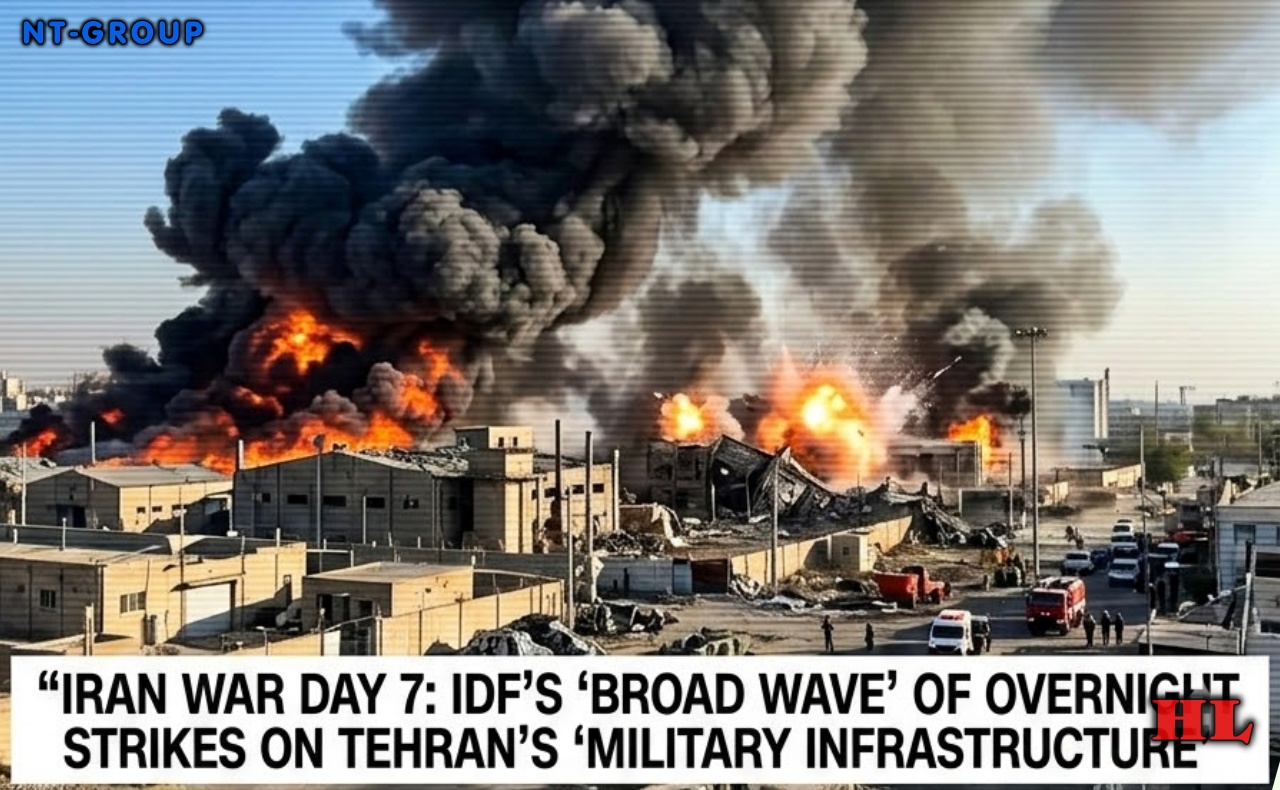
Day 7 of the Iran war began under the glare of burning skies, after Israel’s air force launched what officials call a “broad wave” of overnight strikes on military infrastructure in and around Tehran.
Residents reported sirens and successive blasts shaking the capital shortly after midnight, with flashes visible from the eastern outskirts to the southern industrial belt. Iranian media admitted “enemy attacks” on an air‑defence battery near the city, a Revolutionary Guard logistics hub and a complex believed to house drone and missile research facilities.
Satellite imagery shared by Western analysts points to scorched compounds, collapsed warehouses and craters punched into hardened shelters. Unverified clips from Tehran’s suburbs show secondary explosions ripping through fuel and ammunition depots long after the first impacts. Hospitals in the capital are said to be treating dozens of wounded, mostly military personnel but also civilians hit by glass and debris.
Israeli officials, speaking off the record, frame the assault as a direct answer to Iran’s recent missile and drone barrages on Israeli cities and US bases. The goal, they say, is to “systematically tear out the wiring” of Iran’s command, control and launch networks, not to topple the regime—at least not yet.
Tehran insists most incoming munitions were intercepted and vows a “larger, calibrated response” that will make Israel and its allies “feel our pain.”
As dawn breaks over a shaken capital, one question now dominates war rooms from Jerusalem to Washington: did this broad wave finally blunt Iran’s strike capabilities—or did it just guarantee that the next round of this conflict will be even more explosive, and far harder to stop?