Underwater Caves of Yucatán, Mexico: The Largest Submerged Archaeological Treasure on Earth
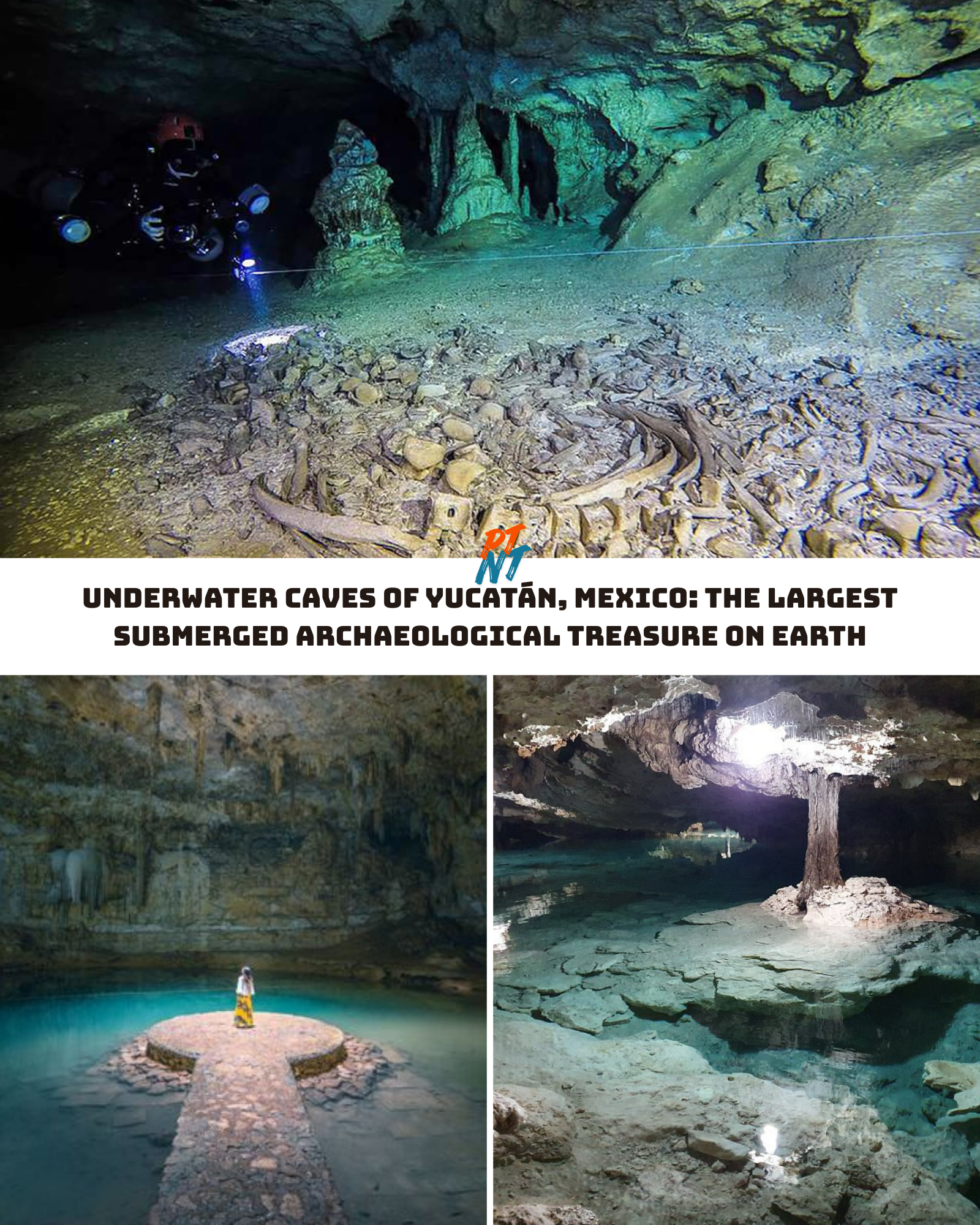
In January 2018, explorers confirmed that two massive flooded cave systems beneath the jungle had connected, forming the largest underwater cave network on Earth. The newly unified system, known as Sac Actun, stretches for hundreds of kilometers through limestone tunnels hidden below the region’s famous cenotes.
But the true significance of the discovery lies in what researchers found inside these submerged chambers.
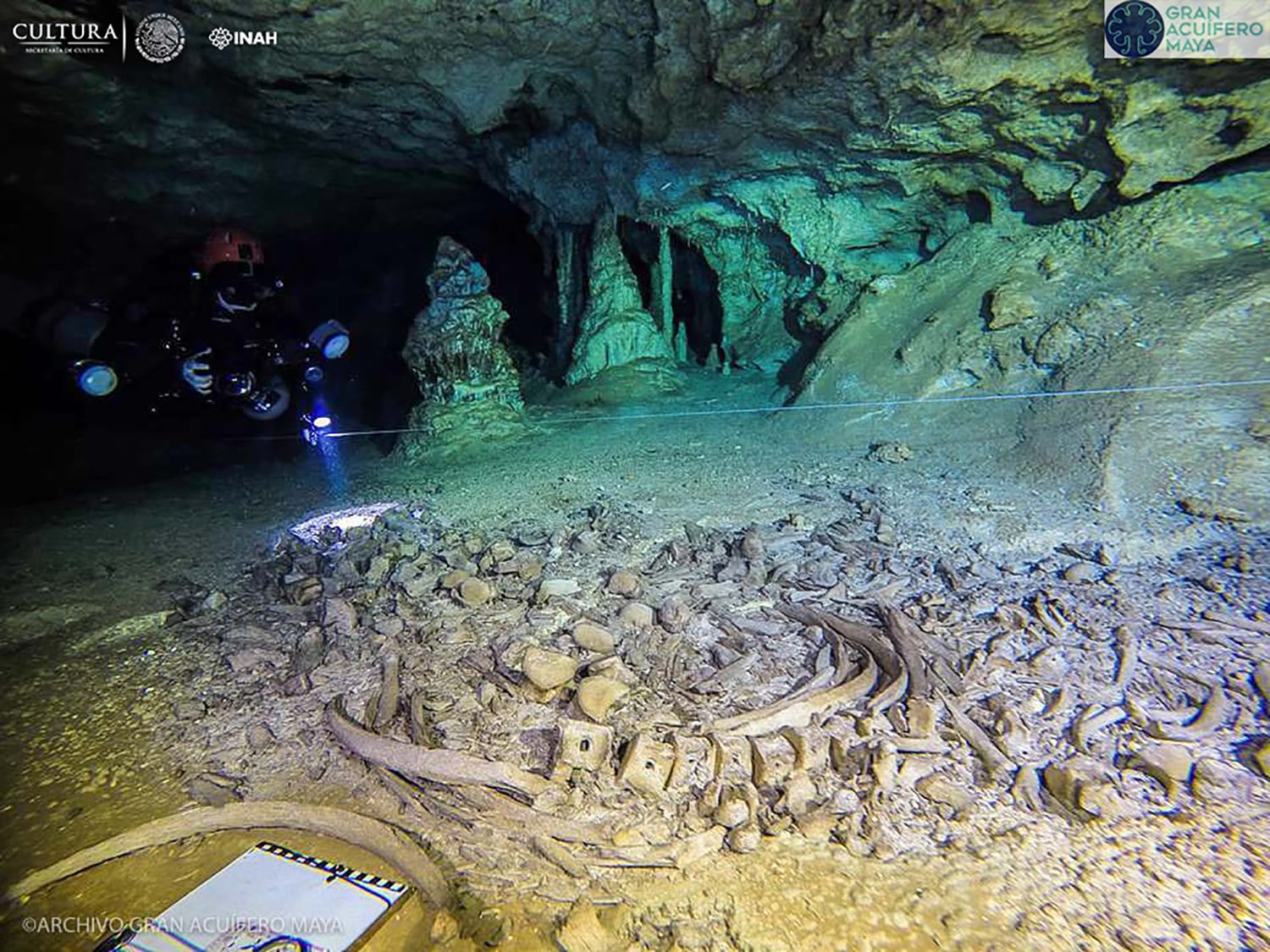
According to renowned underwater archaeologist Guillermo de Anda, the cave network is “the most important submerged archaeological site in the world.” Within the dark and winding passages, scientists uncovered remarkable remains of ancient animals and early humans.

Among the discoveries were bones of gomphotheres, prehistoric relatives of modern elephants, as well as skeletons of giant ground sloths that lived around 15,000 years ago. Even more astonishing was the discovery of a 9,000-year-old human skull, partially covered by limestone deposits, providing rare evidence of some of the earliest inhabitants of the Americas.
Researchers believe that during the last Ice Age, these caves were dry and accessible. Humans and animals likely entered them for shelter or exploration. When the Ice Age ended and sea levels rose, the caves gradually flooded, preserving the remains in remarkable condition for thousands of years.
Today, the vast cave network beneath Yucatán serves as a natural time capsule, offering scientists invaluable insights into prehistoric life, migration, and the ancient ecosystems of the Americas.
With every new dive, explorers continue to uncover artifacts, fossils, and human remains that may reshape our understanding of early human history in the region.