Roopkund Lake: The Himalayan Lake of Skeletons
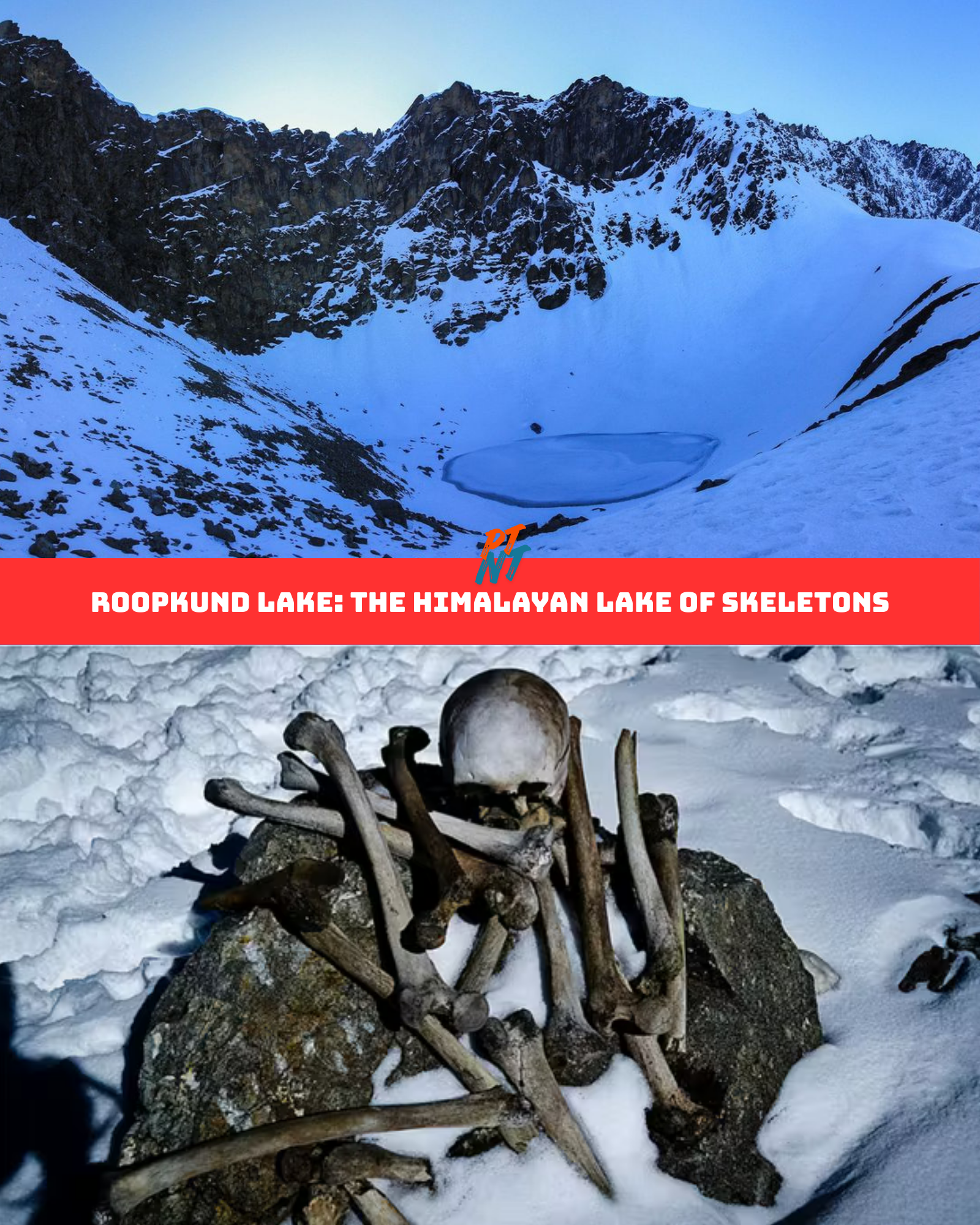
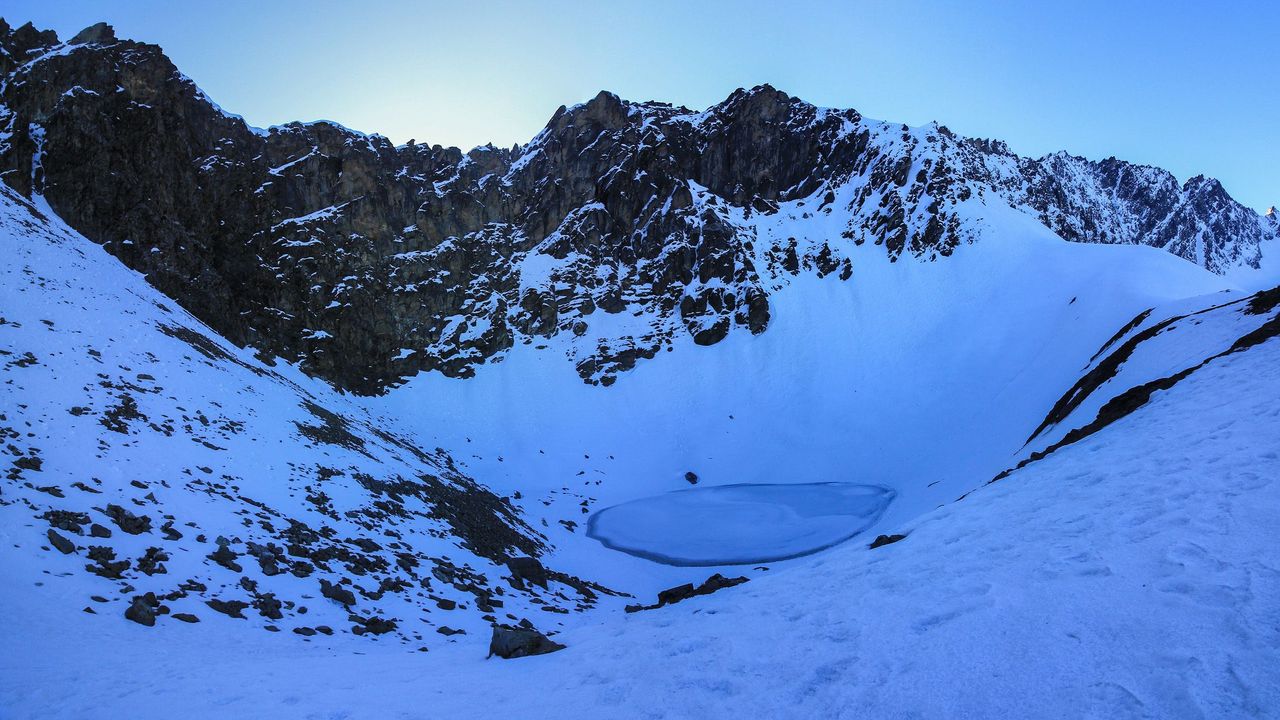
High in the Indian Himalayas, at an altitude of over 5,000 meters, lies Roopkund Lake—one of the most mysterious archaeological sites in the world. Often called the “Skeleton Lake,” the frozen basin contains the remains of hundreds of human skeletons, scattered along its shores and beneath its icy waters.
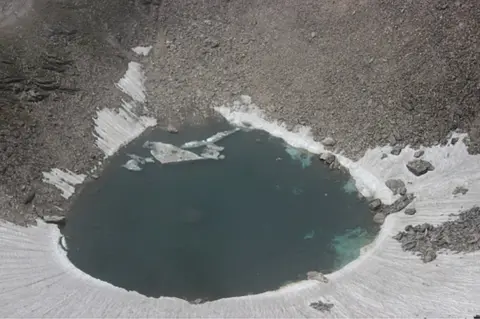
The skeletons were first discovered in the 1940s, sparking decades of speculation. Early theories suggested they were soldiers who perished during a failed military campaign. However, modern scientific studies—including DNA analysis—have revealed a far more complex story.
Researchers found that the remains do not belong to a single group. Instead, they represent multiple populations from different regions and time periods, some dating back more than 1,000 years. Even more surprising, a number of individuals appear to have origins far outside South Asia.
One of the most widely accepted explanations is that many of the victims died during a sudden and catastrophic hailstorm, with skull fractures indicating blunt-force trauma from large hailstones.

Despite these findings, many questions remain unanswered:
👉 Why were these groups traveling to such a remote and dangerous location?
👉 Were they pilgrims, traders, or something else entirely?
Roopkund continues to challenge historians and scientists alike—a chilling reminder that even in the harshest environments, human stories endure.