Ulfberht swords: The Viking Blades That Seemed Centuries Ahead of Their Time
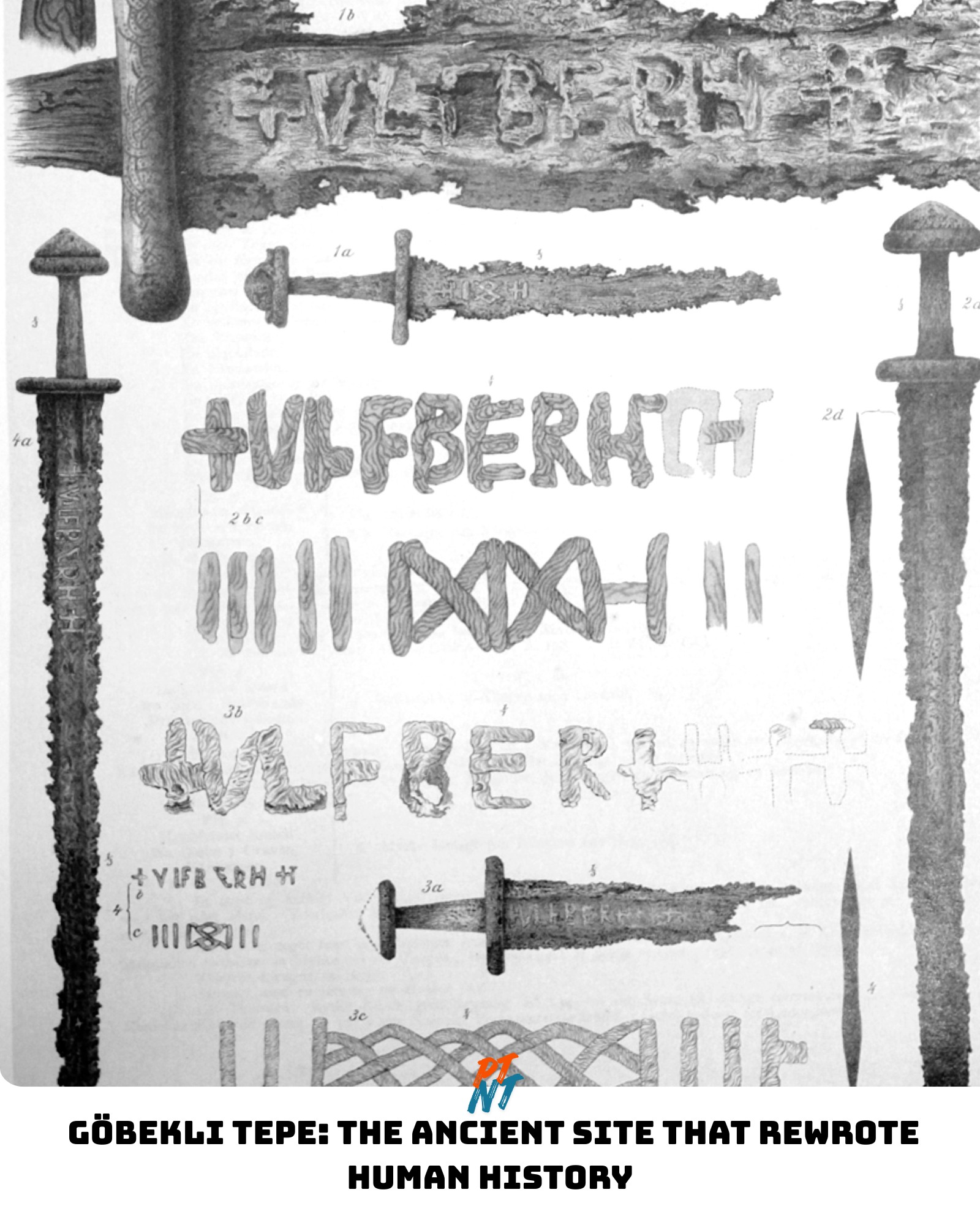

Among the many weapons of the Viking Age, few have captured as much fascination as the legendary Ulfberht swords. Dating from roughly the 9th to 11th centuries, these blades stand out not only for their craftsmanship but for their mysterious technological superiority.
What sets Ulfberht swords apart is the inscription “+ULFBERH+T” embedded in the blade—a mark believed to represent a master blacksmith or a prestigious workshop. However, it is the quality of the metal that truly astonishes researchers.
Unlike typical medieval swords, which were often brittle or filled with impurities, Ulfberht blades were forged from exceptionally pure, high-carbon steel—a material not thought to be widely available in Europe at the time. Some experts argue that this type of steel resembles early forms of crucible steel, similar to what would later be known as Damascus steel.

This has led to a compelling theory:
👉 The Vikings may have obtained advanced metal from the East, possibly through trade routes reaching as far as the Islamic world or Central Asia.
Even more intriguing is the fact that not all Ulfberht swords are equal. Some are clearly counterfeits, made with inferior materials but bearing the same prestigious name—suggesting that even in the Viking Age, branding and imitation were already widespread.
Despite ongoing research, one question remains unanswered:
⚠️ How did Viking smiths acquire or produce such advanced steel centuries before similar techniques became common in Europe?
Today, Ulfberht swords remain one of the greatest metallurgical mysteries of the medieval world—evidence that the past may have been far more advanced than we once believed.