🏺 Göbekli TepThe Ancient Site That Rewrote Human History
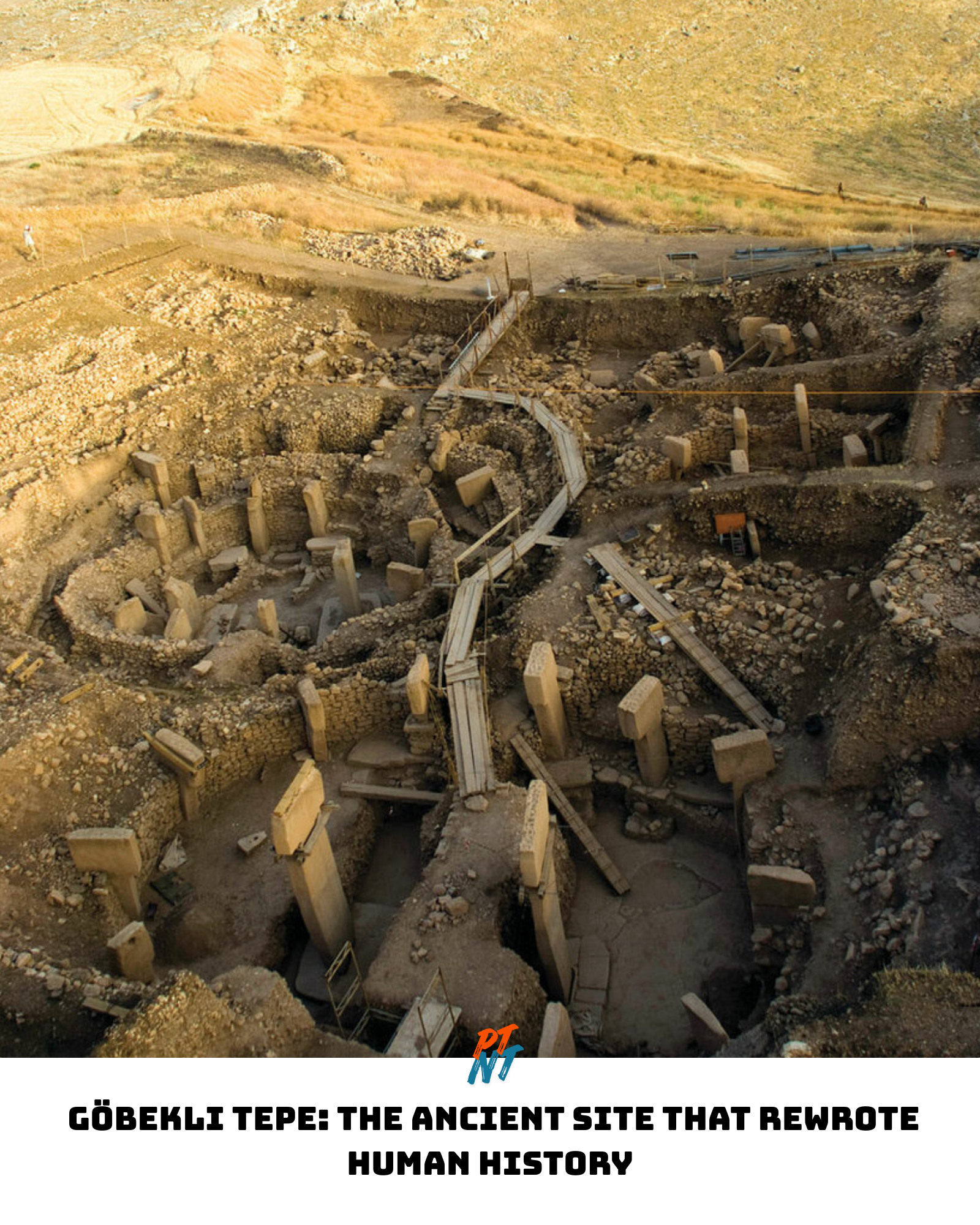
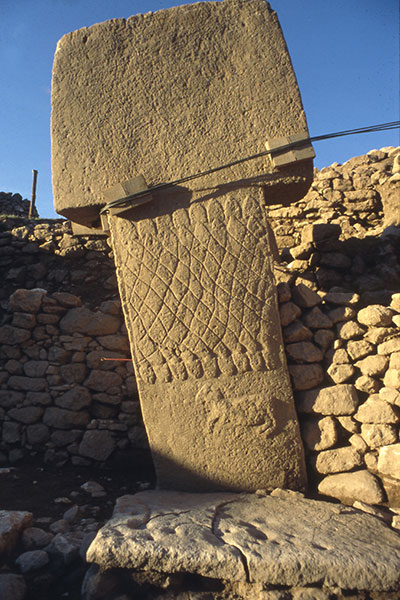
Discovered in the 1990s, the site features massive T-shaped limestone pillars, many intricately carved with animals such as lions, snakes, and vultures. These structures suggest a level of symbolic thinking and social organization far more advanced than previously believed for hunter-gatherer societies.
What makes Göbekli Tepe truly revolutionary is its implication: organized religion may have come before agriculture, not after. For decades, scholars believed that humans first settled into farming communities, and only then developed complex belief systems. Göbekli Tepe challenges that timeline entirely.
Archaeologists believe the site was used for ritual gatherings, possibly drawing groups from across the region. Even more mysterious is the fact that the entire complex was deliberately buried around 8,000 BCE, preserving it for millennia.
Despite years of excavation, only a small portion of Göbekli Tepe has been uncovered. Researchers say the site may hold many more secrets about the dawn of civilization—secrets that could further reshape our understanding of humanity’s earliest chapters.