1,500 Strikes in 24 Hours: How Operation Epic Fury Crushed Iran’s Defences.hl
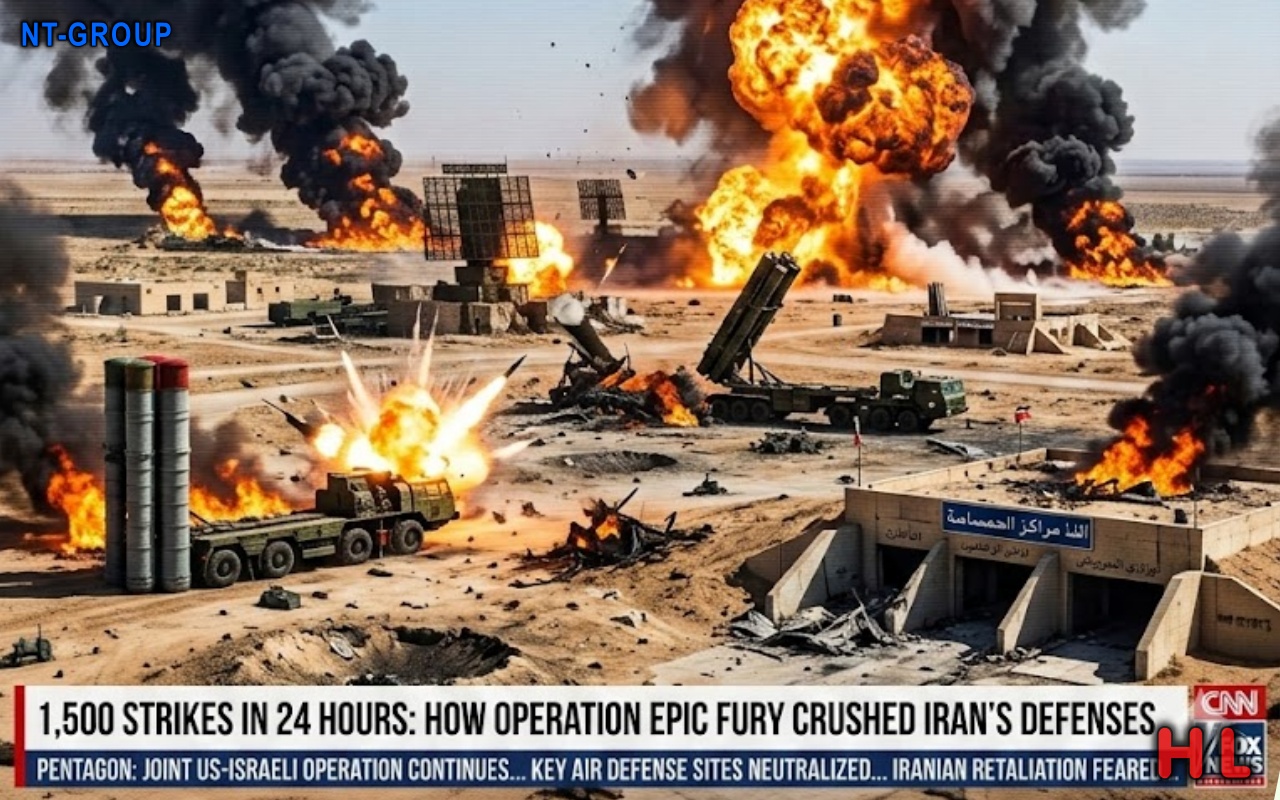
Tehran / Washington — In a relentless, high‑tempo assault unprecedented in the region, US and Israeli forces have carried out 1,500 strikes in just 24 hours under Operation Epic Fury, ripping through Iran’s layered air‑defence network and leaving key Revolutionary Guard units stunned, scattered and partially deaf.
Military planners describe a “rolling storm” of power: cruise missiles from submarines and destroyers slamming into long‑range radar sites and command bunkers; F‑35s and F‑22s slipping through the gaps to hunt high‑value SAM batteries; B‑2 bombers dropping deep‑penetration bombs on underground control centres; drones and cyber teams flooding screens with ghost targets while cutting real links between radars and launch crews. By dawn, whole sectors of Iran’s once‑boasted integrated air defences were dark or firing blindly into empty skies.
Footage released in Washington and Tel Aviv shows cratered S‑300 pads, shredded Bavar‑373 launchers and charred convoy remnants on roads leading to Tehran, Isfahan and the Gulf coast. US officials say surviving batteries have been forced to shut down or relocate constantly, slashing their ability to protect missile brigades, drone hubs and nuclear‑adjacent sites. Iranian media concedes “serious disruption” but insists new systems are “already replacing the martyrs’ positions,” even as fresh explosions continue to light the horizon.
Analysts warn that Epic Fury has done more than break radars and rockets. By proving it can sustain 1,500 precision strikes in a single day, the US–Israel axis has sent a harsher message: Iran can still fire back, but it will do so from behind a defence umbrella that has been torn open — and every new launch risks drawing another storm down on what remains.