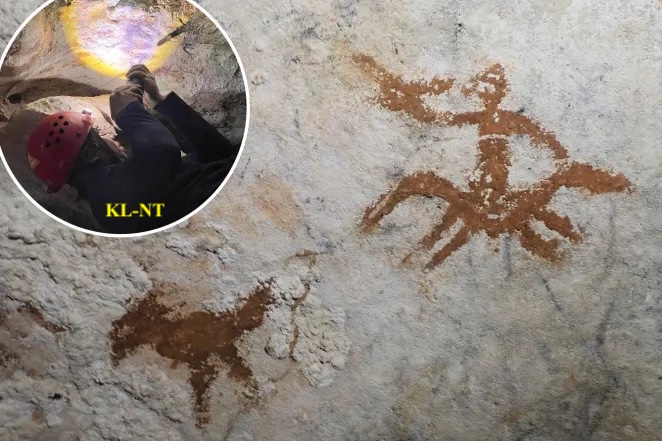
Europe might not be the birthplace of human symbolic culture as previously thought. International scientists have discovered a stencil of a hand in Indonesia that dates back nearly 68,000 years, making it the oldest known cave artwork ever discovered, per a study published Wednesday in the journal Nature.
“People living in what is now eastern Indonesia were producing rock art significantly earlier than previously demonstrated,” the authors wrote while describing the subterranean masterpiece in an article in The Conversation.
The painting depicted slender stenciled hands with deliberately elongated, claw-like fingernails
Discovered in limestone caves on the island of Sulawesi, the ancient stencil depicts a red outline of a hand. It was created by blowing pigment over a hand pressed against the rock — like a prehistoric finger painting.
By analyzing traces of uranium in the mineral deposits covering the work, researchers were able to determine that it was created at least 67,800 years ago, making other cave art look positively modern.