🏺 Egypt Discovers 3 New Kingdom Tombs in Luxor
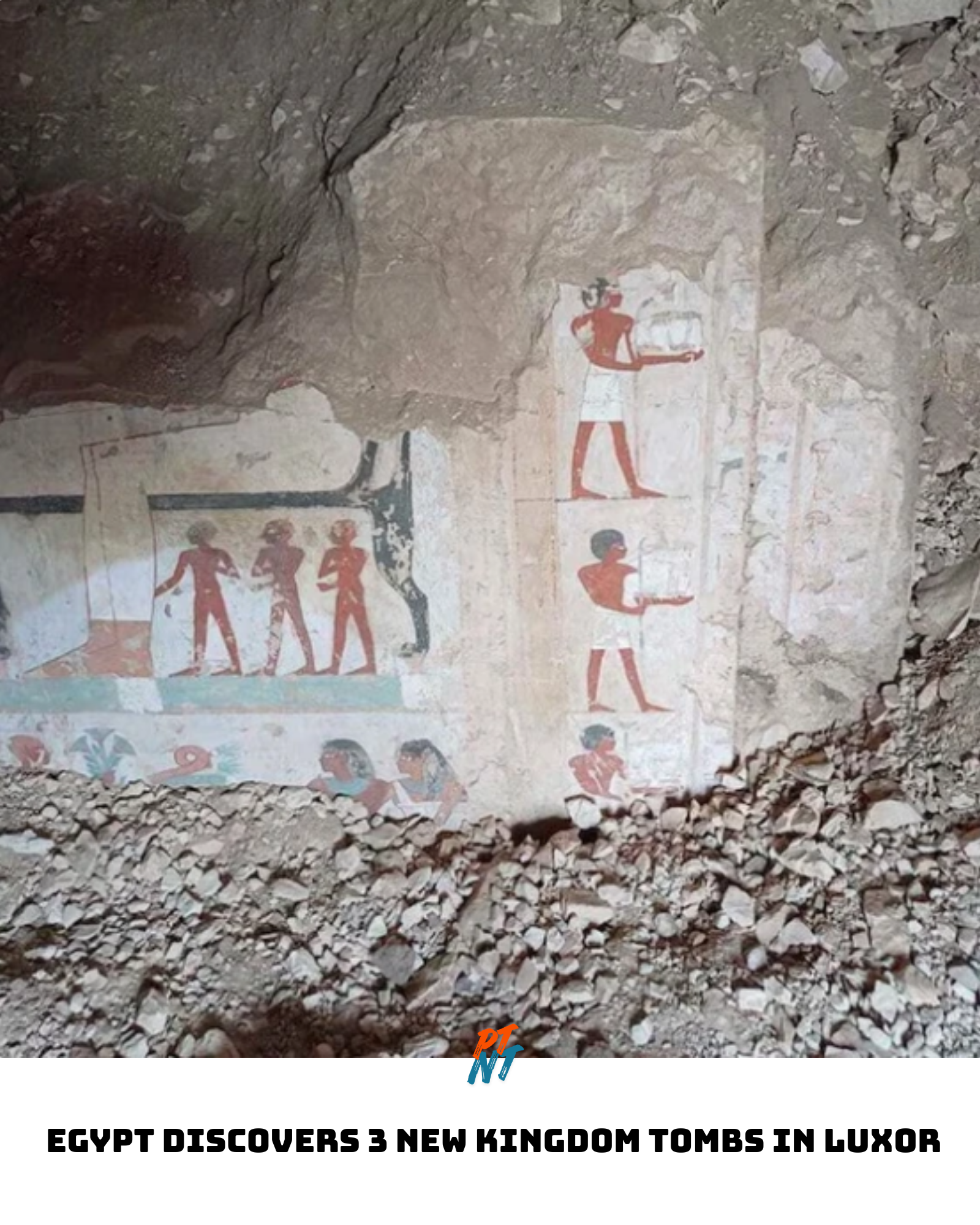

The tombs, believed to belong to high-ranking officials, were uncovered on the west bank of the Nile, an area long associated with elite burials. Experts say the structures likely date to around the 18th–20th Dynasties (circa 1550–1070 BCE).
Inside, researchers found well-preserved wall carvings, hieroglyphic inscriptions, and burial chambers, offering rare insights into the lives of nobles who served Egypt’s pharaohs. The decorations depict religious rituals, offerings to the gods, and scenes of daily life, reflecting both spiritual beliefs and social hierarchy.

“This is a remarkable addition to our understanding of the New Kingdom elite,” an official from Egypt’s Ministry of Tourism and Antiquities stated. “Each tomb tells a story about power, faith, and life after death.”

The discovery reinforces Luxor’s reputation as one of the world’s richest archaeological zones, often described as an open-air museum. Ongoing excavations are expected to reveal further artifacts and possibly more hidden tombs beneath the desert sands.