AI and the Shroud of Turin: Separating Science from Supernatural Claims
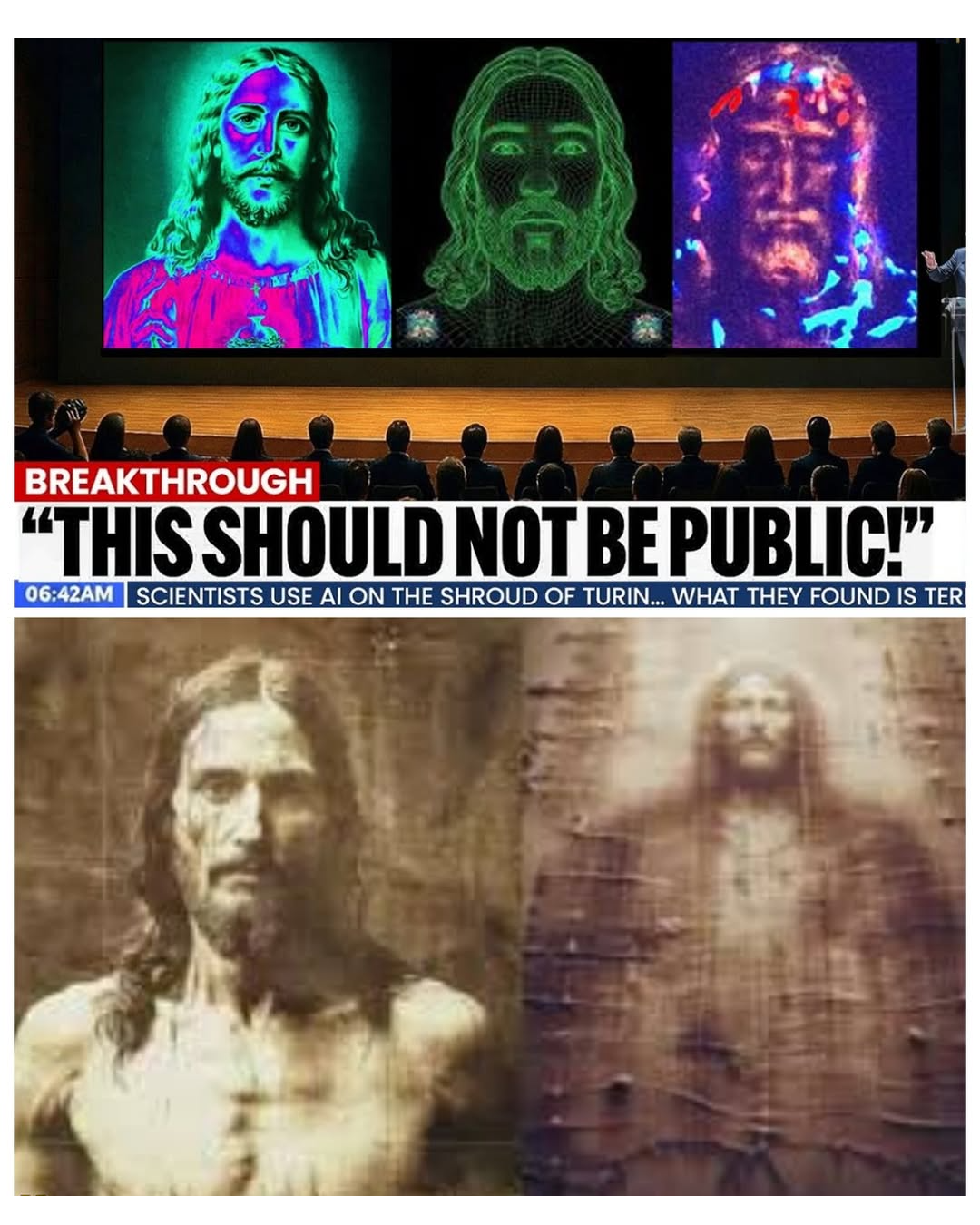
The Shroud of Turin, a centuries-old linen cloth bearing the faint image of a man who appears to have suffered physical trauma consistent with crucifixion, is once again at the center of a digital firestorm. Recent viral posts claim that “ultra-high-resolution scans” paired with “advanced AI analysis” have finally uncovered anomalies that “defy the laws of physics and biology.”
However, as we move through early 2026, a look at the actual scientific record reveals a much more measured reality. While the Shroud remains one of the most studied artifacts in human history, there is currently no verified scientific publication confirming that AI has detected anything “impossible” or “supernatural” about the cloth.
The Role of Modern Imaging
It is true that researchers are using increasingly sophisticated tools to study the Shroud. Over the last few years, teams have employed:
-
3D Surface Mapping: To understand the depth and contours of the image.
-
Macro-Photogrammetry: To analyze the unique “half-tone” characteristics of the straw-yellow honors on the topmost fibers.
-
AI-Enhanced Restoration: To “clean” digital versions of the image to see what a clearer face might have looked like.
While these tools are incredible for preservation and visualization, they function within the boundaries of known science. AI is a pattern-recognition tool; it can identify details the human eye might miss, but it cannot, by its nature, declare an object to be “beyond physics.”

Extraordinary Claims vs. Peer Review
The most sensational rumors suggest that experts are “hiding” discoveries or are “afraid to speak” about the Shroud’s true nature. In reality, the academic world is highly transparent regarding the Shroud. Whether researchers are arguing for a medieval origin (based on 1988 radiocarbon dating) or suggesting newer hypotheses regarding surface-mediated image formation, their findings are typically published in open-access journals and debated at international conferences.
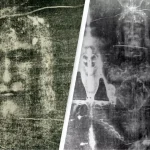
To date, no peer-reviewed study has concluded that the Shroud violates biological or physical laws. The “anomalies” often cited in viral videos—such as the image being a “photographic negative” or having “3D information”—have been known to science since 1898 and 1976, respectively. While they are fascinating and difficult to replicate, they are not considered “scientifically impossible.”

The Verdict of 2026
The Shroud of Turin remains a powerful symbol of faith and a genuine mystery of history. However, the “AI breakthrough” currently being touted on social media appears to be a mix of speculative interpretation and digital exaggeration.
As the scientific community continues to apply new technology to ancient relics, the rule remains the same: extraordinary claims require transparent, peer-reviewed evidence. Until a major lab or university releases a formal report, the Shroud’s “defiance of physics” remains a matter of online speculation rather than proven fact.