The Tiny-Headed Titan: Meet Cotylorhynchus, the Permian’s Gentle Giant
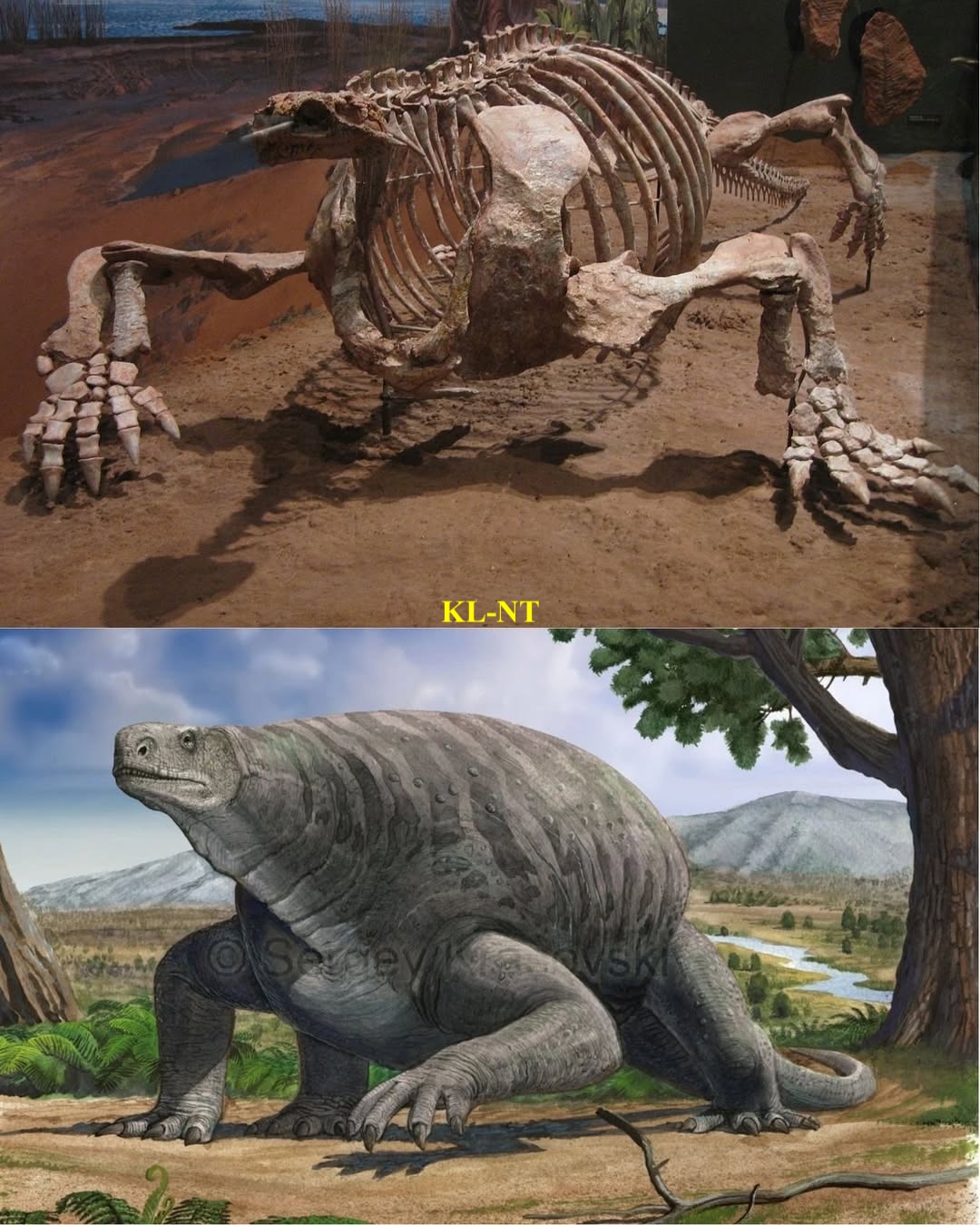
Long before the first Stegosaurus or Triceratops appeared, a bizarre and massive creature dominated the landscape of North America. Known as Cotylorhynchus, this prehistoric giant lived during the Early Permian period, approximately 280 to 272 million years ago. While it may look like a creature out of a fantasy novel, it was a real-life pioneer in the evolution of Earth’s ecosystems.
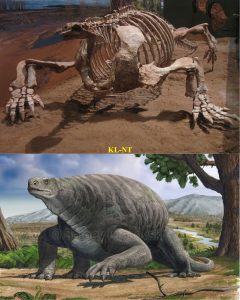
The “Walking Barrel” of the Permian
Cotylorhynchus is famous among paleontologists for its truly unique—and somewhat comical—proportions. It was a member of the caseid synapsids, a group more closely related to mammals than to the dinosaurs that would come much later.
Its most striking features included:
-
The Tiny Head: Its skull was disproportionately small, roughly 10% of its body length. This has led some researchers to suggest it may have spent time looking for predators or navigating through dense vegetation without the weight of a heavy head.
-
The Massive Body: Reaching lengths of up to 6 meters (20 feet) and weighing over 1,000 kilograms, its body was shaped like a giant barrel.
-
A Living Fermentation Tank: This huge torso wasn’t just for show; it housed a massive digestive system. Scientists believe Cotylorhynchus was one of the first animals to master cellulolytic fermentation, using its large gut to break down the tough, fibrous plants of the Permian.

An Evolutionary Pioneer
Cotylorhynchus represents a critical milestone: the emergence of the megaherbivore. Before this era, most large land animals were predators. Cotylorhynchus proved that the terrestrial environment was finally productive enough to support giant plant-eaters.
Its powerful, clawed limbs and massive shoulders suggest it was a robust digger, perhaps unearthing nutrient-rich roots or tubers. Despite its size, it was a slow-moving creature with a sprawling gait, likely relying on its sheer bulk as its primary defense against predators like the famous sail-backed Dimetrodon.

The Fossil Record
Most of what we know about this “pinhead titan” comes from remarkably well-preserved fossils found in the Hennessey Shales of Oklahoma and parts of Texas. These sites have yielded articulated skeletons that show the animal exactly as it died—limbs spread wide—providing a perfect snapshot of life in the ancient American Southwest.
By studying Cotylorhynchus, scientists gain invaluable insight into how early land-dwellers transitioned into the complex, plant-reliant ecosystems that paved the way for the age of mammals.