A Glimpse of the Past: Roman Female Head Discovered at Magna Fort Near Hadrian’s Wall
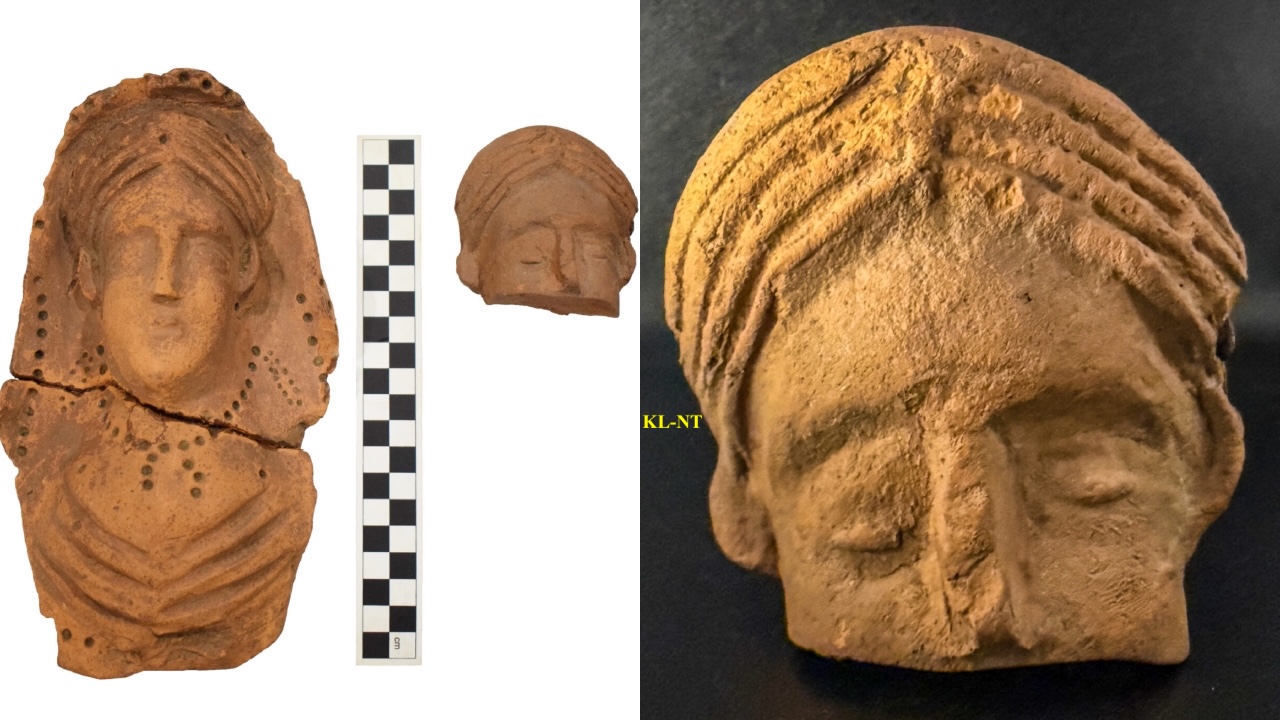
Archaeologists working at the historic Magna Roman Fort in northern England have unearthed a rare and evocative piece of ancient art: a small terracotta female head dating back to the third century CE. This remarkable find offers a fresh perspective on the cultural and artistic life of the people stationed along Rome’s rugged northern frontier.
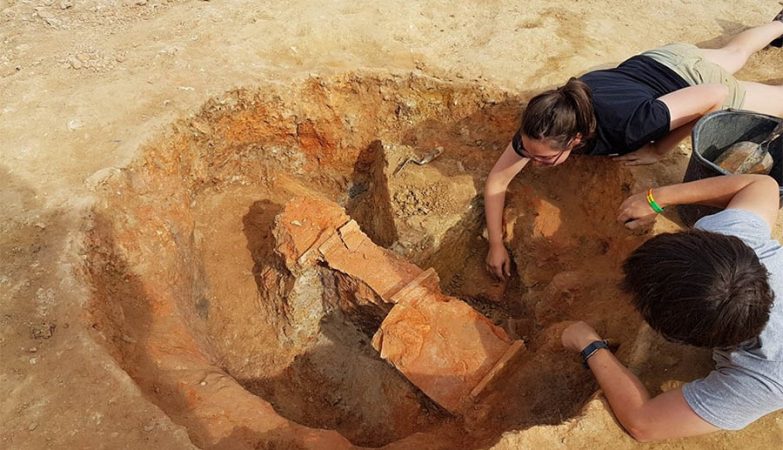
The artifact was discovered during excavations of a defensive ditch along the northern perimeter of the fort, which sits near the junction of Hadrian’s Wall and the Maiden Way. Measuring approximately 78 mm in height and 67 mm in width, the head is meticulously crafted from orange terracotta clay.
Artistry in the Details
Despite its age, the artifact retains striking details that reveal much about Roman-era fashion and craftsmanship:
-
Hairstyle: The figure features a distinctive center-parted hairstyle, with four carefully plaited strands of hair framing each side of the face.
-
Material: The use of orange clay suggests local or regional production, providing clues about the trade and resources available to the fort’s inhabitants.
-
Condition: While the piece has sustained damage below the nose—missing the mouth and chin—the upper facial features and hair remain well-preserved, allowing researchers to study the specific aesthetic styles of the 3rd century.
The Significance of the Find
The Magna fort was a critical military hub, once home to the Cohors II Asturum (a cavalry unit from Spain) and later the Hamian Archers from Syria. Discovering such a feminine and artistic object in a predominantly military landscape highlights the presence of diverse communities—including families, traders, and artisans—who lived alongside the soldiers.
Experts from the Vindolanda Trust, who are overseeing the excavation, state that the find adds a layer of “humanity” to our understanding of the frontier. Rather than just a place of conflict, the area near Hadrian’s Wall was a vibrant cultural crossroads where Roman art and local influences met.
Continuing the Search
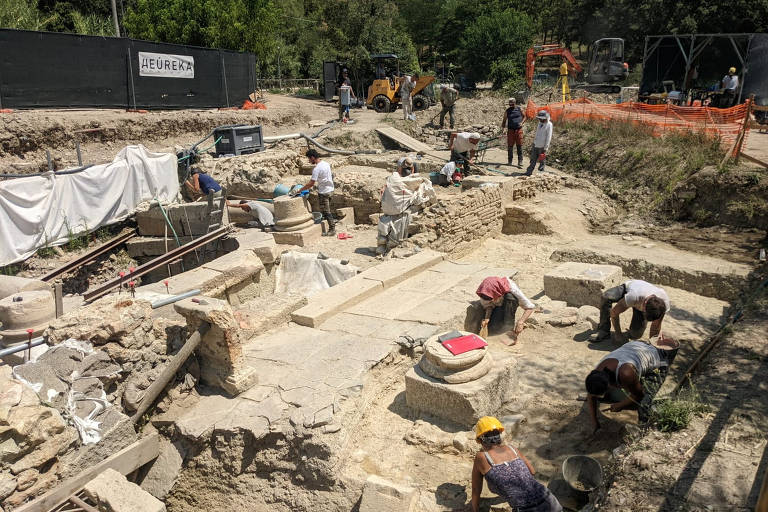
The excavation at Magna is part of a broader effort to preserve the site’s history, as changing environmental conditions and peat desiccation threaten unexamined artifacts. This terracotta head is just one of many recent discoveries that continue to bring the daily lives of Roman Britain into clearer focus.
As the team continues to sift through the defensive ditches of the fort, they hope to find the remaining fragments of the figure, further enriching the story of this ancient outpost.