Israel bombs Lebanon’s Beirut after Hezbollah launches rocket attack.hl
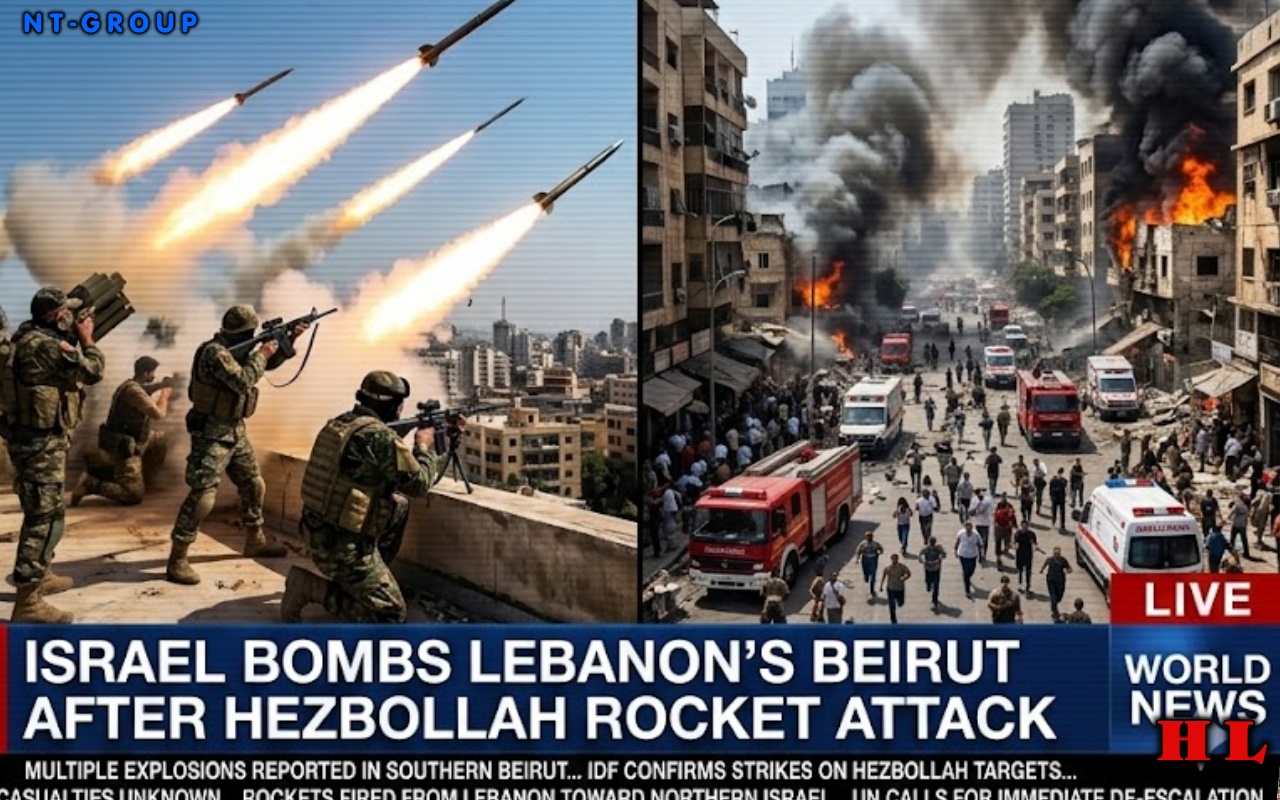
Israeli jets have pounded Beirut’s southern suburbs after Hezbollah claimed responsibility for a rocket and drone barrage on a military base near Haifa, in northern Israel, sharply escalating the region’s already volatile war.
Hezbollah says its overnight attack targeted the Mishmar al‑Karmel missile‑defence facility and was launched “in defence of Lebanon and its people” and as retaliation for the killing of Iran’s Supreme Leader Ayatollah Ali Khamenei in recent US–Israeli strikes.
Within hours, Israeli warplanes struck multiple sites in the capital’s Hezbollah‑dominated Dahieh district, as well as villages in southern Lebanon and the Bekaa Valley. Lebanon’s state news agency reports at least 31 people killed and 149 wounded so far, a toll expected to rise as rescue teams comb through collapsed buildings.1 Residents describe a series of pre‑dawn blasts that shook Beirut, sending plumes of smoke over the city and triggering traffic jams as families fled south‑side neighborhoods.
The Israeli military says it is “vigorously attacking Hezbollah” across Lebanon and claims to have hit senior commanders in Beirut and the south. It has ordered evacuations in more than 50 Lebanese towns near suspected Hezbollah sites, mirroring the mass displacement tactics used during previous campaigns.
Lebanese Prime Minister Nawaf Salam has condemned Hezbollah’s rocket fire as an “irresponsible and suspicious act” that hands Israel a pretext for wider aggression, vowing not to let the country be dragged into “new adventures.” With Lebanon already crippled by economic collapse, analysts warn that reopening the Lebanese front in the emerging US–Israel–Iran confrontation risks tipping the state into a deeper crisis — and turning Beirut once again into a central battlefield in a regional war.