Macron Questions Europe’s Dependence on U.S. Leadership…hl
Macron Questions Europe’s Dependence on U.S. Leadership
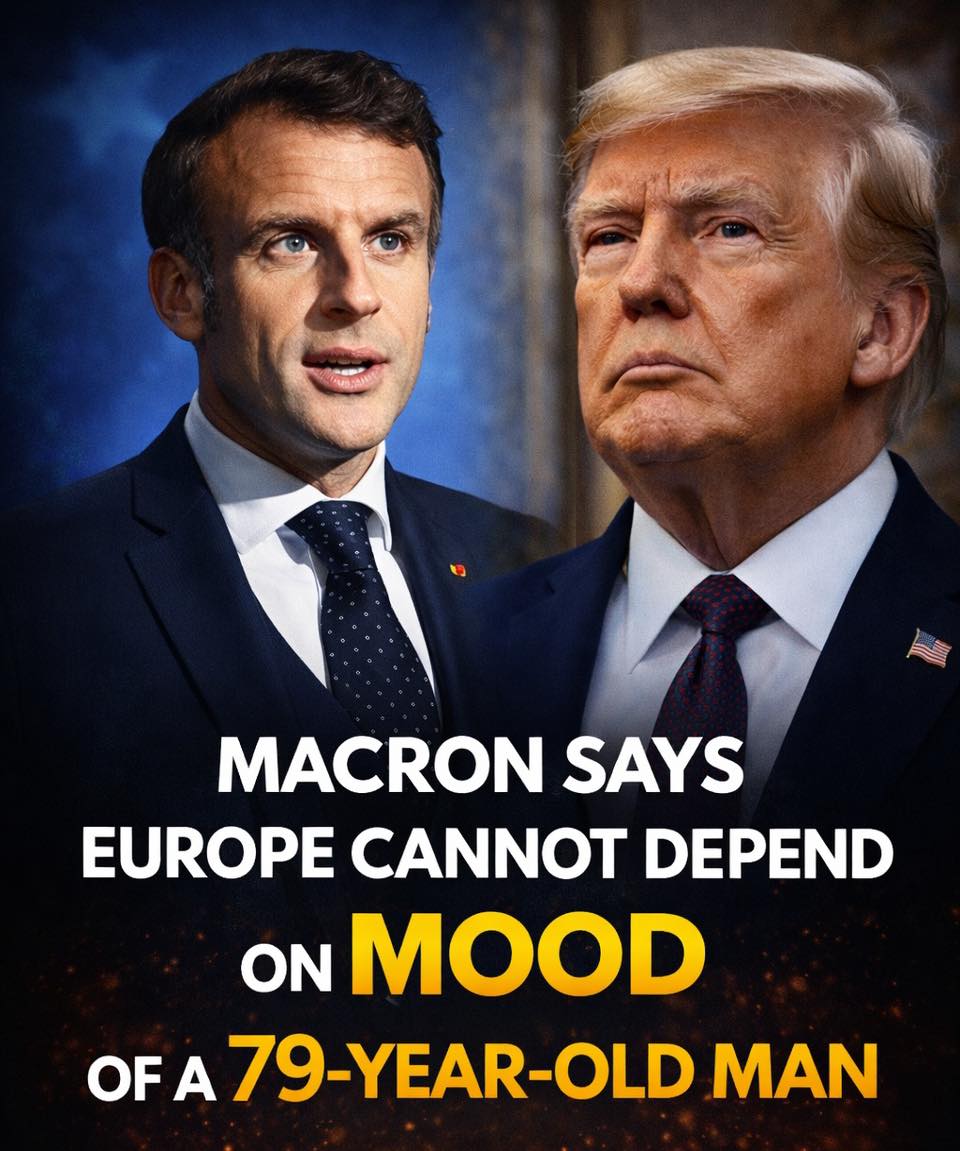
French President Emmanuel Macron recently remarked that Europe “cannot depend on the mood of a 79-year-old man,” a comment widely interpreted as a pointed reference to American political leadership and the unpredictability of shifting administrations in Washington. The statement reflects growing unease within parts of Europe about relying too heavily on U.S. decision-making for security, defense, and broader strategic direction.
For years, Macron has championed the concept of “European strategic autonomy”—the idea that the European Union should strengthen its own military capabilities, reduce energy vulnerabilities, bolster industrial capacity, and build greater economic resilience. In his view, Europe must be capable of defending its interests independently, particularly in an increasingly multipolar world marked by geopolitical competition and uncertainty.
Supporters argue that this approach is pragmatic and necessary, especially given recent global crises and evolving security threats. They see it as a way to ensure stability regardless of political shifts across the Atlantic.
Critics, however, caution that pushing too far toward independence could strain long-standing alliances, particularly NATO, which has historically relied on strong transatlantic cooperation. They argue that unity between Europe and the United States remains essential to global stability.
Ultimately, Macron’s statement underscores a deeper strategic debate: Should Europe chart a more independent course, or does global security still hinge on close transatlantic partnership? The answer may shape Western politics for decades