How Florida’s New Laws Could Turn Lives Upside Down

Felonies, Evictions, and ICE Holds  Inside Florida’s Most Aggressive Immigration Overhaul
Florida has quietly positioned itself as the epicenter of the toughest state-level immigration enforcement in modern America, and what began in 2023 is now setting the stage for what many fear will be an even harsher reality in 2026.
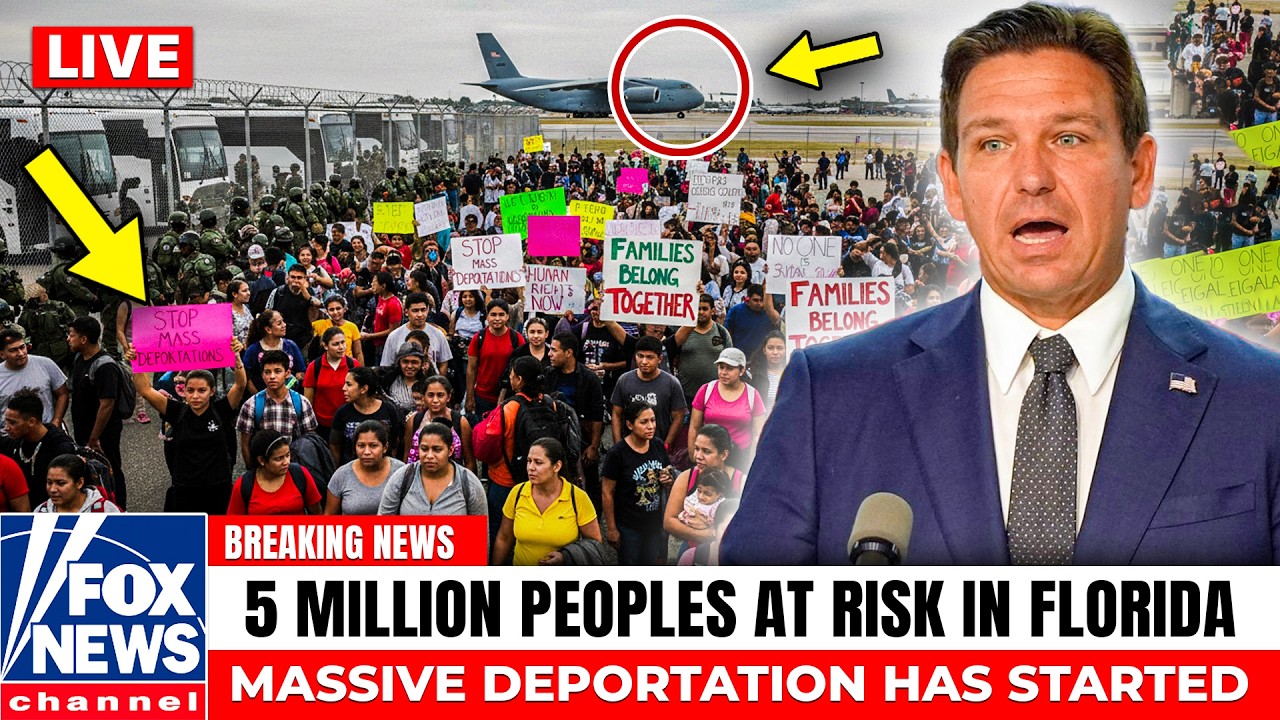
And the ripple effects are spreading through neighborhoods, workplaces, farms, rental properties, and courtrooms across the state.
In May 2023, Governor Ron DeSantis signed Senate Bill 1718 into law, transforming Florida into what critics describe as an immigration enforcement machine.
When the bill took effect on July 1, 2023, it did far more than send a political message.
It created criminal penalties and civil obligations that now touch nearly every aspect of daily life: housing, employment, transportation, healthcare, and law enforcement cooperation with federal authorities.
One of the most controversial provisions requires hospitals that accept Medicaid funds to ask patients about their immigration status on intake forms and report that data quarterly to the state.
While officials argue the information is for statistical purposes and does not automatically trigger enforcement, immigrant communities describe a chilling effect.
Families now hesitate before seeking medical care, fearing that a hospital visit could place them on a government radar.
Housing has become another pressure point.
Under SB 1718, knowingly harboring undocumented immigrants can result in third-degree felony charges.
For landlords, this has created a climate of intense caution.
The law does not explicitly require every landlord to verify immigration status in every lease agreement, yet the risk of criminal liability has led many property owners to tighten screening procedures dramatically.