Mythology in Stone: The Case of the Centaur Skeletons
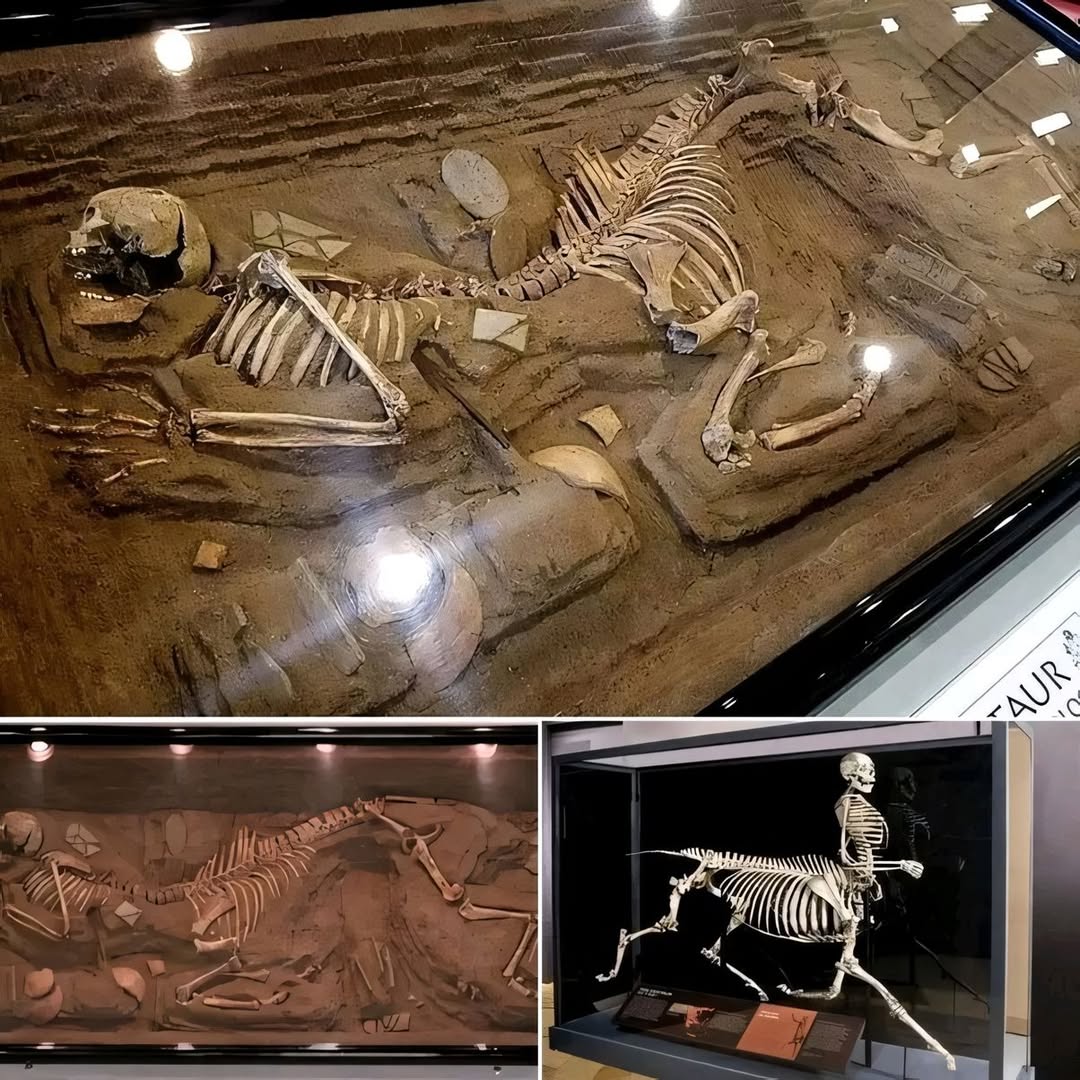
In a dimly lit museum gallery, a skeletal display recently stopped visitors in their tracks: the complete, fossilized remains of a Centaur. The display, featuring a human torso seamlessly joined to the body of a horse, looks like a page from Greek mythology come to life. Photos of these “excavations” have gone viral, leading many to wonder if the creatures of legend were actually flesh-and-blood inhabitants of our ancient past.
However, the “Centaur of Volos” is not a product of natural evolution, but a masterpiece of “conceptual art” and educational storytelling. Created by artists and scientists, these displays are often part of museum exhibits designed to teach the public about the history of myth and how humans interpret fossil remains. By using real biological materials (often ethically sourced human and equine bones), artists create a “hoax” that invites viewers to question their own perceptions of reality.

These exhibits serve a profound pedagogical purpose. In an era where misinformation spreads instantly, these “faked” fossils challenge the viewer to check sources and understand the difference between archeology and art. They mimic the “Feejee Mermaids” of the 19th century—curiosities that blend the line between the natural world and the imaginary.
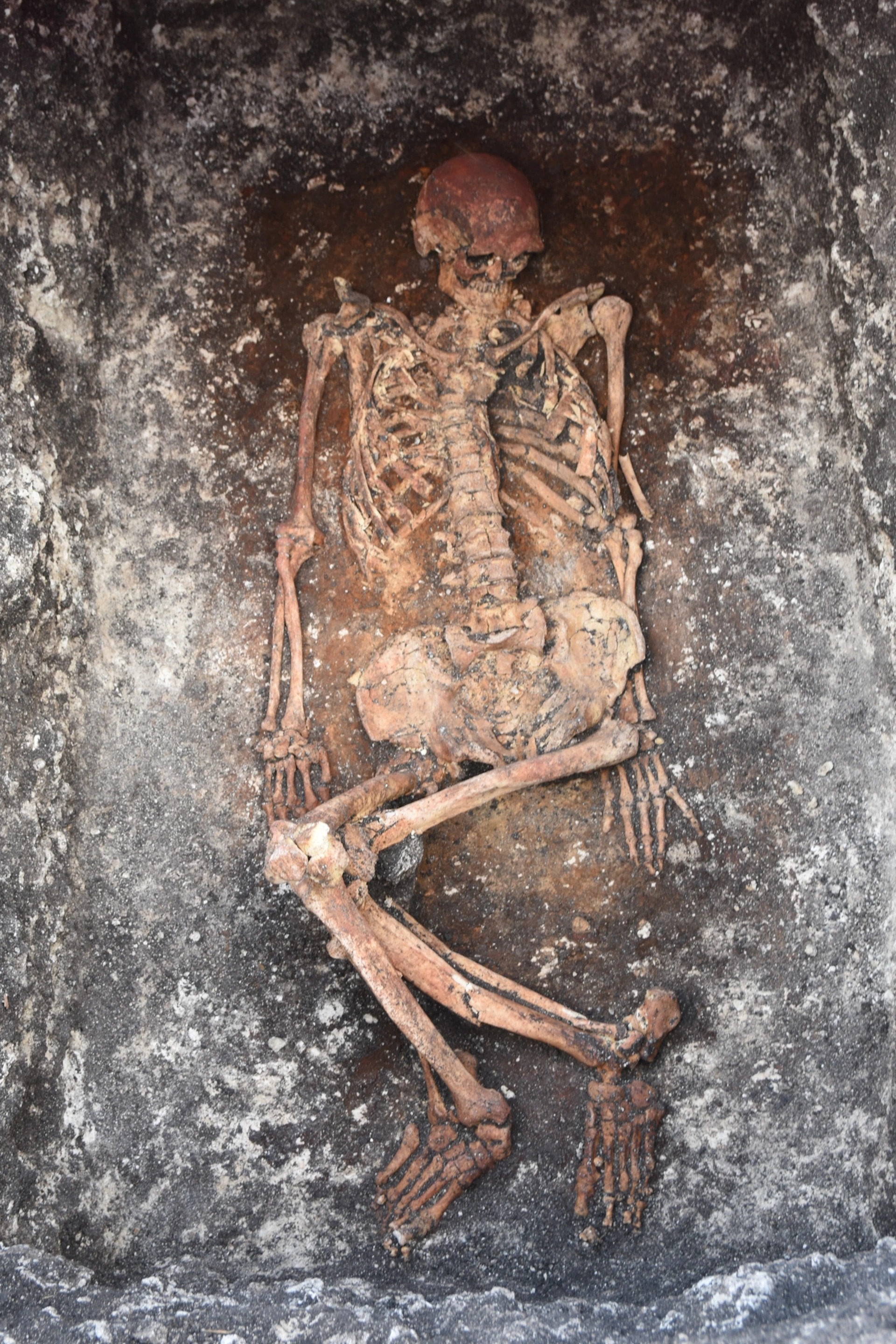
The fascination with the Centaur skeleton proves that even in a scientific age, we still crave the magical. We want to believe that there was once a time when the world was filled with monsters and heroes. While the bones in the glass case may be a modern creation, the wonder they inspire is entirely real, proving that some myths are too powerful to stay dead.